
The 10 Essentials: Fire

While a comprehensive packing list depends on many factors, certain outdoor gear is considered essential whether you’re heading off on an extended backcountry bushwhack or exploring the trails in your local woods. As part of a weekly series, here's a look at outdoor essential number six:

#6. Fire

Being able to start and sustain a fire, even in wet, cold, and windy conditions, is essential. A fire can help prevent hypothermia by providing heat for survival, allow you to make a hot drink, illuminate surroundings, act as a signal, and boost morale. Because fire starting is so important, but can be difficult to do in emergency conditions, especially if you’ve never practiced, you may want to carry more than one type of fire starter for back-up systems.

Windproof pocket lighters are easy to use, but don’t dismiss the value of having waterproof, windproof matches. A fire starter, as the name implies, helps ignite wet wood quickly. You can buy commercial fire starters or make your own from lint or cotton balls soaked with Vaseline. Store any matches and fire starters (even water- or storm-proof ones) in a waterproof container.

    Tips:
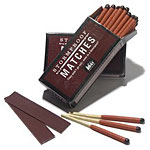
  • As their name implies, strike-anywhere matches don’t require a special striking surface; safety matches do, limiting their usefulness.
  • Don’t rely on flimsy packs of matches.
  • Know how to build a sustainable fire beyond the first step of lighting the tinder.

Have tips or suggestions for this essential? Share them with us.

Read the full "10 Essentials for Backcountry Travel" article in the Gear Guide.

Permalink | Comments (5) | Save & Share
Filed under: Gear

Comments

f_klock
Moderator & Senior Member
Joined: 1/5/06
Posts: 624
June 2, 2008 at 7:32 a.m. (EDT)

While I feel that a fire is not always necessary, for survival situations it is VERY necessary. This is a given, and I agree 100% that fire should be on the list. I consider it to be part of "shelter" on MY list.

Just as learning to change a car tire should be required before a person receives their driver's license, I feel that learning at least 2 ways to build and light a fire should be required before green horns are allowed into the backcountry. (Or front or middle country for that matter)

My only other comment is: Be wary of "cheap" waterproof matches. While the matches themselves my be waterproof, the flimsy drawer-type box they come in is not. If the box gets wet, even damp, the striker on the side will not ignite the matches. These matches are NOT of the strike anywhere variety, and a dry box is needed to light them.

 
Bill S
OGBO
Joined: 3/14/01
Posts: 3339
June 2, 2008 at 1:33 p.m. (EDT)

Here in California, especially during the April-Dec time frame each year, it is very risky to start a fire outside designated campgrounds with permanent fire rings. During the June-Oct time frame, fires are often forbidden even in campgrounds fairly frequently. The problem is that they get out of control very quickly, which could put you in much worse trouble than just being out overnight.

Basically, this means understanding how to build an emergency fire and guarding it carefully to prevent its spreading. We have already had several major fires in the SFBay Area in the past month, with the Summit Fire destroying close to 40 structures in the Santa Cruz Mountains. There have been "emergency" fires that have destroyed tens of thousands of acres in many recent fire seasons.

f_klock's comments on matches are something many people are not aware of and should be emphasized.

On "storm lighters", many of these work poorly, and some not at all, at altitudes above 10,000 ft. Of course, this is above timberline in many areas or the Sierra and Rockies, where there is no wood available for fuel anyway. Matches have the advantage that you can easily open the box and see how many matches you have before setting out on the trail, where it is often impossible to check how full the lighter is (take at least 2 lighters).

In the areas where it is safe (with precautions) to build a fire for signalling or warmth, it cannot be emphasized too much that you should learn to light and keep lit a fire when it is wet or in snow. Practice this until you can do it in very wet conditions BEFORE you venture into such conditions. I highly recommend reading London's To Light A Fire in both versions.

Also, fires for signalling are different from fires for warmth - learn, know, and practice signal fires for daylight and night as well as "warmth" fires.

 
Tom D
Moderator
Joined: 8/10/02
Posts: 1077
June 11, 2008 at 3:18 a.m. (EDT)

I carry both lighters (just the cheap, Bic-style) and waterproof matches -the ones from REI that are in the photograph above. The REI matches work like a fireworks sparkler-once they are lit, they burn all the way. They are excellent. The box comes with a striker pad. I have also used Coughlin's matches and they do not last as long in the box. Once they have been around for a while, they don't work-at least mine didn't. I keep one box of matches in my "ten essentials" bag and a second box in my cook kit.

 
R Goff (guest)

a.k.a. Robert Goff
June 18, 2008 at 12:43 p.m. (EDT)

Bic! Bic! Bic! You can trow one into a bucket of water, then use it to light a fire 30 seconds after shaking it dry. Cary two or three: one on your person and one in your pack, and perhaps a third inside your cook kit. At less that $1 each, you can replace them with new ones prior to each significant trip.

For some reason, many outfitters consider selling Bic lighters equivalent to selling cigarettes. I consider a Bic to be one of the most important and least expensive survival tools available for backcountry excursions.

 
TSAR
Full Member
Joined: 9/21/07
Posts: 33
June 23, 2008 at 8:15 p.m. (EDT)

There's lots of ways to start a fire but if 'matches' in one of those you choose-pay much attention to the 'striker' and how it is kept dry.
Many wet strikers won't light anything including strike anywhere matches.
Experiment at home on what strikes and what lights and what leaks.


This post has been locked and is not accepting new comments