CamelBak All Clear

The All Clear has been discontinued. If you're looking for something new, check out the best bottle and inline water filters for 2026.


 Reviewed by
Bill S
REVIEW CORPS
+4,657
 April 5, 2012
Overall I found the Camelbak All Clear to be a convenient and easy approach to the problem of providing potable water. No water treatment system is perfect, of course. Backpackable systems do not sterilize the water, but rather purify it to a level safe for drinking. No system suitable for backpacking removes industrial, agricultural, or mining runoff. While the battery cannot be replaced by the user and must be recharged via a USB connection, this is not a serious problem. The battery life of 80 cycles is plenty for trips up to a couple weeks, while the battery can be recharged with a small, lightweight solar panel. The bulb life of 10,000 cycles should serve for a number of years of avid backpacking. The All Clear does kill or inactivate all microorganisms, including viruses, while pump and gravity filters do not remove all viruses (except for those filters using an auxiliary iodine matrix). The weight is reasonable compared to other approaches to water treatment in the backcountry.
Pros
- Only 60 seconds to kill/inactivate bacteria, viruses, and encysted protozoa
- Full battery gives 80 treatment cycles (60 liters)
- Bulb rated for 10,000 cycles (about 7500 liters of water, or about 2000 gallons)
- Supplied bottle has directions directly on the bottle
Cons
- Supplied bottle has directions directly on the bottle
- Does not remove glacial flour, volcanic ash, “rust” stains, or industrial, agricultural, or mining runoff
- Treats only ¾ liter at a time (good for one person, not so good for groups)
- Requires using Camelbak ¾ liter bottles, preferably the clear one supplied
- USB charging cable requires wall charger, computer, or other available USB port (none supplied).
- Cannot be used for water with ice in it or at temperatures below 32°F/0°C
- Bulb contains mercury (as do all fluorescent and UV bulbs)
- The All Clear UV cap is not a toy — it should not be used as a flashlight, shown in someone’s eyes, nor directly on someone’s skin (strong UV source).
Water Quality
When I was growing up, we traveled a lot and spent a lot of time in the desert, woods, and hills. We drank from streams, lakes, whatever water was available, with no real concern about what was in it. My mother, who grew up in rural Missouri, told us that water in the creek was safe after it had flowed over three rocks (even if there was some dead animal just upstream). If it was murky, we let it settle for a while and maybe strained it through a piece of muslin to get most of the sand, gravel, sticks, and other junk out. We lived for a while in Central America and never worried about the water out of the tap.
There was one major exception — I grew up during the era when the dreaded polio (poliovirus diameter 27 nm or 0.027 micron) was rampant. Since it was suspected to be transmitted through swimming pool water, we were never to drink or swallow water from the municipal swimming pool.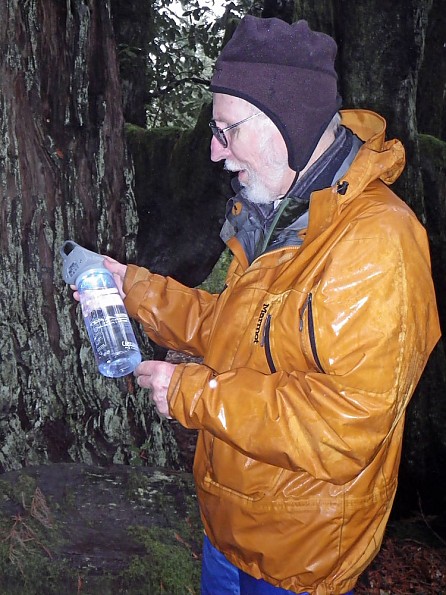
As a teenager and into my late 20s, when backpacking and climbing in the Sierra and Rockies, we would just dip a cup in the stream (or just lay down on the bank and stick our faces in the water) for a drink. I suspect that, being exposed to so many critters, I developed some immunity, because there were times when companions would become ill, usually a week or so after the trip.

These critters do not know about WagBags, latrines, or catholes, or the "200 feet from streams" rule.
Many backcountry travelers drink from the streams and lakes without ill effects. But others get extremely ill. The problem is that as soon as we wander more than a few feet from “civilization,” there are no guaranteed safe sources of water. I discuss the question of water and what’s in it in some detail in my four-part article, "Backcountry Water Treatment" here on Trailspace.
The problem is even more critical when we go to some foreign country. Even straight out of the tap in a fancy hotel, the water may subject us to Montezuma's revenge, Aztec two-step, backdoor trots, beaver fever, loose stool, runs, summer complaint, tourista, trots, Pharaoh’s revenge, mummy tummy, Delhi belly, and many other terms. These complaints are estimated to hit 20 to 50 percent of travelers. Foreigners coming to the U.S. suffer from our “pure” water and food, too.
Staying properly hydrated and healthy is fundamental to having an enjoyable experience. And that means having safe water to drink. But people get sick despite having treated their water or even packing it in. Trailhead interviews of backpackers in the U.S. and Canada point to personal sanitation and careless handling of food as the primary sources of problems rather than contaminated water. Still, it is a good idea, even with diligent hand washing and using sanitizing hand cleaners to treat the water you get out of the streams and lakes.
Water Treatment
There are several classes of water treatment suitable for the backpacker — boiling, halogen tablets (chlorine and iodine), filters, and ultraviolet radiation. All these methods have their advantages and disadvantages. You can also buy bottled water, except that some sources of bottled water just re-fill the bottles from the tap.
I have collected and used examples of all of these methods over the years. These approaches, combined with diligent handwashing and sterilizing, plus careful handling of food, have kept me almost free of the affliction in the backcountry in 3rd world countries as well as in the US, Canada, and Western Europe. Note I said “almost free”. The few times when I was pretty miserable were most likely due to food.
The most likely sources of illness from water are microorganisms like bacteria (E. coli for example) and protozoa (giardia and campylobacter, for example). Viruses are less likely in alpine environments like the Sierra, Cascades, or Rockies.
As a broad generalization, filters will remove bacteria and protozoa, but will pass most viruses, since backpacking filters have pore sizes no smaller than 0.1 micron. The hepatitis B virus is 0.042 microns, for example.
Halogens, in the form of tablets (Aquamira, Potable Aqua, and other iodine and chlorine-based brands) or solution (plain chlorine bleach) will kill bacteria and viruses, and, with sufficiently long times, protozoa (at least 4 hours to more than 24 hours, dependent on temperature). Ultraviolet light will kill or inactivate all the microorganisms.
Ultraviolet sterilization has been used for over a century in a number of applications. It is used in medical practice and required by law in barber shops in many states. It should be noted that the All Clear and SteriPen are “microbiological water purifiers”, and do NOT sterilize the water. Both are rated to kill 99.9999% of bacteria, 99.99% of viruses, and 99.9% of protozoan cysts. SteriPen was the earliest of the widely available ultraviolet systems intended for backpackers.
The Camelbak All Clear is the first of what promises to be a number of competitors to SteriPen for backpacker systems. At 60 seconds for a UV treatment, this promises an advantage over halogens (up to 4 or more hours) or a workout with a pump for 5 to 20 minutes, not to mention carrying that added weight of stove fuel if you boil all your drinking water. However, since the All Clear does only ¾ liter at a time, it is not really suitable for groups.
Product Details
Trailspace’s Chief of Gear Reviews, Seth, sent me an email asking if I would like to review Camelbak’s new All Clear system. I agreed, but noted that I was not willing to “test to destruction” as a human guinea pig, nor were any of the students or staff in the High Adventure Training course for Boy Scout Leaders that I helped teach in March (2012). [edit to add: I have been told that some readers might not understand that the "human guinea pig" comment is a tongue in cheek joke — read the next paragraph.]
The box claims that the All Clear meets applicable EPA standards (manufacturer registration 88622, establishment 0862272-CH-001), plus the label on the box says the All Clear will kill 99.9999% of bacteria, 99.99% of viruses, and 99.9% of protozoan cysts. So, accepting the words on the box for our health and safety, we spent our weekend in the pouring rain treating the water from the south fork of Butano Creek with the All Clear.
Setup & Power
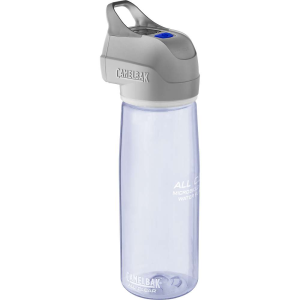
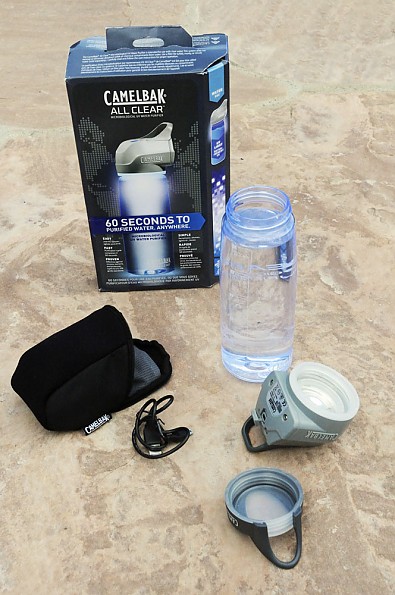
On receiving the package from Trailspace Gear Review Corps Central, I opened the box to examine the contents, and review the instructions. The supplied items consist of a Camelbak ¾ liter clear plastic bottle (would you expect any other color from the name?) with usage directions printed on it, the All Clear ultraviolet lamp head with a USB charger cord and carrying pouch, and a standard Classic bottle cap, all shown in the above photo.
As I opened the box and removed the contents (including directions in English and French, both of which I read, though not necessarily fluently in either), I searched for a USB charger block to plug into the wall. After determining there was none, I scanned the directions to find that I should plug the cord into my computer or other “standard” USB source.
The question immediately arises, of course, of where to find a USB plug in the backcountry. Failing that, how long does a battery charge last? Back to the instructions and the box — Specified battery life is 80 treatment cycles, or 60 liters (about 16 gallons). Since you do not need to treat water used for cooking or boiled up for coffee, tea, cocoa, or hot apple cider, this means a couple weeks worth of drinking water.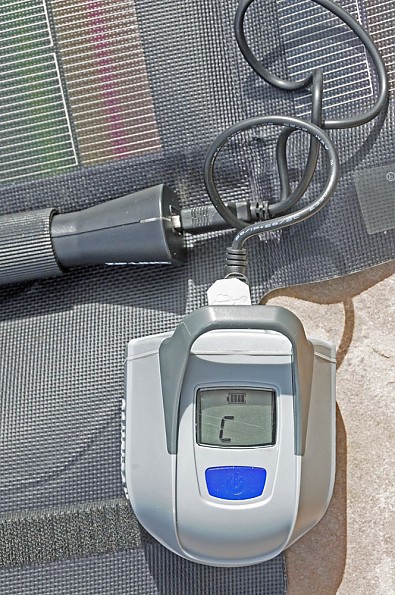
But what do you do for a month-long backpack or a thru-hike on the PCT (2,600 miles) or AT (2,200 miles)? Not all resupply locations have a USB port just waiting for you. And, there are those foreign countries. The answer, of course, is to use a solar panel or one of the “hiker-stride” generators.
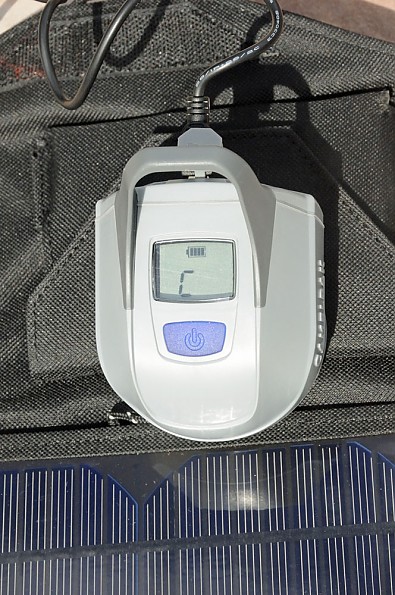
I checked my two solar panels, a Brunton that puts out 27 Watts (left image) and a Goal 0 that puts out about 7 Watts (right image). Both provided plenty of power, though on expeditions I usually prefer the Brunton (25 oz) over the Goal 0 (14 oz), largely because it will recharge the batteries for my Nikon DSLR in 2 hours (same as at home with a wall socket). In the two accompanying photos, the “C” displayed in the LCD screen indicates that charging is in progress, while just above it is the usual “scrolling battery” that shows the progress of the charging process.
Bottle
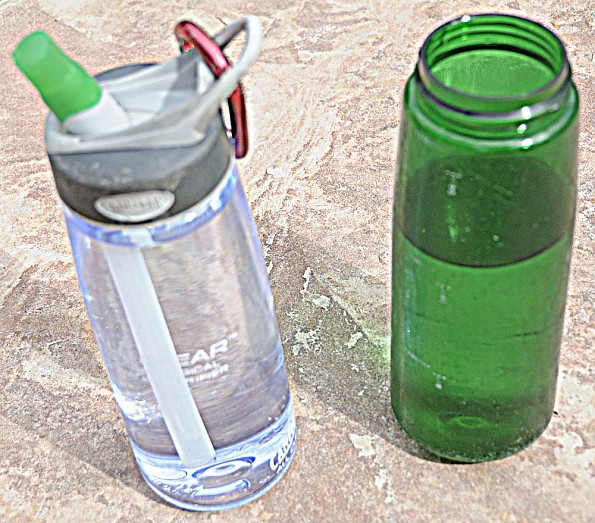
The supplied bottle is basically the standard Camelbak ¾ liter bottle with a cap that must be removed to drink. This means that, in principle, you can use the Camelbak Groove bottle (“straw” filter system), Eddy, or other ¾ liter Camelbak bottles with the flip-up bite valve. The cap size is also the same as the standard Nalgene bottles, though the instructions are very specific about using only the supplied bottle.
I did make a few runs with other Camelbak ¾ liter bottles (the green one in the photo is an old BPA version). Although I did not get analyses made by the local Health Department, no one got sick, and the water tasted OK.
Treating Water
The water must be at least as clear as “weak lemonade.” SteriPen describes this level as “much closer to clear than opaque, Obviously not clear, Obviously cloudy, Objects viewed through the water are visible but blurry, As cloudy as weak lemonade.”
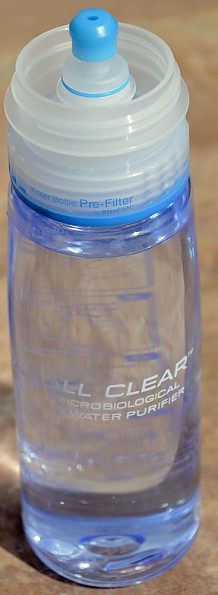
Depending on the source, the instructions suggest running the water through the Camelbak pre-filter. Since the pre-filter is not supplied in the box, I went to my neighborhood REI to examine one. The screen is pretty coarse. I suspect it would let anything smaller in diameter than about a millimeter through, although I did not actually measure the screen size.
Since I already have a SteriPen pre-filter with a much finer mesh screen, I used that during the testing (in the images above). This implies that water containing much particulate matter, such as glacial melt (which would appear milky from the flour-like materials ground up under the glacier) or streams that run through volcanic tuff (such as much of the Sangre de Cristo section of the Rockies) may very well prevent effective treatment with the All Clear (same with the SteriPen).
Where possible, I let the water settle for several hours or overnight, then decant the clearer water from the top. Note that UV systems, as with all other backpacker systems, do NOT remove industrial, agricultural, or mining runoff. Be aware of the sources of the stream or pond from which you are taking your water.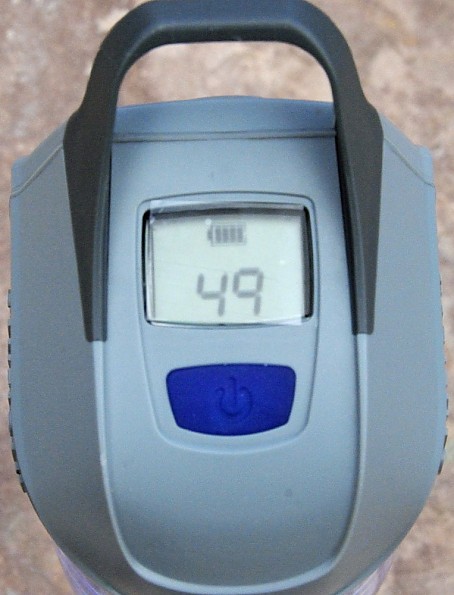
Countdown timer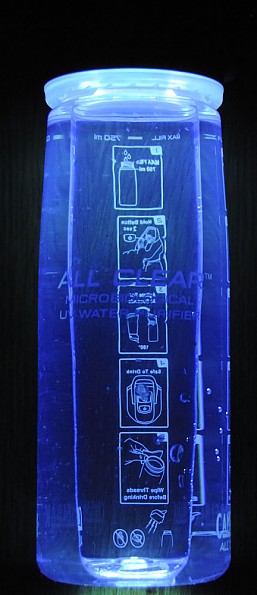
UV light doing purification
Inverting bottle while countdown is in progress to circulate water.
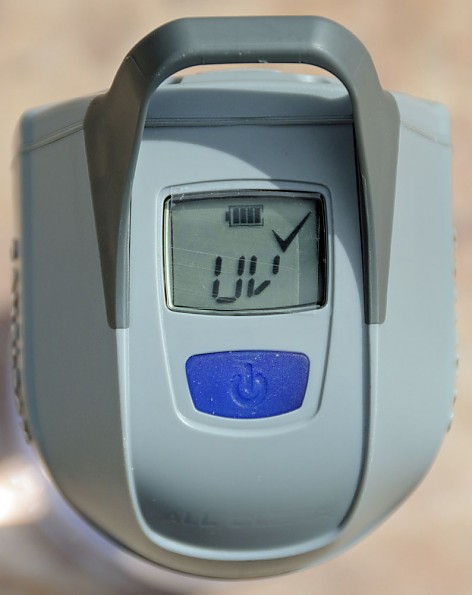
When 60 sec is up, light goes off and UV plus checkmark shows if successful.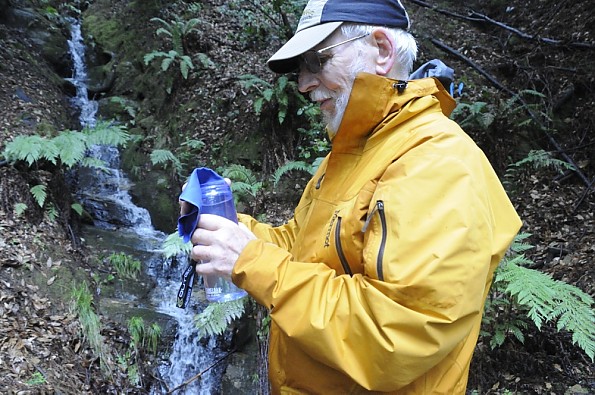
Wipe threads with a clean cloth
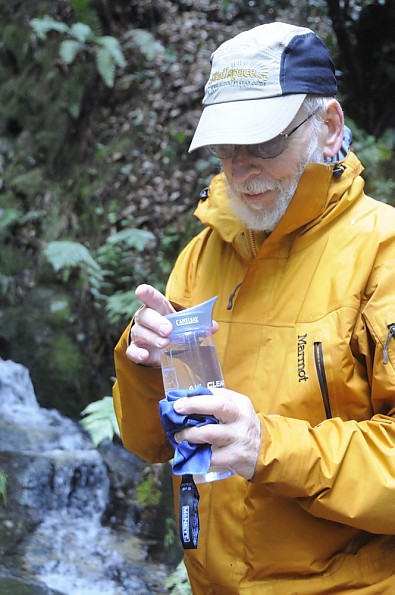
Close bottle with cap (Classic cap in this case)
Operation
The operation of the All Clear system is simple and straightforward, as shown in the sequence of images above. Fill the bottle with clear water to the fill line (¾ liter), screw on the UV cap, press the blue button for two seconds, then turn the bottle inverted and upright 180° continuously (analogous to stirring with a SteriPen) for the full 60 second countdown (visible in the LCD screen).
Do NOT look directly at the UV lamp, and do NOT use the lamp as a flashlight or night light (it is ultraviolet light, after all, intended to fatally damage microorganisms, and could cause damage to your eyes or other parts of your body – this caution is in the Instructions!).
At the end of the cycle, the light turns off and a checkmark and “UV” will appear in the LCD screen. Remove the UV cap, wipe the threads with a clean cloth before drinking the water (water on the threads is not treated), and put the Camelbak Classic cap on the bottle (or, as I did, use one of the Camelbak bite-valve caps).
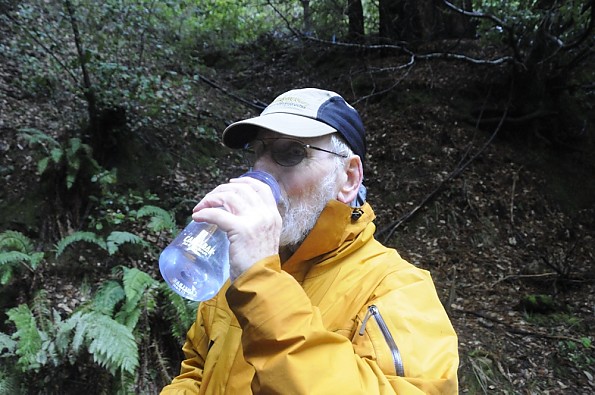
A big drink of cool, clear, purified mountain stream water.
Cap
I used my Camelback flip-up cap with bite valve most of the time instead of removing and replacing the cap every time I took a drink. This is much easier when in the middle of a rock pitch. The Classic and flip-up caps have a loop that you can simply clip a carabiner through and attach to a gear loop on your climbing harness. But with the Classic cap, you have to remove the cap to drink, then screw it back on – a two-handed operation, where the flip-up can be done one-handed, as can the unclip/reclip to the gear loop.
Pre-filtering
For turbid, murky, or cloudy water, such as from skuzzy ponds or shared with hippos, the instructions say to follow a fairly lengthy procedure of pre-filtering to remove large debris, then filtered two times “through an MSR Miniworks Microfilter or commercial equivalent” (interesting to see this specific recommendation, since Camelbak is not part of the Cascade Designs corporate umbrella). Then run the water in the All Clear bottle through two full UV cycles. In general, if the water is still tinted, do not drink it or cook with it.
Testing
I did run some other tests and carry the All Clear on several short hikes. I did not carry it on an extended expedition, since I needed to complete the evaluation in a fairly short period. The two weekend trips included one in the Sierra that featured a blizzard that dropped some two feet of snow on my tent overnight and one with our group of 25 adult Scout leaders and nine staff in the Santa Cruz Mountains.
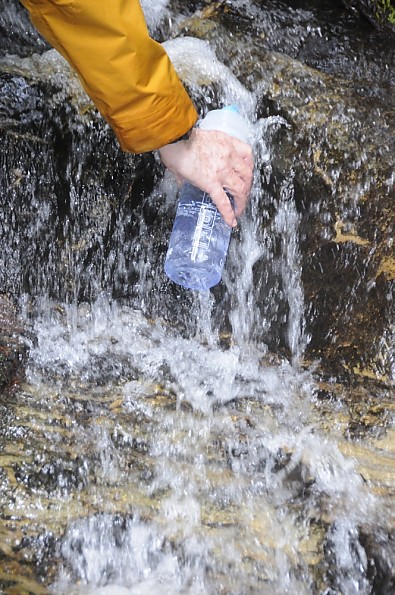
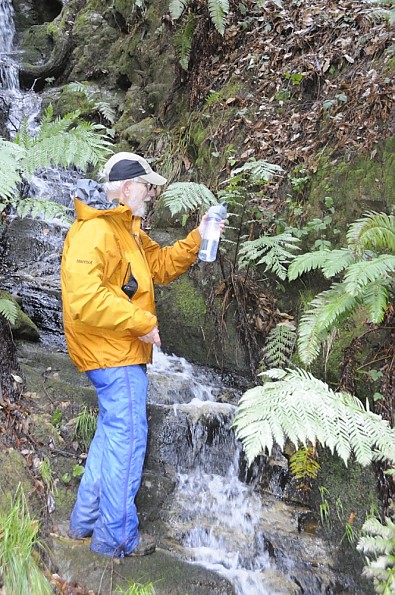
It worked fine on all outings. On two of the day hikes (both during heavy rainstorms that dropped snow on the local SFBay Area mountain peaks), I refilled and treated the All Clear bottle at streams fully flowing from the rain runoff, one of which is shown in the photo below.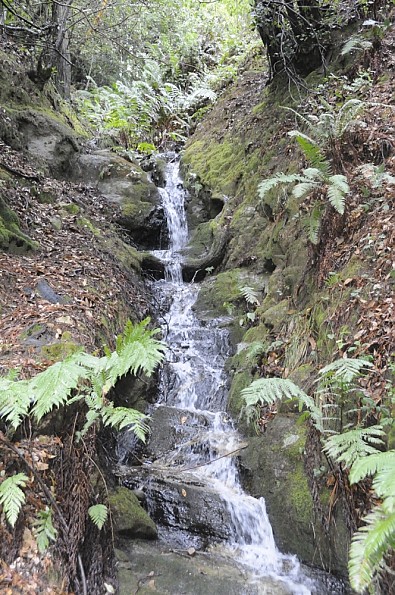
Operating Limitations
The operating limitations are no higher than 140°F/60°C and no lower than 32°F/0°C, or water containing ice. The cap should not be exposed to temperatures above 140°F/60°C, or below -4°F/-20°C.
I was curious about the low temperature usage, since this would reduce battery life. I chilled the UV cap in the freezer to a low point of -6°F/-21°C. The unit seemed to work adequately down to 20°F, though I would not advise going beyond the manufacturer’s limitations.
In any case, the water being treated must be liquid with no ice in it, hence above 32°F/0°C.
Battery Capacity
I tested the battery capacity by running repeated treatment cycles to see when the battery indicator said it was discharged. At 20 cycles, the battery indicator showed 3 out of 5 bars. The “LO” message showed up at 80 cycles, meaning that the limit was 79 cycles. I suspect that the capacity will vary by one or two cycles, depending on the exact usage conditions and whether you start with a truly full charge.
The recharge time is specified as 5 hours from empty, with the measured time being as close to 5 hours, using a USB wall block, as I could measure by making occasional checks to see when the LCD indicated a full charge.
FCC Part 15
The instruction sheet includes an FCC Part 15 notice, stating that the UV cap is compliant within the limits of a Class B digital device. This is the first time I had seen this notice on any outdoor gear other than GPS receivers and radios. I checked for interference with other electronic outdoor widgets, finding only a bit of static on several bands of my ham radio handheld when the cap was held within an inch or so of the antenna. In principle, Part 15 applies to all electronic and electric devices. With the plethora of new electronic widgets getting out into the woods, I suspect we will see more of these notices.
Weight
A number of the participants in the High Adventure course were, if not actual ultraLight backpackers, at least incipient ones. The 13.6 ounces for the full All Clear setup seemed a bit heavy to some of the more dedicated in the group. The following list compares weights for several treatment systems. Note that weights listed for the AllClear and the “filter-straw bottles” include a bottle, and the Sawyer includes two 2-liter bladders (grey for the unfiltered water and blue for the filtered water and use as your hydration bladder). Halogen systems require an added bottle, as does the SteriPen.
My personal choice?
If I have a source with clear water or can get the water clear enough with settling and a prefilter, I would use the AllClear for my personal water (plus maybe one companion) for long day hikes and backpacks up to a week or so (longer if I carry my solar panel).
The AllClear is a bit more convenient to use on the trail than the SteriPens I have. I have used the SteriPen in the U.S., South America, Europe, and Africa. If the water is turbid or I have good reason to suspect significant protozoa, I use a filter (Katadyn Hiker Pro usually, sometimes Sawyer gravity filter 2 liter), followed by either a SteriPen or chlorine dioxide tablets . Cooking water has to be heated anyway, so no further treatment is needed.
I have been using the SteriPen on tap water in foreign countries (a few times in a restaurant, when I was unsure of the source of their “bottled” water), and think it would be more convenient for that glass of water the waiter brings than pouring the water into the AllClear bottle and using that approach. But remember, you can’t use the UV treatment if there is ice in the water.
Comparative weights of some water treatment systems as carried in the field:
Camelbak All Clear (bottle, std cap, UV cap, case): 13.6 oz
Camelbak All Clear UV cap only: 7 oz
Camelbak Groove (¾ liter bottle with “straw filter”): 6.9 oz
Camelbak ¾ liter bottle with bite valve and non-filter straw: 7.2 oz
SteriPen Venture Opti (UV) with batteries: 3.6 oz
SteriPen Venture contact (UV) in solar case with spare batteries (Opti is same): 11.5 oz
SteriPen Pre-filter: 1.5 oz
MSR MiOx kit (generates chlorine dioxide from rock salt and water): 5.8 oz
Katadyn Exstream XR (bottle with filter straw and “virus treatment”): 9.6 oz
Katadyn Hiker Pro pump filter kit (incl prefilter): 15.6 oz
Sweetwater pump filter kit (incl prefilter): 13.4
First Need pump filter kit (incl pre-filter): 14.2 oz
Sawyer 0.1 micron gravity filter 2 liter: 16.2 oz (including the two 2-liter bladders)
 Reviewed by
CaverDigger
+16
May 30, 2013
Just upgraded my backpacking water treatment to the Camelbak All Clear system. No pumping necessary, no chemical taste, no waiting ... ready in 60 seconds. And no fear of breaking the UV lamp as it is sealed in the water bottle cap. A compact system made more useful with the prefilter that covers the cap threads from contaminated water when filling the bottle prior to treatment.
Pros
- UV bulb is protected from breakage in a closed unit
- Prefilter covers bottle cap threads
- 60 second cycle and you are ready to drink
- Charge it prior to trips w/o buying expensive Li batteries each time
- More compact than my SteriPen, smaller overall package
- Nalgene caps fit the bottle to get rid of the bulky Camelbak lid and save a bit of weight
Cons
- Works on smaller volume (0.7 liters) for each treatment
- Cannot carry back-up battery; must use solar or hand-crank USB recharger
I am a long time user of the SteriPen and before that, various pump filters (most recently MSR), ever since my college roommate became sick with Giardia on a White Mtns backpacking trip in the 1980's. I have used chemical tablets as well.
The Camelbak All Clear is, in my opinion, an upgrade to all these options. My favorite purification method, up to this point, was the SteriPen, with UV effectiveness, and its prefilter system on a Nalgene 1 liter bottle. But with the All Clear protecting its UV bulb in a "bottle cap", and with the helpful LCD screen and clear instructions printed on the outside of the bottle, I feel this unit is easier to use. As with other UV systems, the All Clear delivers the wonderful fresh taste of mountain stream water without the risk of organic contaminants.
It purifies a smaller volume of water on each cycle, with the same efficiency of the SteriPen (SteriPen takes 90 sec for 1 liter, All Clear takes 60 sec for 2/3 liter). So time-wise it's a wash ...
Weight-wise, the units are comparable. The All Clear is an ounce heavier than my SteriPen unit, but the Camelbak prefilter is lighter and smaller Camelbak bottle with a minimal Nalgene cap more than makes up for the weight difference. I use a flexible, lightweight 2 liter water storage bottle, not suitable for use with a UV unit, so carrying the smaller, stiff-sided 2/3 liter bottle saves me weight over the SteriPen's system with a 1 liter bottle.
I use my cooking pot to dip water from a stream or other water source, so as not to accidently drop the prefilter, bottle or UV unit into a roaring glacial stream. Then I pour the water through the prefilter into the bottle a ways back from the stream on "safe" ground. I still worried that I would accidently smash the exposed SteriPen bulb on a rock, and am less worried with the All Clear's construction. I added a wrist loop to my SteriPen, as I was always concerned that I would drop or whack it against a rock and be left without a water purification system on a multi-day backpacking trip. And by the way, I use a clean handkerchief to wipe any droplets of water from the outside of the bottle, esp the cap threads, since the UV treatment does not have any effect outside the closed bottle.
Last fall I sent my backpacking partner down to get water, and he confused the steps needed to use the SteriPen. I believe the instructions and LCD screen reduce the chance of someone forgetting how to use the device properly.
UV treatment has the benefit of breaking down organic molecules in bacteria, viruses and protozoa. Pumps are only as good as their filter pore size, and can be readily clogged by glacial rock-flour. Tests by SteriPen show that UV still works on mildly turbid water, like glacial runoff that would clog a ceramic filter in seconds. I have spend many wasted minutes sitting by a stream cleaning my ceramic filter after each pumping cycle, and don't want to have to do that again.
Source: bought it new
Price Paid: $80 with 20% off at REI
 Reviewed by
FromSagetoSnow
TOP 25 REVIEWER
REVIEW CORPS
+8,957
March 26, 2013
I am saying goodbye to iodine.
Pros
- No taste issues
- Lighter than a pump
- Fastest method to purify water
- Simple, intuitive controls
- Rechargeable batteries last a long time
Cons
- Electronics might some day
- Heavier than tablets
- NOT CHEAP
- I had to pay retail for it *sniffle
- Doesn't purify a whole quart/liter
I have been using iodine tablets to purify water ever since I learned that not all clear, flowing water is drinkable (I was ten). Supposedly iodine tablets have been banned in Europe because they are unsafe but I have never noticed any ill effects from using them myself. *twitch *twitch
Now that I'm a dad I am less cavalier about health risks and I have been reassessing my water purification choices. I decided to give the All Clear a try because it leaves no chemicals in the water and it's lighter and faster than a pump. I know that there are chemicals which purify water other than iodine but, for my kid's sake I'd rather avoid chemicals when I can.
I received my All Clear and pretty much immediately gave it a try from some creeks in my area. The best thing about this device is how fast it works. In a minute the UV light does its work and the water is ready to drink. I was able to purify and refill mine and all the kid's water bottles in the time it took for tablets or pumping one bottle.
The device is supposedly waterproof but I don't think I'll submerge it any time soon. Of course I will probably always keep a few tablets someplace in my pack for emergencies but this light is just too simple to use!
The information states that the battery is good for up to 80 cycles. If that isn't enough I could bring my small solar USB recharger to give it some help.
Is this as light as a Steripen? No.Can I replace its batteries? No, but 80 (let's be safe and call it 50) cycles per charge it should last through most trip lengths.
So far I have carried it on two overnight trips with zero issues but I admit that I tried hard to baby it. Just for testing purposes I ran it for about 20 cycles without recharging it and the battery indicator said it still had about a 3/4 charge. The nastiest water I have purified with it is water from the creek where I hunt ducks. The creek is clear but has a muddy bottom and, well, ducks poop in it. It wasn't the tastiest water but I survived. *twitch *twitch
Caveat: I live in the West where most of the surface water here is pretty clear. If I lived someplace where the water is muddier I'd consider the optional pre-filter because cloudy water doesn't work with this gadget, according to the manufacturer. Also, of course it won't remove chemicals from the water like charcoal or a filter might.
The worst part is the price, I had to pay retail, which about killed me. Compared to filters though it might be a great deal but I am switching over from tablets so it seems quite pricy.
Source: bought it new
Price Paid: $89.99
 Reviewed by
schifferj
+1,208
April 16, 2012
The water purification system I've been looking for!
Pros
- Convenience
- Kills virus without imparting bad taste
Cons
- Weight
I've been enamored with the use of UV light to inactivate bacteria and virus for quite some time. I love to backpack in the Hawaiian Islands but over there a number of water sources are infected with Leptospirosis virus which a normal filter cannot deal with.
Other UV devices I've tried are, in my opinion, not too reliable. The first one I tried was plagued with short battery life and it was a pain to carry extra batteries, remove them from the device, etc. etc.
The All Clear is super easy to use. You can prefilter your water with a mesh device that is purchased separately for $15. That is a gross decontaminator only though and does not filter anything from the water. Then you press the button on the lid for two seconds and a sixty second timer comes on simultaneous with a blue light in the bottle (the blue is just so you can see the light and "know" it's working as ultra violet light is in an invisible spectrum of light.
You gently agitate the bottle for the sixty seconds rotating it 180 degrees and back throughout the cycle. When your done you replace the filter lid with a smaller lid and your ready to go. Camelbak recommends wiping the threads if they were contaminated during the filling stage and that's probably good advice.
So far I've used this on one overnight trip and one three day trip and there has been plenty of battery life to keep me supplied with sterile water for the entire trip. I don't plan, right now, to carry a solar charger with this unit.
Only drawback that I can find is the weight which is about 16 ounces give or take a little. Other than that it seems to be well built, the bulb is well protected, and the sterilizing unit seems very solid.
Someone told me that Camelbak says this can only be used with the provided bottle. I've reread the instructions a couple times and couldn't find that blurb. I tried it on several Nalgene bottles and Camelbak bottles and it fits a lot of different bottles. My guess is that it will work fine with any bottle AS LONG AS THAT BOTTLE CONTAINS THE SAME AMOUNT OF WATER AS THIS ALL CLEAR BOTTLE.
This is a great unit – you're hiking along a fresh, snow fed stream, you pop this baby out of the mesh side pack on your pack, fill it up, push the button, agitate for sixty seconds, and drink fresh cold water knowing it won't make you sick! Awesome.
Source: bought it new
Price Paid: $80 (I used my REI 20% coupon)
 Reviewed by
Peter1955
+1,474
 September 4, 2012 (original May 23, 2012)
Safe water with a minimum of fuss.
Pros
- Kills pretty much everything
- Fast
Cons
- Heavy
When I heard that my local outdoor store was going to be getting some of these in, I ran right down and grabbed one. Finally, all rugged all-in-one water treatment system that would kill bacteria, spores, and viruses in just 60 seconds, and unlike a water filter would be low maintenance and not prone to plugging.
As with any water treatment system, there's no real proof that it actually killed anything — you just know you DIDN'T get sick — so it's hard to judge how well it works except from studies that show that UV light works well. The theory is that the UV light damages the DNA of micro-organisms so they can't replicate.
It's wise to pre-filter the water just to get out the lumps, and an accessory screen is sold for that purpose. To remove smaller floating particles, it would also be nice to use a coffee filter, although the UV should cope with that to some extent anyway.
No filter can handle chemical contaminants like industrial waste or agricultural chemicals, and a UV system does nothing for the taste. On the upside, at least you can be sure that what you're drinking is safe to drink.
Now the kicker: I bought this as the ultimate backpacking system, but when it came right down to it, I actually found the treatment module a bit heavy. That may be more to do with the psychology of backpacking, where you're continually trying to shave off a few ounces, or to choose the lightest possible option. On an easy route, where I expected to find potable water at a couple of places en route, I chose instead to carry one full 750 ml. water bottle and one empty one, plus Aquatabs so I could alternate from one to the other.
That doesn't mean that I won't use it on a mountain trip. I think it will be especially invaluable in summer on a long hike, where water consumption can easily exceed the 1 litre/four hours that you get using the Aquatab system I mention above. And it will also be very useful where I have to provide water for a number of people.
EDIT: Just returned from a mountain backpacking trip with some serious elevation. Shaved off pound after pound, but still came in at 38 lbs with .750 l of water and the All Clear. I did use that system for purifying glacier lake water and it had the advantage of giving me lots of water as soon as I wanted it. My partner carried Pristine drops, though, and I envied her the lighter weight.
Even using the UV system, I still filled a hydration bladder each evening and tossed in a couple of MicroPur tablets. More water, more easily. More time, but way less weight than that electronic module. For anything long and hard, where every ounce counts, I think I'll have to go back to the tablets.
Source: bought it new
Price Paid: $117
Reviewed by
Bryan White
+4
September 23, 2016
The product is very innovative and easy to use. The battery life is never a problem and this unit is utilized by two on the trail. Having a top with the filter gives the best of both worlds with UV and filtration. Nice to have the solution from one company.
Pros
- Easy to use
- Good battery life
Cons
- Price, got it for $75. Would be great at $60.
This unit make very quick work of hydration. Fill the bottle, hit the button, and then shake gently for a short time. How easy is that? I can purify the water and change heads in under 2 minutes. It sure beats having to squeeze through a filter getting the hands wet.
I have already recommended this to a couple of my packing buddies. One really neat feature is the small display and a go/no go indication. The unit seems beefy and strong.
The product is new and I have only used it for three months on a couple of trips, but I use this at home now. City is "fixing" water piping which means "stuff" in the water. So, in reality, I use it quite a bit.
Source: bought it new
Price Paid: $75
 Reviewed by
Amanda Desiree Wilson
+77
March 3, 2019
I lived in Mexico in a town that got its water from a lake. The water was not safe to drink so I used the Camelbak All Clear. I never got sick. I also use a Katadyn Pocket Filter when I need to get rid of all the solids.
Pros
- Fast
- Light
- Convenient
Cons
- I would like to see a little more volume.
I have traveled to Mexico and Peru where the water quality is less than superb. If you drink the water that is untreated, you will get Montezuma's Revenge. I also have a carrier for the bottle. I am glad I bought this unit as it sure saved me a lot of running to the bathroom.
Background
I have used this unit in Mexico and Peru.
Source: bought it new
Price Paid: $100
Reviewed by
Foesrider
+43
August 27, 2012
Excellent for making sure your water is clean.
Pros
- It is a bottle as well.
Cons
- A bit heavy, but not too bad.
I bought this for my wife who has a weak digestive system. I want to make sure she is healthy on the trail and free of any bugs, so to say.
Source: bought it new
Price Paid: 20 bucks (Cabela's points)
Your Review
You May Like
Specs
| Price |
MSRP: $99.00 Historic Range: $49.50-$129.00 Reviewers Paid: $20.00-$117.00 |
| Weight |
7 oz (cap) |