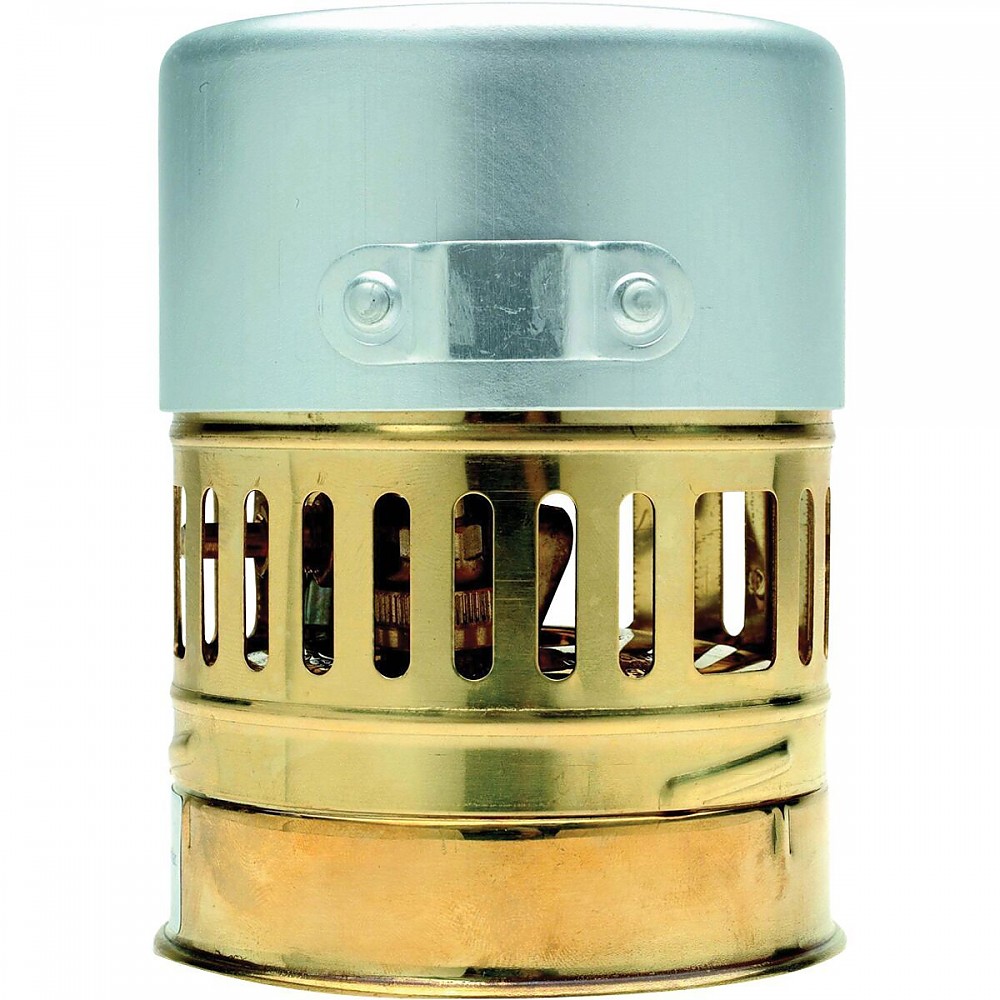
Optimus Svea 123



 Reviewed by
BackcountryJoe
+216
 July 18, 2012
The seva 123 is widely known as one of the most reliable stoves ever made and for good reason, they don’t break and most of them are still around in some form or another (parts, tarnished or new in box). The svea has been around for over half a century now and is still available new which can really attest for its quality and customer loyalty. Mine is an older Optimus model, and is missing the aluminum cup so I cannot speak as to the cup's performance. I still enjoy taking this stove on day hikes to cook some ramen noodles or Meso soup, plus it will get you some props from the older trail mates.
Pros
- Always works
- Tuff as nails
- Fuel efficent
- Lightweight 15oz full
Cons
- Sometimes difficult to prime
- Brass tarnishes easily
- Dosen't carry much fuel
- Poor flame control
- Rather unstable
Story
I found this stove completely by accident when I was cleaning out the basement; I found a milk crate full of old hiking gear. So I drug it out into the sunlight and inspected the contents and was amazed. Inside there were 20 unused Gaz canisters with matching stove, a Whisperlite, fold up candle lantern and the svea 123. Evidently it had been sitting in that crate for 20 years with all the other gear so first thing I did was fill it up with Coleman fuel fill the priming cup and torch it off. After 25 seconds or so I opened up the main valve and the stove lit up with its telltale powerful pulsating flame and freight train sound. The stove worked perfectly despite being stored in a damp dingy basement with fuel in it for over 20 years with just minor tarnishing.
Setup
It takes a few uses before you really get setup down mainly because of the key on the chain having to be threaded through the pot support/ windscreen. You want to do this after lighting the priming cup and getting the stove all primed up but before lighting the burner. Make sure you thread the key and chain through the correct hole or the chain will is too short to operate.
Ignition
Once that is setup open the valve fully if there is audible hissing it is still primes and ready to go. Light the burner with a flint, match or lighter do not worry the flames won’t rise too high when lighting so burning yourself is unlikely. Always practice extreme caution while priming and lighting.
Flame Control
Even with all the Svea’s strengths it does have a couple weaknesses: Flame control with this stove has only 3 modes; off, barely on, and Space Shuttle on take off. All of that in a ¾ turn of the valve.
Boil Time
The boil time of any stove is severely affected by the conditions one is cooking in. Under ideal conditions the svea will boil 1 quart/ liter of water in just under 6 minutes of continuous burn.
Wind
The svea is well known for being pretty much wind proof. Once up to temp you can try you’re hardest to blow the stove out but you won’t have any luck, though your heat output will be affected. And the built on wind screen does leave something to be desired.
Efficiency
The svea is incredibly fuel efficient and will often burn one (.35 pint) tank of fuel per hour of use though this all depends on conditions.
Packability
This stove is quite packable sized in at 5" tall by 4" in diameter. It will fit in most packs with relative ease and will often times fit into other large cups or pots.
Ease of use
Once acquainted with the stove anyone will find it quite easy to operate and its lack of features tend to make it easier to use. At first priming will be difficult but once one develops their own method the whole process becomes a breeze.
Stability
Along with flame control stability is one of the areas where the svea falls short. With its round base and high center of gravity on can find their noodles on the ground if they are not too careful and do not pick a flat cook site. I have heard of some people using the stove supports available for jet boil and other canister stoves with the svea since the bases are similar, but I have yet to try this myself.
Features
The Svea 123 does not really have many features since it is such an old model. But its lack of features I would say is one of its greatest features.
The stove does include:
- Built on wind screen
- Key/tool that will disassemble most of the stove
- Built in pot supporting arms
- Accompanying aluminum cup
Construction & Durability
Don’t let the shiny brass exterior fool you the svea is one tuff as nails stove. Often times the worst thing that could happen is the windscreen could get slightly bent or the brass can get scratched, but fair warning, do not run the stove dry of fuel. This will damage the cotton wick reducing its performance.
Conditions
I took the stove out the next weekend on a brief day hike to Wallace Lake with my Snow Peak 600 mug, top ramen, coffee, and hot chocolate. So no surprise the thing performed no problem cooking all of it and using hardly any fuel. I have since used this stove on several more day trips in ranging from snowshoe hikes at 5500' to hot sea level summer trips. In all cases the svea has not failed once.
Practical Uses
Since the svea can burn multiple fuels, pack well, uses little fuel and requires almost no maintenance I would highly recommend it for a survival kit or bug out bag.
Conclusion
All of this is why I would recommend it to anyone. Sure it may be antiquated but it always works when you need it and has a certain charm that those old stoves do.
Source: received it as a personal gift
 Reviewed by
Erich
+808
June 22, 2013 (original May 8, 2008)
I have had mine since I purchased in new in the early seventies. With only two moving parts (the valve and the needle on the "R" model), it is one of the simplest and most reliable stoves ever made. It is not finicky about old or poor quality fuel, as some newer stoves are.
Pros
- Rugged
- Reliable
- Compact
- Very little assembly required to fire it up
- Integrated windscreen works well
- Pump isn't necessary
- Works well with poor quality or old fuel
- Very little to no maintenance required over years of use
Cons
- Not as stable as box stoves or modern separate tank stoves
- Wide pots can increase heat in tank
- Tank needs to be insulated from snow to maintain good pressure
I've had my 123R since about 1972. I used it for all my climbing and hiking trips until about 1990, when I stopped camping for few years because of kids. In 1996 I pulled it out again and it fired right up, even with old gas. I did finally replace the cap, just because I thought I should.
This stove will never let you down. Easy to start, warm hands, or even a match will pressurize the tank, then prime and you're good to go. Beautiful to look at, simple and functional. I'm surprised it never won a design award. Still available after more than a half century of use. It isn't a "build a stove" like so many are today. And it simmers well. Plus the noise it makes at full tilt is very comforting, although that might just be me remembering many high camps.
I gave it a 4.5 because it isn't the most stable stove, but aside from that, it is simply the best.
Update: March 12, 2012
I've had this stove for almost forty years. As testament to its reliability, I had not used it in more than ten years in 2010, when I decided to take it on a trip. The gas was at least ten years old. I did replace the tank filler, as I was concerned the gasket might have degraded. The stove fired up immediately, sputtered slightly, and then began the jet roar that these little stoves are famous for.
Though the 123 dates to the 1950's, the particular burner style goes back to the early 20th century, and is still the basis for many modern stoves. Several years ago, the Svea rights changed hands once again. The new rights holder, with many more modern stoves to sell, decided to discontinue the 123. However, there was such a hue and cry from around the world, that they decided to make once last batch to sell through A & H Enterprises, the North American distributor and repair facility. Approximately 200 stoves manufactured that year sold out in a matter of weeks.
This stove, as with many others, is not without its quirks. They are not particularly stable. As well, the integral tank can get too hot if a large diameter pot is used. Further, if used in snow, the tank needs to be insulated to maintain good pressure.
However, the above cons aside, this is a wonderful little stove for one to two people, though I have cooked for four on it.
Setup: It is possibly the easiest pressurized stove to set up. Put it on a level surface and remove the aluminum pot that covers the stove. Insert the key in the valve and the stove is ready to be primed.
Priming: There are several ways to prime this stove. If you have gained a bit of elevation, there may be enough pressure in the tank to get some fuel to squirt out and land in the little cup on the top of the tank. If not, you can gently heat the tank with your hands, or a lighter to generate enough pressure.
Make sure you close the valve before you use the lighter method. The most common method, is to use an eye dropper to place some fuel in the cup on the tank. Finally, ignite the primer fuel and wait until the cup is almost empty, then turn the key and the stove should quickly start sounding like a jet engine.
Flame control: Simmering can be done with this stove with practice, but its main use is for boiling water, cooking rice, or pasta. Baking is not something I would recommend, nor frying.
Boil time: There are stoves out there that are faster boiling, but not by much more than a minute or two at the most. Pot size is more critical here and with a billy that is slighter wider in diameter than the stove, I have boiled a liter in under four minutes.
Wind: The 123 has an integrated windscreen that also holds the pot supports.
Fuel Efficiency: I can't really say exactly how thirsty or thrifty this stove is with fuel. It does appear on par with other white gas stoves, such as those from MSR.
Stability: OK, this is probably the weakest point of the Svea 123. With a pot on top, it has to be watched, lest some clumsy companion upset dinner.
Packability: This doesn't get any better in my opinion and is one of the strongest attributes of this little stove. With its integral tank, protecting windscreen and small pot over the top, this stove is very compact. Mine fits tightly inside a 1.5 liter billy with a top making it a perfect little packed unit, with lighter and eye dropper stored neatly inside. There are no separate hoses or tanks, nor pumps required.
Ease of use: As with any stove, the Svea 123 has its tricks to learn. Yet, once learned, this stove is about the simplest stove around, at least among pressurized white gas and kerosene stoves. The key is hung on a chain, the windscreen need never be removed except to add fuel.
Features: Clever design, as all parts fit neatly into or onto the stove. The valve key has wrenches on it to strip the stove to its fundamental parts.
Construction and Durability: Many people have this stove as an inherited piece from their father or grandfather. It is all metal, mostly brass, and with one moving part (the valve) or two on the 123R (the valve and the integrated cleaning needle) there isn't another pressurized gas or kerosene stove that is simpler. In years of use, it has never let me down.
Conditions: I have used this stove in winter and summer and from 14,000 feet to sea level, from 0 degrees F. to 90 degrees F. I have mostly used it on short trips of less than a week, and cooking for two or sometimes three.
Source: bought it new
Price Paid: As I recall I paid about $40 for it at REI.
 Reviewed by
Tÿcho
+571
December 27, 2018
A fun stove.
Pros
- Easy to use
- Compact
Cons
- Priming takes a little to get used too
Svea 123r is a self pressurizing white gas (Coleman Lantern Fuel, Naphtha, Shellite) backpacking stove. The stove's base serves as an integrated fuel tank which can not be refilled on the fly. It holds about 40-60 minutes burn time of fuel.
The stove produces excellent heat, but due to narrow size would not recommend putting large group pot on top. The stove like many liquid fuel stoves has two speeds, full blast and off. You can lower the flame, but the burner is small so all the heat goes to one spot.
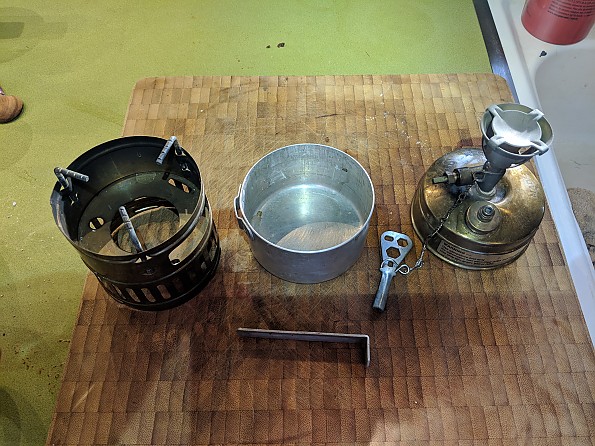 Svea 123r—wind screen, pot and handle, stove with key
The stove has a groove in the center of the fuel tank. To prime you have to fill it with fuel and ignite. The heat from the burning fuel causes the fuel in the fuel tank to evaporate and create pressure. This pressure forces the fuel through the jet and feeds the stove.
Priming takes a bit of getting used too. The groove isn't readily accessible when the windscreen/pot stand is installed. You can fill the groove before putting the windscreen on and hope not to spill the fuel. You can prime the stove before installing the windscreen and try and do it quickly while the stove is hot. Some people use a squeeze bottle and fill the groove with the stove fully assembled. I use a straw as a pipet filled from an external fuel source.
Once primed you just need to turn the key and light. Once burning the stove makes a loud noise similar to the MSR XKG stove—they have the same type of burner. When you are done turn the key all the way to the right and the fuel supply is cut and the stove shuts off. Turning the key all the way to the left pushes a needle though the gas jet to clean it.
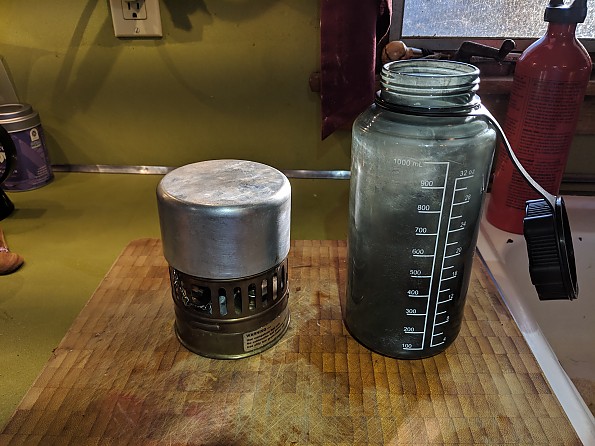
My fully fueled stove just weighs 617g. The pot holds about 350 ml. Pot and handle weigh 85 g if you want to leave them home and save a bit of weight.
My stove dates from the early to mid '70s. Internet scuttlebut is that the curent stove is made in China and not of the quality of the older stoves. Not having a newer stove to compare too I can't tell if it is true or nostalgia.
Background
Six months of camping, mostly car camping
Source: received it as a personal gift
 Reviewed by
Steve Allison
+36
April 17, 2026
The Svea 123R I purchased in 1980 has been in continuous service since that date. It never fails to light and has few mechanical parts to fail. Combine it with the Sigg Tourist kit and you have a reasonably stable and versatile solution to solo packing or even a small group.
Pros
- Simplistic design
- Reliability—lights every time
- You know when it's lit (jet engine)
Cons
- It is loud, surprise for the uninitiated.
- Cooldown required to refuel, but typical run time is almost an hour
I have watched over the years the cyclic nature of "pack stove innovations" and can’t help having an internal chuckle watching the machinations in the name of innovations. This includes the early introduction of the pumping MSR WhisperLite "improvement" with multipart setup and pumping handle. I watch the "canister revolution" and the consternations of trying to dispose or recycle all the cans. I could not help but reflect about the pictures of all those oxygen tanks abandoned at high altitudes. Those canisters on the shelf of the EMS store did not look cheap either and I notice that there was oft occurrence of fuel depletion mid-meal prep. Most recently, I have observed the "back to natural fuel searches" at the trailheads to find twigs for their biofuel stove plugged into a smart phone with one group even packing in wood pellets. And I even watch the modernization of the Sterno-type alcohol stove.
In 1980 I had my first real paycheck after college. I invested in a North Face internal frame pack, Vasque boots (heavy suckers), Eureka two-man (aluminum poles with shock cords), Svea 123R, and Sigg Tourist kit. The North Face pack, boots, and tent are long gone with much improved performers replacing them.
What is not long gone, and is still in my new AG LT 50 pack, is the 123R that I purchased in 1980. I see where many list the weight as a con. I can’t honestly compare because I have yet to see any "lightweight" options that seem viable in simplicity and reliability to put in my pack. With that said, it will be in my pack this summer when I finally get to hike Isle Royale for my 70th birthday solo hike.
I also can’t say that that this was the best decision I ever made (40th wedding anniversary is this summer), but it was one of the best decisions I have made. My advice, if you see one of the original 123R's for sale, snatch it up and don’t look back. It will be one of the best decisions you will make.
Source: bought it new
Price Paid: 1980 price? I wish someone could tell how good that deal was
Reviewed by
Neil M.
+311
March 2, 2024 (original Jan 12, 2021)
Always works. Always. The Volvo station wagon of camp stoves.
Pros
- indestructible
- always works
- cheerful camp companion
- fun to light
Cons
- fuel tank cap washer only lasted 40 years
Have been using since 1972. Briefly used an MSR Whisperlite but was not as dependable and seemed flimsy. Missed the cheerful splutter sound.
Stove has been completely black for decades due to exuberant lighting. I light stove by removing the flame spreader and pouring about a half teaspoon of fuel on the burner. Replace spreader, toss in match, and whuumpf. As flames die down just open the valve and away she goes spluttering along.
Have always used Coleman fuel as seems to have a better btu output and have never had to clean nozzle. I don't cook on the trail anymore much, but do carry a percolator coffee pot. Nothing beats a hot cup of good coffee in the camp. Flame control has never been a problem, turns down fine for final stage of percolating.
Backpacked and hitchhiked all over the country with it, never had to treat it gentle.
If replacing the fill cap washer, try to get one made of viton which is more heat resistant than buna rubber.
A full tank and an MSR bottle of gas lasts me about 10 days of twice-a-day use.
Cook bulger wheat instead of rice, it cooks in 1/4 of the time and saves fuel.
Addendum, 3/24: On recent trip to primitive island had fuel jet begin to clog on the older model I have. Having lost the original jet cleaner some time back in the '70s, I had to improvise with what was available. What worked for me was to use a wire bread bag tie I had in my tent to hang my reading light from the ceiling ring. I scrapped about 1/2 inch of the plastic coating off, but the wire was still too big to clean the jet. Using my Swiss army knife and the aluminum stone cover I was able to scrape tiny amounts off the wire, turning it slowly to try to keep it round. After about 15 minutes of scraping was able to get wire through the jet. I used the key to remove the jet and was able to turn the jet between my fingers to fully clean it. If removing jet be careful to do it over a very clean clear area so that if you drop it you can easily find it. After reinstalling the jet stove roared away as usual.
Field repairs with found objects make life worthwhile.
Background
I have probably lit this stove 300 to 400 times and only problem was 10 years ago when it wouldn't maintain pressure. Checked the cap o-ring and it was hard as nails, so got a new viton ring from the hardware store and then was good as new. Haven't tipped it over, but have also been careful. Have not used at sub-zero temps.
Source: bought it new
Price Paid: paid $18 in 1972 at Mels Army and Navy
 Reviewed by
outside guy
+130
April 11, 2019 (original Jan 10, 2019)
Older technology, but dependable.
Pros
- Bomb proof
- Dependable
- Very little to go wrong
- Sufficient BTU
Cons
- A bit heavy
- Not as stable
- Tricky to light if a novice
My first Svea 123 I purchased in the 1970s when I started backpacking. The old girl never let me down and provided enough heat to cook any trail food that was on the menu. This is so durable that if one would go on eBay you could find many antique 123's that work as good as they did when new. I say my first because the original suffered a broken stem valve back in the '90s and due to no internet I had no idea where to get a new one.
I recently purchased a new version labeled Svea 123R. The only change I see is a built-in cleaning needle to clear out any soot that may build up in the orifice. I found that the stove has a bit of a stability problem due to being top heavy when a pot is setting on top. This can be partially eliminated by placing some sizable rocks around it to keep it from tipping while using it.
The wind is a factor at times. With a moderate wind blowing the cook time can increase dramatically. It is advisable to not use a full windscreen as overheating may occur. I have read about the safety pressure relief port letting go due to overheating because of the windscreen holding in too much heat. I do not carry a windscreen but simply shelter it with anything I can find at the campsite.
I only use the stove once a day, so on a weekend trip I start out with a full tank and do not find it necessary to carry any extra fuel. If an anticipated longer pack trip is in order then I carry a small MSR bottle to supplement the fuel.
With a little practice you can easily master the fine art of lighting the stove. Just pouring a thimble size amount of fuel on the depression around the top of the tank and lighting it is all it takes to prime and pressurize the tank. Simple!
I have zero experience with any of the butane-fueled stoves so I have nothing to compare my Svea to. That being said, sometimes older is just as good as the newer technology. I say if it isn't broke don't fix it.
Source: bought it new
Price Paid: $96 dollars for the Svea 123R
Reviewed by
Kevin Sullivan
+35
December 25, 2014
Only stove you will ever need.
Pros
- The thing will always work, it's physics.
- Tank like construction, you will only buy one
- Ease of use
- You can get fuel almost anywhere
- It stores its own fuel
Cons
- Slight learning curve, 5 to 15 minutes to master
- The brass is heavy
- It is a little big
My brother and I took a Svea across the country on a road trip and it performed very well. There was a bit of a learning curve. We simply heat the entire stove with a lighter or match for 10-20 seconds then turn the gas open rather than using what others may refer to as primers.
Also, if you start your hike at a low altitude then go to a higher altitude you won't have a problem pressurizing or getting it started. It should go right away. This is a very easy stove to use if you spend maybe 5-15 minutes learning all the ins and outs, and that should be enough time to learn all of them. I should add the stove we used is from the '70s and is my dad's. Weight, like an old Schwinn. Build quality, like a tank.
"Need" to cook something, this is your stove. Just spend 5-15 minutes starting it a few times and get comfortable using it before you are in the campsite and look like a credit card camper with a big buck stove you can't get working. Remember to never fill it all the way with fuel and that will take out almost every problem. It doesn't take 30-40 years to figure out how to use.
It is designed in such a way to always work and never fail, never. Wikipedia actually does a great job of going into more depth of the physics behind this design if you are more curious. How many stoves have their own Wikipedia page?
If you have a serious problem with the stove, consult YouTube or another owner of a Svea. I am confident this stove will be a great contribution to any backpacker or motorcycle touring person. I will only carry this stove.
Source: received it as a personal gift
 Reviewed by
Grey Eagle
+233
April 2, 2012
Simple and almost bullet proof and will SIMMER. Highly recommended.
Pros
- Great temp control, easy to start
- Compact—fits into a lot of pots.
Cons
- Not the lightest or hottest.
- Requires priming, unlike a canister stove
I have two of these stoves. The first I purchased new from an online retailer in 2011 and discovered after extensive examination of the box that it was made in Taiwan. I think the price was about $110 plus shipping.
The second I purchased on eBay recently for considerably less and was a used stove. It was advertised as a 123 and the box it came it said the same, but upon examination I could see the cleaning needle protruding from the jet when the fuel valve turned fully counterclockwise making it a 123R. The fuel tank was stamped Sweden and the box said "Made in Sweden".
Both these stoves work great, are very simple to use, and most importantly for me, they will simmer.
I like to use alcohol for priming as it prevents exciting flareups if overprimed. The downside is that the flames are hard to see in the daylight.
It is not the highest heat stove available (4700 BTU's), but unless all you want to do is boil water the ability to simmer is very important and the Svea 123 will do just that! When you're camping, what's the hurry?
It's also a bit noisy, but not objectionable to me. The built-in windscreen's pot supports will accommodate different shapes and sizes of cooking vessels. The base is rather small and not as stable as a stove with legs, but it is about the same as a canister stove sitting on top of a fuel canister.
As the heat from the burner pressurizes the fuel tank, it should be insulated from snow or very cold ground when cooking. It required no pumping, only warming the fuel tank to operate, and I do have the pump and cap when it gets very cold.
I highly recommend this stove whether purchased new from an online retailer or on eBay. I can't think of a more reliable stove for solo or camping with two people.
Source: bought it new
Price Paid: $110
Reviewed by
Charles LaPiene
+69
October 20, 2015 (original Oct 18, 2015)
Recently found three (1 SVEA123 2 R's) on the "free" table at a recycling center. Snarfed those babies up! All were working soon after some cleaning maintenance. With a SIGG Tourister!
HINT: A can of lighter fluid works well for priming. I reuse the can when it is empty. The flip nozzle is great.
Pros
- Always works
- None better
- Weight? Who really cares? Reliability has no weight.
- Starts easy if you practice the process!
- Had my original since the early 1960s w/ Tourister set.
- Check out Cabela's
Cons
- Price has skyrocketed—probably due to demand/availability
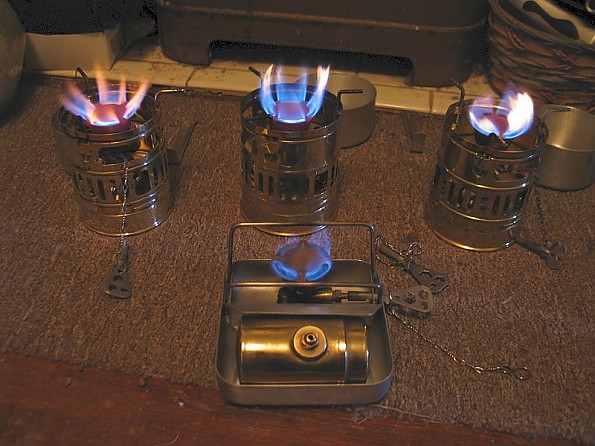
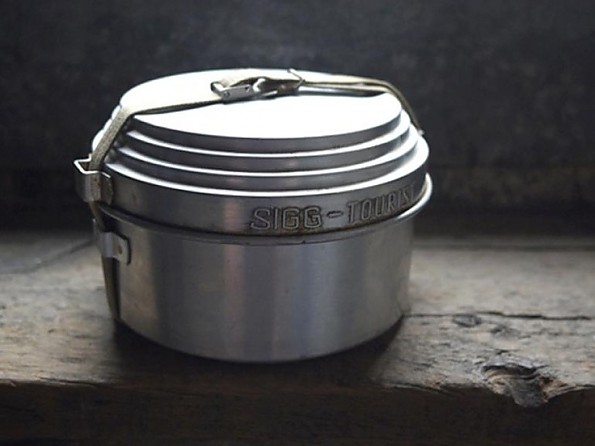
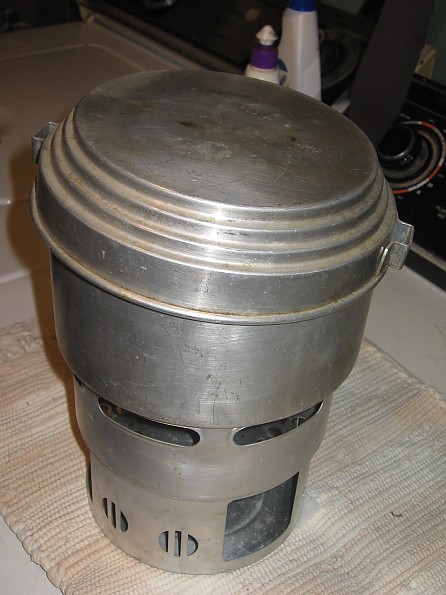
Notice the control keys on the 123's are not on the spindle. THEY GET HOT IF YOU LEAVE THEM ON!!
Be careful if a windscreen is used. Place the screen only where any wind will be deflected.
Strip pieces of aluminum in the Tourister make an adjustable screen. A workhorse. Use some sort of pad under the stove base in colder weather.
Source: bought it new (Bought new in 1960. Second one a year later. Both with SIGG Touristers.)
Reviewed by
Moxieman
+36
February 3, 2018
It is a trusted friend who will always be there for you when things get tough.
Pros
- Reliable
- Inexpensive to use and maintain
- Beautiful brass in a world of boring plastic
Cons
- A little slow
- Not silent
There are times when you need to get something warm into you, and you need it NOW...that is when you will appreciate this stove. Dump some fuel on the top, light it, insert the valve key, put your pot on top, and turn the key when the flames of the priming fuel are almost out...you've got soup!
The perfect stove has yet to be made. This one isn't the fastest to boil water; but it will do the job. Simmering is not great, but better than my MSR XGK. Comparing fuel consumption with my Optimus 8r and MSR XGK, I have found that it is on par with the Optimus and seems to use less fuel than the XGK.
I usually cook two meals per day and also have a cup or two of tea; a pint of fuel will be sufficient for 4-5 days. Although I have used this stove in winter, melting snow at -20°F is best left to the XGX.
All stoves fail! My MSR stuff sack holds a baggie of spare o-rings and other parts...the Svea is much lower maintenance. If you occasionally put a little carb cleaner into the fuel tank, remove and clean the jet (and where it sits) with carb cleaner, and never run the fuel dry, this stove will be incredibly reliable.
The fuel cap gasket will eventually need replacement. I cut my own from a sheet of material purchased at the hardware store.
This stove runs on Naphtha...AKA Coleman Fuel. It can be obtained at sporting goods and hardware stores. If you fill the tank before starting your cooking, you should never run out during a meal.
Source: bought it used (Yard sale for $9 including the Sigg Tourist cookset)
Reviewed by
Bradford Benner
+154
 August 11, 2016
As others have said, super simple. But most are wrong saying it is heavy.
Pros
- Very simple
- Little maintenance
Cons
- Tricky to assemble while lighting
- Not real stable
I have an old 123 and a newer 123R. The 123 is significantly lighter. I don't carry the silly aluminum top/cup. The stove full of fuel weighs 509 grams. With an MSR 325 mL bottle, the total stove and fuel bottle and fuel weighs 850 grams. Compare that to my MSR SuperFly canister stove. The stove is 175 grams but with two canisters weighs 889 grams, giving about the same burn time as the full Svea plus the 325 mL gas.
I think the Svea is somewhat unstable with its small base, but it is about the same as a canister stove, which I find unstable as well. Neither are nearly as stable as a Coleman single burner or, the best, a Trangia 27.
If you carry full length wooden matches you can fill the priming cup and assemble the wind screen, then light. If you use a lighter, you will need to light the priming cup and then assemble the wind screen, which can be tricky.
In my opinion the Sveas, Trangias, even Colemans are much better than the MSR WhisperLite type stoves, which are complicated and require constant maintenance. I carried the stupid rebuild kit for several years for my Whisperlight, but when I actually needed it I was not able to save the poor quality pump. I threw the stove away.
I do not carry canister stoves any more. You never know how much fuel is in the canister, so you end up buying new ones for every trip. Then the garage has ten partially full canisters which you don't carry because who wants to start a trip with half empty canisters. Besides, I see the empties strewn through the woods when people don't want to carry the empties home. I think they should be banned from the woods.
Source: bought it used
Price Paid: $40
 Reviewed by
Gary Bowen
+212
May 5, 2022
I've had my SVEA 123 (not R) stove since the early seventies. It's never failed me on a camping trip. Apart from the priming, super easy to use, and it even simmers.
Pros
- Never fails to start
- Easy to prime
- Simmers
- Looks great
- Tucks away easily in my pack
- MSR canister base fits snugly.
Cons
- Weight, but I never knew anything else
- Polishing, but it's a good ZEN session
My SVEA was one of the highlights of any of my modest backpacking trips. Hearing that jet burst of flame meant a hot, well earned meal was close at hand and marked a welcomed inflection point to the end of a sweaty day on the trail.
I have an MSR Dragonfly, and it's a great stove, but requires some setting up of course. The SVEA, just set it on a small solid surface is all that is required.
After sitting unused and collecting tarnish, I thought it was about time I give it a good looksee. Discovering that the control valve/spindle leaked and ignited, did some searching to try and fix with help from the folks over at ClassicCampingStove Forums. Successful. It only required fresh graphite packing in the spindle chamber of the control valve/key.
Background
I like my MSR Dragonfly because it's so stable and controllable. But my SVEA can't be beat for simplicity and reliability. One can't beat the small footprint either.
Source: bought it new
Price Paid: 30$ CDN?
 Reviewed by
realdam3
+187
April 25, 2019
Old school stove from the last century, great for modern camping.
Pros
- Lightweight
- No pump needed to get it running even in below zero conditions.
- Very few moving parts to go wrong
Cons
- Expensive, even on the used market.
This stove is very simple to operate, you basically pour a little white gas on it and "light it on fire." This causes the fuel in the tank to expand and turn the liquid to gas.
I bought this stove on the used market about a decade ago for $30. It has saved us on more than a few winter campouts in our scout troop. When our normal Coleman stoves would not operate due to the pump seal shrinking in the cold, the "Old Seva 123" always came to the rescue.
Does not have a very large fuel tank, but has enough to bring a covered gallon of water to a boil. You will love the unique "helicopter" sound when it is running. Throws a lot of BTU's for a small unit. I see why this went on many Everest climbs, it just plain works! Takes about 10-15 minutes to heat up that much water, but it surely does the job. The simple controls are a "square slot" key. You can turn the flame way down to simmer. I use it mostly on "full throttle".
One tech tip: REMOVE THE KEY while running, otherwise it gets HOT! You only leave it attached once, and you learn your lesson.
It is made of solid brass, and I would guess will still be around after I am dust. Very packable, basically the space of a coffee can. Not the smallest, but for its size, certainly can go the distance. When using larger pots, you need a steady surface to keep the pot steady.
This stove has been around for over a century, and while it's still made new, you can sometimes snag a good deal on the used market. We don't camp without it!
Background
I have been Boy Scout camping for 20 years, have gone through a lot of gear that didn't live up to the hype; this stove is the "real deal"!
Source: bought it used
Price Paid: $30
 Reviewed by
Davy J
+23
April 19, 2012 (original Aug 31, 2010)
Great little stove that lasted forever, until I added a windscreen and overpressurized it!
Pros
- reliability
- adjustable flame
Cons
- weight
- stability
I loved this stove and it worked pretty well for about 20 years—very reliable. That is until a recent trip to Yellowstone. A friend had a spare windscreen and I placed it around the 123 and started cooking. After about 30 minutes we heard a loud popping noise and the stove became unstable. Apparently the fuel tank had overpressurized and popped out from the bottom.
Luckily the stove did not explode but is forever ruined, as the bottom will not pop back in. I talked to Optimus about this and they told me I was out of luck. I can only think that it was the windscreen that caused this stove to overheat so I would recommend neve using one with the 123.
They offered me a discount on a new one, but honestly it is too heavy compared with other stoves on the market now.
Update: April 19, 2012
I bought my Svea 123 back in the late '80s and used it for backpacking for 25 years. Only once did I need some jet/needle adjustment that someone at REI provided for free.
I primed it in one of two ways
- hold a piece of burning paper underneath the stove to warm the fuel, or
- pour some fuel in the little cup and light it.
Unfortunately, this stove died because it overpressured and the entire fuel tank popped out on the bottom. A friend gave me a windscreen and I was frying some fish when I heard a loud pop. The fuel tank had expanded and there was no fix.
Luckily the stove did not explode. The stove just got too hot—so don't ever use a windscreen with it. I was bummed to lose the old friend.
Source: bought it new
Price Paid: don't remember
Reviewed by
Andy
+23
December 5, 2024
My SVEA is 45 years old. Has never let me down. Is still going strong. Still available new and all parts are still available.
Pros
- Simple operation, no parts to put together or drop/lose with cold hands.
- Bomb proof
- Powerful
- Efficient giving extended burn time
Cons
- Some care re stability required.
To prime I use an eye dropper bottle (fits in the billy set). Set stove on flat surface, add windshield, attach key, check/turn off. Use eye dropper to add fuel to the stoves priming depression, where the burner meets the base. Light it. Wait for the fuel to almost burn off, turn key gently and voila, ignition. Run at half speed for 10-15 seconds. Turn it up.
On my MLTB in 1986 I did not take a flask with a hot drink. My instructor queried this. On our hike, on windy moorland he instructed a member of the party to 'fall over' and told me they were suffering from cold and needed a hot drink. He gave three minutes to produce it. Saw a Dip offering shelter. Threw pack down as a windshield, set up stove, used two eye dropper squirts of fuel on it, light primer fuel. Get billies add one cup of water to pan. Turn stove on, turn it up. Put pan on top. Get cup, add hot chocolate. Add boiling water to cup. Give to injured party. Instructor asks what about the rest of the party. I reply I was carrying 2 litres of water and their drinks were on the go now.
We were all well pleased.
The stove is reliable and fast. There is no assembly required (with cold hands) and you can't lose bits of it (the key is on a chain).
It works in all weather and at altitude.
It is not expensive.
Background
A bit 🙂
Source: bought it new
Price Paid: Don't remember, bought in 1980 in Canada
Reviewed by
Tom Randall
+54
August 20, 2022
I'm 71 years old and planning on hiking a section of the AT next year. I was thinking about the gear I would need when I remembered a SVEA that my father had given me. I dug it out of a canoe box. The stove probably hasn't seen the light of day in over 40 years. I filled it with fuel, primed it, and it took right off. You've got to love a quality item that works exactly as it was designed to do.
Pros
- Reliable as the sun
- Practically indestructible
- Beautiful in design and build
Cons
- Maybe a little heavy by today's standards.
I hadn't seen this stove since I was a teenager. I took it apart and looked at the various pieces. It was very intuitive. I filled it with fuel and fiddled with the priming. (Used the pan as designed, and later using the warmth of my hands like rubbing Aladdin’s lamp. I'm using a tube from a Bic pen as a pipette to prime it.)
Some have mentioned not being able to adjust the flame to a simmer. I haven't found that to be a problem. With the 123R, I can back it down to where I need it to be.
Stability may be an issue, but if you're smart and careful, it isn't a real problem for me.
Background
Used it with my father on short hiking trips in my teens. Haven't used it in 40-50 years, but expect to soon.
Source: I inherited it from my father
 Reviewed by
NJHiker
+443
January 20, 2021 (original Jan 15, 2021)
Worth its weight...in gold.
Pros
- Heavy DUTY—this thing is rugged
- Works—always
- True multi-fuel
- Noisy—scares the beejeezus out of millennial hikers and unlike alcohol stoves, you know when it's on
- Outlasted every pair of boots and pack I ever owned
Cons
- Heavy DUTY—this thing is heavy
- That damned key...(and my hiking buddy)
I've run the gamut with stoves, trying to lighten the load. I always come back to the SVEA 123R. It's worth its weight in gold! My hiking buddy of 45 years says the same thing about his. We bought them back in the '70s before our 1979 AT through-hike.
Rock solid performance. A little dab of "fire paste" is enough to pressurize (and patina) the tank. I once tried a "quietstove cap" but found that ridiculously expensive and cumbersome—so I went back to the standard flame spreader.
I occasionally buy a rebuild kit when I find them, but have only needed one graphite packing seal in the needle valve. I even bought a few extra stoves "just in case" I needed parts or to repair. So I now have Brunton and Optimus versions as well.
The only problems I have ever had was a user inflicted meltdown—the graphite seal flamed out on me on the first night of a 5-day hike...too much or misplaced fire paste caused a jet-like flame to shoot out the valve stem...and the damned key always ends up in my hiking buddy's stove kit! This is what legends are made of...
About 1998, I parked the SIGG kit and started carrying it in a tall "heat exchanger" style 1L cook cup (with the neoprene coozy removed). This setup with a claw grip handle is damn near bullet-proof—this thing boils snow in about 5 minutes.
Background
AWESOME!!
Source: bought it new
Price Paid: seemed like a lot, but probably $58
 Reviewed by
Bob Handelsman
+125
May 22, 2014
Great stove.
Pros
- Everything except its inability to simmer
Cons
- Inability to simmer
I've had several since buying my first one in 1974. The only problem I've had is the rubber gasket inside the cap drying out. Since I've discovered that defect, I've (so far) remedied it by using a Qtip to coat the gasket with vaseline about twice a year.
The stove can set up in a minute. I use a funnel to add fuel. Watch out for overflowing fuel.
I prime my stove with Coghlan's fire paste.
The only drawback is that the stove appears to have only one setting. I can turn the flame down a little bit but not much.
My meals are very simple. I only use it to boil water and it seems to boil water as quickly as my kitchen stove at home.
I use a windscreen ALL the time.
I've never had a problem with stability but I use a Sigg cook kit I bought with my first stove. The stove and the Sigg cook kit are fairly stable but one MUST ALWAYS be careful.
The stove packs inside the Sigg cook kit which I put in a larger pot. All go in a stuff sack which fits into the top compartment of my external frame pack. I am able to pack a fold-up strainer, small box of waterproof matches, lighter, pot gripper, eye dropper (which I used to remove fuel from the stove to place at the base to prime it before I discovered the fire paste) small sponge wipe in a zip loc bag and 1 ounce container of CampSuds in with the stove.
The advertising line by that scotch whiskey, "the good things never change", describes this stove. I wish they were cheaper and more widely available.
Source: bought it new
Reviewed by
Jack
+43
March 29, 2017
Pros
- RELIABLE!
- Tidy and easy to use
- No proprietary bottle or pump required
- Easy to maintain
- Good output
Cons
- Needs good base for stability
Like most liquid fuel stoves, you must learn how to prime this one properly and safely. Once you have that, it will be an extremely reliable stove that is very easily maintained.
While some claim this stove has no simmer control, I wouldn't agree. I can reduce my flame down to a clean burning simmer, repeatedly.
There is a one-star review here that suggests retiring this stove on account of safety. Instead I would suggest that you don't misuse the stove, and do use your common sense. Eg. If you must use the priming pump, don't overdo it. You will find that over-pumping it doesn't work so well anyway.
I have found that many other liquid fuel stoves with fuel hoses, fold out legs, and foil wind shields are finicky, prone to damage (hoses), take up way more space, and are more prone to flaring during the fire-up after priming.
Regarding boil times, I haven't measured this but it brings water to the boil in comparable speed to other liquid fuel stoves. If you include the time required to set up other stoves, the Svea 123 compares very well. Its total output is not as great as some others out there, but its burner head is smaller and fuel consumption is respectable.
I pulled my stove apart after 25 years of flawless use and gave the stove an overhaul. It just keeps going and gives me no reason to replace it.
Source: bought it new
Price Paid: $30
Reviewed by
joe
+36
June 23, 2018
Have used my 123R since 1974 everywhere from the Appalachian Trail to winter camping in Yellowstone (true about insulating from snow) and only one problem. Early on I had leaks from the self-cleaning pin. I just removed the pin and it has never leaked again. It is now on the inheritance list for the kids.
Pros
- Simple
- Rugged
- Works
Cons
- Self cleaning pin
Setup: EASY. If you can't do this you have no business in the back country.
Ignition: Using your hands does really work, but the eye dropper is the best.
Ignition: Boiled water and cooked just fine in Yellowstone in winter at 7,600 feet (you can't believe how much water vapor your body puts out at night), anywhere else is cake.
Construction & Durability: Come on, it's over 40 year old and still works great along with my Alpenlite FRAME pack.
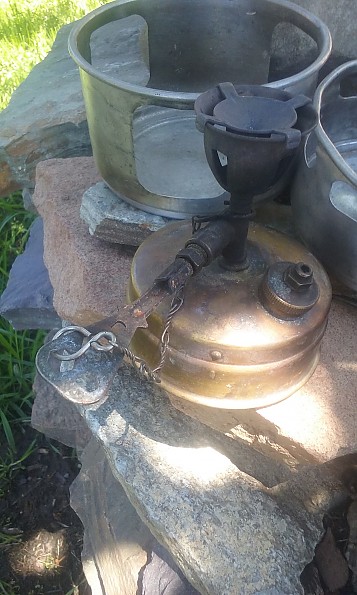
Source: bought it new
Price Paid: damn that was 40 years ago who can remember that
Reviewed by
Golly
+46
March 12, 2012
I have the SVEA 123R and bought it in 1977. It still works faithfully. Never had a problem. Due to weight, I'm considering a Nova Plus or MSR Whisperlite Universal. Should I make a change?
Pros
- Always reliable, no maintenance
- Works at altitude and cold
- Very stable with cookset
Cons
- Can't use outback oven
- Longer to boil water than newer stoves
I love this little stove. A dropper full of white gas in the cup under the generator is all you need to light it. Use a match or sparkie. The flame is somewhat adjustable, but not super low.
I have used the Outback oven with this, but very carefully. I made an extra shield to cover the gas tank and that worked, but over time it melted my windscreen (aluminum), part of my cookset.
It takes 7 minutes to boil a liter of water. Not as fast as newer stoves, but then there's no maintenance either. Works better if you shelter it from wind, but the cookset that was made to go with this has a nice windscreen in it and it makes it very stable.
The stove itself packs small and even though I don't use the supplied windscreen and "pot", I take it along to protect the stove. It doesn't weigh much.
Overall, I like this stove.
Source: bought it new
Price Paid: $30
 Reviewed by
Jim Rodgers
+91
February 28, 2016
Reliable old friend, always there and ready to help.
Pros
- Basic design
- Wind proof, unless in a hurricane
- Uses about any fuel
Cons
- A tad heavier, but worth the weight
This is the only stove I have ever had, so I can't compare it to any other but that should say something there. The flame control is a little touchy, but with use one figures out the system.
I have never poured fuel into the cup to light my 123. I have either lovingly held the cup/control valve cupped on one hand to warm it up or the best way I have found is to carry a straw or small piece of tygon tubing that will just fit over the nozzle.
Put the tubing over the nozzle, open the valve and blow into the tubing pressurizing the tank and then shut the valve prior to stopping your blowing into the tank. You now have a pressurized tank and when you open the valve fuel comes out and is ignitable.
I have yet to have this way fail for lighting the stove. I am in my mid 50's and have used this stove since my father handed it down to me in my late teens and I know my father got it used from somewhere and who knows when, but he was backpacking before I was born. That might give you some idea of how long the little jewel will work.
Source: received it as a personal gift
Reviewed by
Nad Resnetal
+54
May 18, 2021
Svea 123 (since 1968). Never fails. White Gas (naptha). If you travel two weeks from people...you will survive.
Also have Sigg stand/pot. Light. Hot. No plastic. Repairable. Brass! No mess, no smoke, no residual smell. 100% confident (Survival!). Still nothing better. Old acquaintance not forgot!
Pros
- Never fails
- No plastic
- Hot!
- Repairable
- Lasts 50 years (mine)
- Campsite locator (noisy)
- Can be minimal for weekend
- Fits in my pressure cooker (very low fuel consumption with pressure cooker)
- !!! NO FUSS EVER !!!
Cons
- Hard to simmer for pressure cooker...easy to overheat cooker.
- Break your heart when you lose one
- Everybody wants to know about it. Yak Yak!
- Must cook before stealth camping (noise)
Mine has lasted for 50 years. What more needs to be said? I have not met anyone with an older stove (anyone that is actually mobile).
No nonsense!
Used on 90-day bicycle tours. Worst drawback I have found is naptha/coleman fuel/white gas comes in 1 gallon jugs. So I fill a sigg bottle or two and leave rest behind while touring, but every stove has this problem except Sierra Zip. Sometimes I cache fuel for the next time or carry to first campground and trade.
Very clean burning.
Background
I actually have not had to use a different stove since I was 14. Seen plenty, studied them all. Stick with what works (Always works!).
Source: bought it new
Price Paid: Perhaps $35
Reviewed by
Curtis Evans
+146
February 13, 2016
A rugged, no-frills stove that does the job year after year. Buy one and you're done shopping for stoves.
Pros
- Rugged
- Simple
Cons
- Heavy-ish
With a quarter-twist the wind-screen comes off exposing the concave base of the burner. A small amount of fuel or fire-paste is lit. As it nearly burns away you turn the control valve open and fuel flows upward, light that and it sputters to life.
As I usually use it to boil water the limited flame adjustment is OK. Water is boiling by the time I get the dried food and tea prepped so I have never timed the boil. It has never fallen with a medium sized pot on top. The fuel tank will last about two days so I carry a small fuel bottle for refills.
It is about the size of a large can so packing is not an issue for me. Its rugged old-school construction means I don't have to worry about it being banged around in the pack.
This stove has worked for me for at least 30 years in wet, cold, windy, and mountain-side settings.
If you prefer fly rods over spinning gear, full leather hiking boots, down bags, and external frame packs this is a stove you will learn to love.
Source: bought it new
Price Paid: Too long ago to remember
Reviewed by
Pete Staehling
+25
October 30, 2020
Great stove. It always works!
Pros
- Simple
- Reliable
- Easy to use
Cons
- Not the lightest
- Not the cheapest today
I bought mine in about 1972 at a flea market. It saw a lot of use and always worked fine. For some reason it was abandoned for newer designs of white gas and butane stoves. Then more recently I have been using pop can alcohol stoves.
I recently dug out the old SVEA and can't figure out why I stopped using it. It is a great little stove. I think I cited weight, but my Whisperlite weighs almost the same, has a bunch of plastic parts, is less reliable, and more fiddly.
When counting every single gram and not needing to carry fuel for more than a couple days the pop can stoves still have a pretty big weight advantage and may still get some usage, but for longer trips or any time weight isn't super critical the SVEA is likely to be my first choice (alcohol has fewer BTUs per ounce, so if the trip is long the pop can stove loses its weight advantage).
BTU, folks sometimes complain about the "roar." I find the sputtering sound comforting. It lets you know the stove is doing what it is supposed to.
Source: bought it used
Price Paid: $8
Reviewed by
Richards Steinbock
+177
May 19, 2021
I bought my 123 in 1970. Went on many trips until it was put away about 1976. Resurrected about 1990 with fuel still in it. Started right up and has since been on many more trips. Had to replace the fill cap washer once after a spectacular fireball due to its failure while cooking.
Pros
- Almost indestructible, a thing of beauty, easy to prime and, yes, one can simmer with it.
- Many times I was done cooking while my trail mates were still futzing around with their fancy MSRs.
- Have used mine at altitude, at 10 below zero, and every situation in between.
Cons
- Only uses white gas
- Some stability issues
- Overheating with too large a pot or windscreen
- Quite a bit heavier than my 2 oz alcohol stove.
I concur with all the other folks who have heaped high praise on these little beauties. Despite its occasional little quirks it is the best stove I’ve ever used.
I just wish it weighed a little less. Approaching my eighth decade I’m finding I need to get my pack weight a tad lower, so the old 123 is largely relegated to short trips.
It’s also done noble duty on those occasions when we lose power at home.
Background
This beats any other stove I have used or seen in used. It is elegantly simple and simply elegant.
Source: bought it new
Price Paid: Probably less than $30. It was 1970.
Reviewed by
bbgun
+132
November 8, 2010
I keep searching for this stove at yard sales and on ebay. When I get them home, I completely clean them with a mixture of catsup and vinegar and they turn bright.
We always prime them with fuel and warm them up this way and though I have the little pump, it is really not necessary if you are willing to pour a cap full of gas onto the stove and let it burn hot. Once started, it has the characteristic jet engine sound.
I remember my first climb to the top of Mt, Whitney and my first time above tree line and I needed a stove. The guy in the Lone Pine camp store convinced me to buy this and he was sooo right! You can carry this easy, it starts up well, and always gives a hot liter of water in about five minutes.
The thing to remember is not to use it with an Outback Oven because I did and I swear the tank was glowing with the added heat. It was with me forty years ago when I did a solo across the Sierras on skis and there will always be five or six here to give to friends and family as a rite of passage.
It is the best stove made and the simplest to use once you figure them out with some practice. Hope this helps!
Price Paid: $30
 Reviewed by
Steven Sanborn
+442
September 17, 2021 (original May 13, 2021)
Simplicity and brilliantly designed.
Pros
- Fuel is easy to obtain
- Self pressurizing
- Works very well at very high altitudes
- Longevity
Cons
- A bit heavy for stoves today
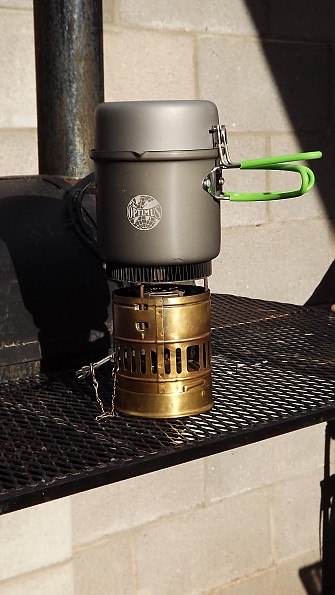
I use this stove with the Optimus Terra HE cook set. It reduces boiling time considerably.
Bought new in 1973, it continues to work with no problems at all. I now use it now on shorter excursions because of my age but still enjoy the jet-engine burner roar. I do want to mention you do not have to put your fuel tank in your sleeping bag in extreme cold or altitudes. This device will fire up every time.
All I can say is you will not regret owning a reliably designed unit that does what it's supposed to do. Oh, did I mention it is beautifully crafted from brass?
Background
I have used this stove (on and off) for 48 years and have never had any issues firing it up.
Source: bought it new
Price Paid: $50 (maybe) too long ago ....
Reviewed by
Botox
+32
August 10, 2006
This is one of those products that just will not quit. I bought mine in the mid '80s and just returned from a backpacking trip to Mt. Whitney where the stove preformed as well as it did back then. Nothing has ever gone wrong with this stove.
I painted the original pot that was included with bar-b-que paint when I first purchased it and it is still in great shape.
When I first bought it there were alot of "lightweight" stoves just starting to come out and after using it once or twice, I thought it was maybe too heavy, too this, too that, but as time passed, I realized that it is reliable and long-lived because of the weight and simplness of the stove. There is not a bunch of setting-up or unfolding to do in order to get to your fire. I am very impressed by simple design that works well.
I sometimes want to go out just to be able to enjoy this stove. I have tents, boots, and backpacks that I enjoy for that same simple design reason. I don't know if they make a product that is this simple and works this well today.
Worth finding a used one and paying whatever they want for it.
Reviewed by
tlanderson44
+77
September 14, 2008
I have another multi-fuel stove that is very good and has not failed me. I bought this stove because it looked neat, like something a Sherpa might have in his pack. I sometimes buy things just for the because factor. This was one of those things.
The first time I pulled it out my mates all did the "Wow that is neat, does it work?" thing. I had test fired the little devil prior to the trip and knew it was a worker. I went through the pre-ignite ritual using some fire starter paste and then stuck the match to the starter. It flared a bit and then settled down to a steady flame. After about 40 seconds I turned on the fuel valve and the thing let out a very satisfying roar.
First product was hot water for a cup of tea. It did a fantastic job of boiling the water in record time. It earned the OOHs and AAAhs of those present. I had several offers to purchase, but turned them down.
It is a great little stove—reliable, economical, and burns hot, even in the Tetons on a cold winter day or night. It doesn't take up much space and is fairly lightweight even with a tankful of fuel.
Price Paid: $89
Reviewed by
Damian
June 13, 2010
The stove is brilliant, compact and works every time very well. I have had the stove for several years, though starting it especially for the first timers can be challenging. I collect and use all my stoves, as one would know it's integral part of bushwalking and many national parks are going to stove-only policy.
From the time you go into the outdoors to have a hot meal at the end of the day, after hard physical activities and a hot cuppa, adds to the enjoyment, and each stove I have has a special memory of time gone by.
The svea 123 has been the best purchase for bush walking I have ever made. It cooks a meal quickly, minimal parts that can be damaged but never have. Some would say there are better stoves out there, and I know you might save a few more grams in weight or have better flame control, however unsurpassed reliability is the svea and Optimus products generally in my opinion. The stove continues to maintain its faithfulness, unlike some women in my life.
I can see I will be handing this to the next generation in another 30-40 years, as I think you would have to pry it from my dying hands.
Price Paid: 140
Reviewed by
Olmedo Correa
+39
September 24, 2020
Have two of the original Sveas (1970 and 76) with the complimentary Sigg Tourister, which is a great pots/pan/dish and holding base for the stove. All still work fine in 2020 and are a wonderful piece of backpacking history. Never had a problem with mine but did retire them and don't use them as much since purchasing a Jetboil this summer.
Pros
- Durable and always works
- Easy to use with a little common sense
- Easy to pack
- Can simmer after getting to know the adjustment
Cons
- Not as fast of a boil if you in a hurry, but not an issue.
See above comments. It is 2020 and there are many other choices, but can't go wrong with old school Svea if using white gas. A nice oldie but goodie, even with my Jetboil purchase this summer.
Background
Been backpacking since 1970 and the Svea has always taken care of me.
Source: bought it new
Price Paid: $35
 Reviewed by
300winmag
+1,503
January 15, 2021
Beautifully designed stove used by tens of thousands of backpackers since the '60s. Now outdated.
Pros
- simple to operate and repair
- compact
- "beloved" by many
Cons
- noisy
- slow to prime
- lacks stability unless in SIG TOURIST base
This was my first backpacking stove and, like Erich, I bought it in '72 along with the SIGG TOURIST cook kit/windscreen.
As soon as it came out I bought the tiny aluminum pump and mating fuel lid. That made it far easier to prime. No need to heat the bottom with a candle first. Just pump, turn on the fuel valve for two seconds and close, light fuel in depression on top of the container, wait 10 seconds and turn on fuel while it sputtered to a roaring blue flame. Voile'!
Background
Nothing but good!
Source: bought it new
Price Paid: $35 (1972)
Reviewed by
JohnH
July 20, 2010
This stove model debuted in 1955, so it isn't 100 years old, despite what you read on the web.
People like to obsess over gear weight, but do a few ounces more or less really matter? Maybe if you're out for a really long time without resupply, but the average backpacker is more likely doing 3- or 4-day weekend trips, or maybe a full week once in a while. If you're worried about weight, lose some body fat.
One reviewer complained that because this stove has slower boil time it will burn more fuel. This is like saying that if you drive 30 mph instead of 60 mph, the journey will take twice as long, therefore you will use twice as much fuel. The reality is that stoves with quicker boil times put out more heat by burning more fuel in less time. The amount of fuel to boil a quart of water is about the same either way, and is far more greatly affected by weather conditions and how well the stove is screened against wind.
This stove's strong points are simplicity, reliability, and nostalgic charm. It is not a 10k Btu volcano. This does not make it inefficient, it just means you have to wait a few more minutes for the water to boil. You got a train to catch or what?
Reviewed by
Jeff Hall
December 16, 2009 (original Oct 26, 2009)
Will depart Springer Mountain, Georgia, late Feb '10 for Mt. Katahdin. I purchased this stove in 1981 as an instructor in the "Wilderness Skills" program Vanderbilt University, Tennessee. Thankfully, it has served me faithfully the last 25+ years on many hikes and travels.
My last weeklong hike March '09 through Joyce Kilmer National Forest (with surprise snowdrifts) proved once again. Considering weight, reliability, functionality and value, the svea 123 is without a doubt the best kitchen tool available on any serious hike. Do not use anything else unless you enjoy eating freeze dried food with cold water on occasion...
Jeff
Update: December 16, 2009
Never have I owned anything that ALWAYS WORKS. This little brass stove has been my best friend for my entire backpacking lifetime. I would never consider anything else as it's so very dependable. Never once has it let me down!
It's beautiful, simple, light enough, and is the best all around cookstove you will ever own. It will be with me on my AT thru hike in 2010.
jeff
Price Paid: not sure—in 1983
Reviewed by
JIM FROM IDAHO
February 21, 2010
This is our second Svea. The first one is still going strong after many years and has been trouble free. I use white gas only. Priming is easy with an eye dropper (just use a little gas from the tank).
As advertised runs 50 minutes at full blast. Did a simmer test on a full tank (4.5 ounces, measured). After running 3 minutes full blast, turned to lowest setting that would still produce a blue flame. Ran for 2 hours ( adjusted the flame 3 or 4 times ) and had a little over 2 ounces fuel remaining (measured). Would estimate it would simmer well over 3 hours.
This one spends a lot of time in a horse's saddle bag (inside of an aluminum can from a M1950 stove). The pot supports will adjust to fit oddball cook pots (Swedish mess kits, canteen cups, etc...). No bottles to hook up, no pump to mess with, no o-rings to leak (has one rubber washer in the tank lid).
It just works every time, no matter what.
Price Paid: $83.81
 Reviewed by
Outback Aussie
+32
June 14, 2011
How many things do you own that always work as they're supposed to, and always have worked for more than 30 years? Probably not too many. This little wonder is in that elite company.
I inherited mine from my Grandfather who used it to boil water on his rowboat when we spent nights fishing. It always worked. It has been on the Larapinta trail in Outback Australia and always worked. It has been beach camping on Fraser Island, mountain climbing in the Snowies, and car camping all around Australia and always worked.
The way I see it, the little additional effort to light it and the extra minute it takes to boil a litre of water gives you more time to enjoy the view. It is the reliability (and the stored memories of all the places it has been faithfully looking after you and keeping you company) that make it a priceless piece of kit. Only my Trangia cookset has shared the same good times.
Price Paid: Nothing—it was inherited
Reviewed by
Jerry Lanford
+20
June 7, 2014
Great little stove for any trip. Classic design and easy to use.
Pros
- Reliability
- Compact
- Easy fuel access
Cons
- Weight
- Needs larger pot
- Easier access to fuel pool
Just bought this after anticipating and contemplating the purchase. I have about 8 different types of stoves. I have an old Optimus 8R and have had for 30 years. Thought I would take the plunge and get the older model to see how it works.
Tried it in the yard and loved how easy it was to light, quickly it boiled water, and how compact it was. Just wish the pot was bigger with a lid stored somewhere.
Source: bought it new
Price Paid: $90
 Reviewed by
Bill Hudson
+325
October 11, 2015
Bombproof
Pros
- Simple
- Reliable
Cons
- Bulk
This stove is bombproof. The design has been bombproof for the 60 years this stove has been around. Simple to set up.
Simple to prime. Simple to use. Durable always. Reliable every time.
If you have the fuel, you'll have a burner. Works well every time with no monkeying around and fidgeting with the stove. Perhaps old school, but sometimes the old ways really are the best ways, and this stove falls into that category. Buy one and never look back.
I finally gave away my MSR Whisperlite Internat'l since this Svea is THE stove. I should have bought a Svea 20+ years ago when I bought the MSR, but I foolishly thought newer is better. The Svea demonstrates that is not always the case.
Source: bought it new
Price Paid: $82.50
Reviewed by
rfdude
+40
August 26, 2007
I purchased my 1st SVEA 123 in early 80s. Can't remember the price. It is still going strong. After 25 years of use never failed once; Can't say enough about this stove.
Simple design, reliable, easy to light, clean up, maintenance, in any conditions. Have tried a variety of liquid and canister stoves and always keep coming back the my Svea.
Hard to find these days and the price tag is up to $80, but so are most stoves now. Not sure how long these will be sold, so I recently bought a second for the next 25 years: http://www.packstoves.com/index.htm
Does anybody knows were to purchase the Sigg Tourist set? Mine still works fine, but is getting a bit dinged.
Most of the hikers/climbers I met seem to feel very positive about this piece of equipment.
Price Paid: ~$80
 Reviewed by
Old school camping
+22
October 22, 2011
I bought this stove in 1974 for $50. That was a lot back then. But well worth the price.
I would say this is the most important part of my hiking/pack packing adventures. It not only makes a great cook stove but can warm up and dry out a tent in very short time. I was on a 7-day trip. It rained for three days. I would fire this little wonder up and in no time my tent was dry and warm.
Make sure you have good ventilation when using in your tent. When I got divorced a few years ago I made sure I took my Svea with me! Had it since I was a kid.
I can't say enough about this stove...what are you waiting for? Go get one or two! They're the best!
Price Paid: $50
Reviewed by
Doug De Jong
August 10, 2006
The best backpacking stove ever made. I have had mine for more than 25 years. It has never failed me. It's been everywhere in all kinds of conditions and I have always had a hot meal. Trouble free, simple, compact and tough.
It is the only backpacking gear that I have never replaced. I have never replaced any parts or had to do any maintenance to it. It was stored once for a couple of years. I bought it back out and it fired up in seconds, no problems.
I can't imagine going on any trip without it. I would choose this stove again without even thinking twice. It is still available at A & H Packstoves in Tustin, California for $80. You can find them on the web at www.packstoves.com.
Price Paid: $50
 Reviewed by
Jeff RMNP hiker
+29
March 22, 2012
This stove is timeless. There are hundreds of reviews over many forums and throughout the ages. This stove keeps on shining.
Pros
- Reliability
Cons
- none
I would sacrifice a few ounces for reliability over the 30 years I have had mine. My Dad's is now in my son's hands. Dad's is now 35 years old. Only thing I have ever had to do is replace some washers.
I have a PocketRocket and a Jetboil. For simplicity and reliability this stove beats them for all around stoves, especially in cold weather.
Source: received it as a personal gift (Dad bought it for me 30 years ago)
Reviewed by
Dennis Albee
August 17, 2008
I've used my svea 123 stove several times a year for 38 years, and it has never failed me. All I do is burn it empty at the end of the season, and it fires up every time the following year. I've never had to service the valve or anything else. As for as I'm concerned, it's the best stove ever.
The only problem is, I'm trying to replace the cookware made for the stove, that nestles together, along with a wind screen. I am unable find a replacement. Sigg used to make aluminum pots, windscreen, and a base made specifically for the svea, but evidently, no longer.
If anyone knows a website, please let me know.
Thanks, Dennis (Sacramento, CA)
Price Paid: $20
Reviewed by
Tom Murphy
November 3, 2009
The recent post inspired me to add my thoughts.
The SVEA 123R is the most reliable piece of hiking gear I own.
I wanted a single stove for year round use. For me, in New England, that means down to -20 deg F.
There are trade-offs:
- It is heavier than most
- It is nosy
- You need to learn how to prime it
- You need to bring an additional fuel bottle for longer trips
- You need a gentle hand to make it simmer
When you need a warm drink or a hot meal, you know this stove will light.
This is the only backpacking stove I will ever use.
Price Paid: $85
Reviewed by
WY2L
+26
April 8, 2011
Bought one in 1967 and it has never failed me. I had a love affair with MSR stoves when white gas got hard to find (see my review of the MSR WisperLight International), but now see the error of my ways.
When starting, the best advice I got on the trail was "there are old pros, and bold pros, but no old bold pros". Just sprinkle a little white gas on the top and strike a lit match to it.
This stove just works. Dependable. No issues. Too bad other things in my life did not work as dependable (cars, boots, cameras, ex-wife, cars, etc).
Price Paid: $11.95 in 1967
Reviewed by
George Nichols
November 2, 2009
Old School: A classic from a time gone by and the best damn 19oz of compact brass you can pack if you want a hot meal and don't mind a bit of weight (Brass ain't light) or performing the ritual of the manual prime (You gotta spend some quality time).
This thing is about as bullet proof as you can make a stove and the sound when it is fired up is like a cross between a blowtorch and a helicopter. One moving part, a valve using a graphite packing (bushing) as a valve seal. Not the fastest stove.
Price Paid: $79
 Reviewed by
Jeff Cheesman
+26
August 25, 2022
Best part of this stove is its simplicity, and it is just plain bombproof.
Pros
- No moving parts to speak of that need replacing
- Just simple to use
Cons
- Do not know of any cons with this stove
Bought this stove after reading Colin Fletcher's book on hiking. Fletcher hiked all over the world and sang high praise on this stove. After that I researched it and was convinced this was the stove for hiking and for me.
Background
At home it has been my backup stove and getting ready to use out on the trail
Source: bought it new
Price Paid: $110 new
Reviewed by
Uncle Joe
October 1, 2007
Oh, my. It's simple, beautiful, and utterly reliable. Burns almost anything. When's the last time you could call a stove elegant?
It's exciting to overprime when lighting it (if you have one you know what I mean—heh heh) and fun to listen to (has a roarer-type burner, and a distinctive one at that). Takes about 1 minute to set up and light.
Look around other gear review sites and you'll see that Svea 123s have an almost cult-like following. Get one and it'll still be around 50 years from now for your grandkids.
Reviewed by
Gary Dolan
+23
January 20, 2021
In 1973 we used it at sub 0°. We used it above 14,450 feet. We used it in 60 mph wind. It never didn't work. We always thought it was the perfect stove for the PCT.
Pros
- Never failed.
Cons
- It stopped working after 45 years.
Source: bought it new
Price Paid: ?
Reviewed by
Mark Sanders
+12
March 9, 2011
SVEA 123R Rocks. Mine has been through thick and thin for over 30 years and still starts first time.
Best comment would be hiking the Grand Canyon someone unfamiliar with how the thing starts panicked and threw sand on it to extinguish the flame, which it did. Much to everyone's delight we shook it off, blew on it, rubbed it like a genie's lamp, and POOF started first match.
Rain or shine, thick or thin, SVEA 123's are Awesome.
Price Paid: $65 back in 1976
Reviewed by
Hikkerman
+109
November 18, 2010
This stove has never failed me. It may be a little heavier than other, newer stoves, but when it counts (like in the winter or other bad weather) it never fails to light.
Yes, it is noisy and smelly compared to the canned gas stoves. It has no maintenance except maybe to replace the fuel cap gasket once in a while.
I have had mine since 1983 and it is still going strong.
Price Paid: Don't remember-too long ago!
Reviewed by
Woody
November 6, 2009
I used to use this stove all the time. Loved it when in full time use. I put it a way for about fifteen years and only recently brought it back out. Dumped the old fuel out and replaced with new, whamo, fired right up and purred like a kitten. What more can one say about a product this wonderful and reliable?
Price Paid: ? bought it in 1976
Reviewed by
Eric M. Csaba
April 6, 2006
Simple, brilliant, and now very hard to find!!!!
I have had my stove for 20 years++ and used it more than I thought it would last! I still have the replacement kit in the plastic. A little bit of cleaning and care when using.
Simply the best stove ever made. If you can find one, buy it. You'll never regret it...EVER!!!
Price Paid: $20
Reviewed by
Michael Walker
April 2, 2008
I purchased this stove in 1974...for those folks that don't do math, that was 34 years ago. I can't remember how much I paid for it. I used it for 28 years in the Army including Desert Storm. My Svea isn't nearly as shiny as it use to be, but it still works like new and it has never failed me.
Reviewed by
Desert Dog
 December 22, 2009
This is a good stove and the design has been around for 100 years, but let's face it there are much better choices out there today!
The Good:
- Reliable and Durable. I've had mine 30 years and with minimal maintenance it works just as good as it did when it was new.
- Inexpensive. You can find this stove for under $80 on the net.
- Built-in wind screen. Much nicer than the roll up aluminum screens.
The Bad:
- Heavy. Stove is 4-6 ounces heavier than competitors. Not much maybe but those ounces add up fast!
- Slow boil times. Stove took 3:30 to boil one cup of water. That was 75% longer than my MSR. I don't know about you, but I don't want to carry 75% more fuel around especially on a multi-day hike! That kicks the stove's weight penalty up to 2 pounds or more for a week long hike.
The Bottom Line:
Great stove if you want a piece of hiking history, but if weight and efficiency mean anything to you then get something else.
Reviewed by
rik_uk3
+20
April 12, 2006
Now a discontinued model (but still available if you shop around), this is perhaps the greatest all round stove ever made. They just keep on working, year after year. Go get one while you can.
Price Paid: $25
Reviewed by
Bill Palmer
 May 15, 2010
I have had an Optimus svea 123 with the Sigg Tourist cookkit since 1977. It was a gift. I have NEVER been able to get it to work right. Nor have others. So it may be valuable to someone for parts. Let me know.
Price Paid: $100
Reviewed by
gprice06
+8
 March 22, 2012
This stove and similar were rendered obsolete and retired along time ago for good reasons.
Cons
- fuel tank under the burner head represents a hazard
This stove and others very similar to it with provisions for pressurizing the fuel tank were deemed so dangerous by MSR that it was the major incentive to develop the XGK.
A larger pot or prolonged use would cause the fuel tank under the burner head to overheat. In the case of the pressurized versions the result would be an ignited flame front into the user's face.
While the 123 does not have a pressurized tank there were seam failures and injuries reported. I would strongly suggest retirement for your stove.
Reviewed by
Jerry Cox
July 9, 2008
I bought this in 1964 for $9.95 and it was expensive then. It has served me well and I bought several others for use for trips that I have guided.
Problem...I can't find a replacement fuel wick. Any suggestions???
Price Paid: $9.95
 Reviewed by
android
+181
October 17, 2010
Simple, cool, classic, and it can simmer like a champ. I use the Snow Peak titanium cup instead of the provided aluminum one, as the Snow Peak one slides right over the stove perfectly.
Price Paid: $85
Reviewed by
Jim Trueworthy
+22
March 29, 2006
Best stove ever made. Period.
Price Paid: Don't remember
Your Review
Where to Buy


You May Like
Specs
| Price |
Current Retail: $144.95 Historic Range: $65.95-$144.95 Reviewers Paid: $8.00-$110.00 |
| Stove Type |
liquid fuel |
| Fuel Type |
white gas |
| Average Burn Time |
50L |
| Fuel Consumption |
120g |
| Average Boil Time for 1L of Water |
7 |
| Power in kWh (=BTU) |
1400 |
| Height |
130 mm |
| Diameter |
100 mm |
| Weight |
550g |