
Headlamps
Top Picks
How we choose: The best headlamps highlighted here were selected based on 1,806 reviews of 165 products. Our top picks are those that are readily-available in the United States and have received the highest overall ratings from reviewers.
How we test: Trailspace is powered entirely by our community of readers. The reviews posted here reflect the real-world experiences of outdoor enthusiasts just like you.
If you've used a headlamp that you think should be listed here, please share your experience.
Disclosure: Trailspace never accepts payment for gear reviews, product placement, or editorial coverage. When you buy through affiliate links on our site, Trailspace may earn a small commission, which helps cover the costs of running the site.
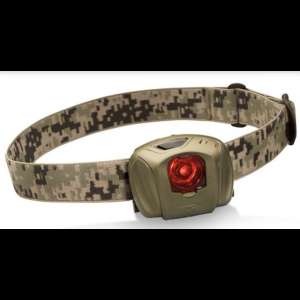
Princeton Tec Quad
 (10 reviews)
 Featured review
by Angie O'Plasty
Featured review
by Angie O'Plasty 
I have been very happy with this headlamp. It is bright enough for night hiking and the angle can be adjusted depending on what you need to see (or to keep from blinding your hiking partner when you turn toward them). The low-battery warning is a nice feature. I also like that this light is water resistant; this is important for a hiking headlamp because sometimes one ends up hiking in rain and it may happen to be dark out as well. My only complaint is that it is kind of hard to open the battery compartment. Maybe this part of the design is necessary for water resistance, but it does make battery changes a bit of a pain. The good news is that this light doesn't go through batteries very quickly.
Read more: Princeton Tec Quad reviews (10)
Princeton Tec EOS
(13 reviews)

Featured review
by Strahwk
I currently have two of these headlamps. One is used for hiking and the other I wear on my hardhat at work. For the price, weight, and size, I am very pleased. The lamp I use for hiking is roughly 3 years old and is as good as new. It throws sufficient light for any task in the woods, and I have used it for many night hikes, especially in the winter. As others have noted, the tilt adjustment for the lamp seems a little weak. For the lamp I use hiking this is not yet an issue, even after 3 years, partly because it is not used heavily.
Read more: Princeton Tec EOS reviews (13)
Princeton Tec Fred
(4 reviews)
 Featured review
by Bill "L.Dog" Garlinghouse
Featured review
by Bill "L.Dog" Garlinghouse 
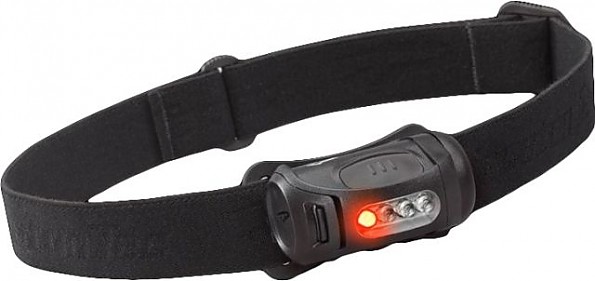
A light, well-made headlamp with bright, focused beams, and a red light mode. An intelligent switching pattern becomes intuitive with use. Made in the USA.
Reasons to Buy
- Has a red light mode
- Intelligent switching
- Bright, focused light
- Lightweight
- Made in the USA
Reasons to Avoid
- Headband too small for some
- Battery compartment hard to open
I've had a few headlamps before this one. In my first section of the Appalachian Trail, I took my Black Diamond Cosmo LED headlamp. It had two side LEDs for a flood effect, and one central 0.5-watt LED with a conical reflector to focus the beam. It was a fine unit except for one thing. It didn't have a red light mode. Now, many like red light to protect night vision. But if one's hiking the AT, and turns on a white light inside a crowded shelter after dark, they are often called names, have their sanity questioned, and are generally ostracized from the community of hikers.
Read more: Princeton Tec Fred reviews (4)
Explore more top-rated headlamps from Princeton Tec:
NiteCore NU33
(1 review)
 Reviewed
by Shane
Reviewed
by Shane
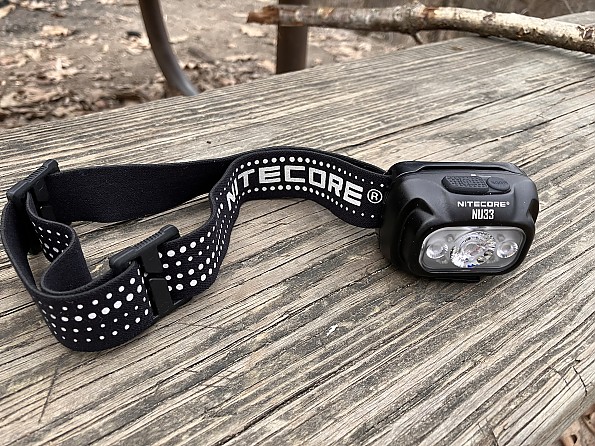
The Nitecore NU33 is a legit headlamp for various uses. It is lightweight, bright but dimmable, very water resistant, and the battery lasts a long time.
Reasons to Buy
- Bright
- Comfortable to wear
- Lightweight
- Good battery
- USB-C charging
Reasons to Avoid
- The various button functions sometimes are confusing.
I've used this Nitecore NU33 headlamp for many different long-distance backpacking trips. It has served me very well. I got this one because it was rechargeable with a USB-C cord—it doesn't need AA or AAA batteries. I also got this one because Nitecore is a reputable company that makes good lights. The main center spotlight on bright. Like other headlamps, the Nitecore NU33 has various lighting modes. This one includes a spotlight option, a diffused light option, and a red light option.
Read more: NiteCore NU33 review (1)
Fenix HM70R
(1 review)
 Reviewed
by Wolfed
Reviewed
by Wolfed
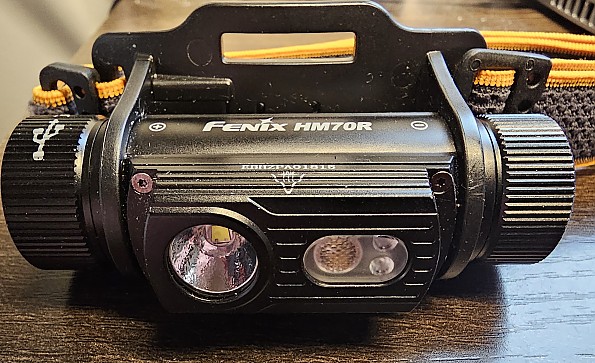
Rugged, long run time, waterproof headlamp
Reasons to Buy
- Multiple light output modes
- Long run time
- Rugged
- Waterproof
Reasons to Avoid
- Heavy for backpacking
- Button press to turn on not immediately obvious for those not familiar with lamp
When doing anything, especially when I will be away from civilization where potential help if is far away if needed, I like to be as prepared as possible. You will notice that this headlamp is not light by any means at almost half a pound. Then again, it's not marketed as a backpacking light. What you get for this weight though is serious ruggedness, waterproofness, various choices in light output along with run time. You also get something where if you use it mindfully, you shouldn’t have to charge it again while out, even on your longer trips.
Read more: Fenix HM70R review (1)
Petzl TacTikka
(3 reviews)

Featured review
by George McCormic
The compact size and light weight are a real plus. The use of non-lithium batteries won't cause any concerns if you carry this on an airplane.
Reasons to Buy
- Size
- Regular batteries
- Brightness
- Stealthy design
Reasons to Avoid
- Getting used to the switch modes.
This was purchased to replace an older headlamp. I like Petzl products and was looking for a bright compact light that was not too "flashy" and had minimal functions. This model does the trick. This light was purchased as a backup for some ice cave exploration and glacier hiking in Iceland and because of the concern regarding carrying lithium batteries for air travel I was looking for a light that used non-lithium batteries. On lower settings this light is stingy on battery use and it worked well in cold wet weather. I plan on purchasing a second model as a spare to replace my older AA headlamp.
Read more: Petzl TacTikka reviews (3)
Petzl Tikka
(10 reviews)

Featured review
by Jamwat
This headlamp has good battery life, is fairly durable, and comes with an affordable price. The only drawback is the highest brightness setting, which isn't incredibly bright, but given the size and the price, it's a great buy.
Reasons to Buy
- Affordable
- Durable
- Good battery life
Reasons to Avoid
- Not very bright
This headlamp offers multiple light settings and uses the batteries well for each setting well. It's also durable, though the casing can open if given a significant drop. It's easy to operate and offers good functionality for low-demand tasks. The only drawback is that the highest beam intensity isn't that bright. All this considered, the price is fantastic for the quality of the product and, at the price, you can't do any better. This is excellent for reading at night or walking around camp. It's isn't a high-end technical headlamp, and it doesn't pretend to be. If you're looking for a simple headlamp, this is the best one for your money.
Read more: Petzl Tikka reviews (10)
Black Diamond Spot 400-R
(1 review)
 Reviewed
by T.J.
Reviewed
by T.J.
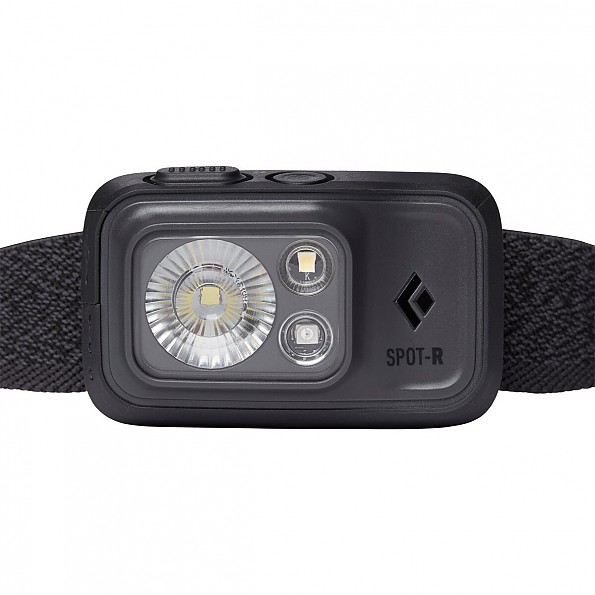
Everything you might need in a hiking headlamp and then some.
Reasons to Buy
- Light
- Waterproof
- A variety of easy to access modes
- Dimmable
- Powerful
- Rechargeable
- Long-lasting charge
- Smooth direction adjustment
Reasons to Avoid
- Two buttons needed to lock/unlock
- Unnecessary "Power Tap" feature
- Headband may be too tight for some
- Not compatible with alkaline batteries
As most of us know, there are some who REALLY get in to headlamps and can take crazy deep dives. That's not me, but I do night hike a lot and know the features I need/like so, when comparison shopping, it's a matter of maybe giving something up to get something else. And the Black Diamond Spot 400-R ticked almost every box for me. I've only had it for about six months but the other BD lamps I've had have all shown excellent durability so I expect the same here. I really like rechargeable lamps and have found this to charge quickly and hold that charge.
Read more: Black Diamond Spot 400-R review (1)
Petzl Noctilight
(1 review)
 Reviewed
by Vladimir Gorbunov
Reviewed
by Vladimir Gorbunov
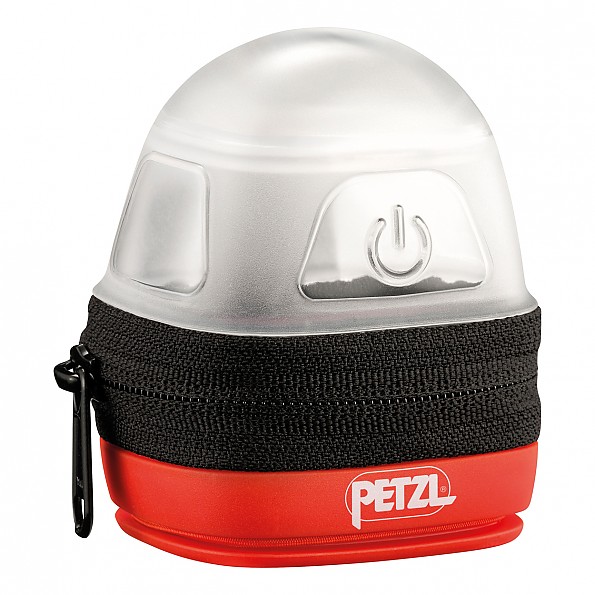
Useful addition to a small Petzl headlamp, which turns it into a versatile lantern. Nice to have for those who need a night lamp or simply a soft light source in their tent or at picnic table.
Reasons to Buy
- Creates wide and soft beam pattern
- Various possible applications
- May be placed on surface or hung somewhere
- Offers good protection against damage
- Leaves access to lamp controls
- Useful as a nightlight
- Lightweight
Reasons to Avoid
- Reduces overall light output
- Quite premium price
- Quite large dimensions
- “Loud” zipper with metal puller
Usually we travel in backcountry with our child, and it’s necessary to have a night light in the tent. Our two Petzl Tikka R+ headlamps don’t fit well for that, as they are too powerful, and even the red light doesn’t work well as a night light. Also we needed a diffused light for using inside the tent — while it’s always possible to hang the headlamp on the clothesline, its beam pattern is too narrow for such a use case. Third, it’s always nice to have a diffused light source in the camp (e.g.
Read more: Petzl Noctilight review (1)
BioLite HeadLamp 330
(3 reviews)
 Featured review
by FromSagetoSnow
Featured review
by FromSagetoSnow
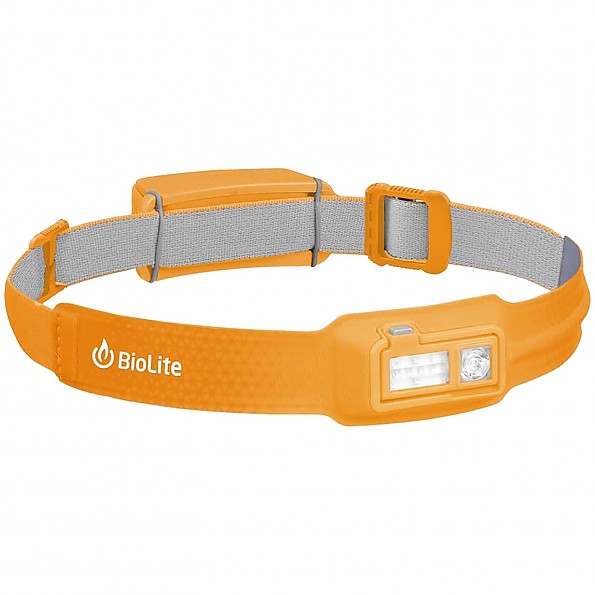
Thin, light, balanced, rechargeable, bounce-free—put the Headlamp 330 on the buy-list. The technology is advanced enough that rechargeable headlamps are finally a good deal. You can't get this much light in this small of a package anyplace else so far.
Reasons to Buy
- Clean, shadow-free beam
- Several modes
- Intuitive operation
- USB charge
- Only one button
- A battery next to your skin keeps it running well in the cold
Reasons to Avoid
- Too small to fit over a helmet well
- Small button not good for gloves
Remember when a 90-lumen headlamp was the best thing ever? Say hello to 330! Winter is a time when runners have to run in the dark to get their miles in. Short days mean you need a headlamp. Most flashlights and headlamps are little more than a container for dead batteries and don’t work well for running; they are heavy and made only for distance. The Biolite 330 provides you with as much (or more) light as your favorite Petzl or Black Diamond lights and comes in a teensy, rechargeable package that you’ll actually want to wear running.
Read more: BioLite HeadLamp 330 reviews (3)
More Reviews of Headlamps
Trailspace reviewers have shared 1806 reviews of 165 different headlamps.
or add yours
Other Types of Lights
Find more lights reviewed in these related categories:
Flashlights
Battery-Powered Lanterns
Fuel-Burning Lanterns
+3 more types
Review Your Outdoor Gear
If you've found this site helpful — or if we've missed something important — please consider paying it forward by some of your favorite outdoor gear.
Why? From professional gearheads to outdoor novices, everyone has an important point of view to contribute. will support the outdoor community and help others find the best gear.
Trailspace reviewers are outdoor enthusiasts like you: hikers, climbers, paddlers, backcountry skiers, and trail runners who share our experiences with the gear and clothing we rely on to get outside. Learn more about Trailspace