
The 10 Essentials: Emergency Shelter

While a comprehensive packing list depends on many factors, certain outdoor gear is considered essential whether you’re heading off on an extended backcountry bushwhack or exploring the trails in your local woods. As part of a weekly series, here's a look at outdoor essential number ten:

#10. Emergency Shelter

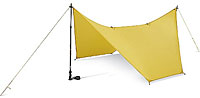
Shelter is a new addition to the classic 10 essentials list and what you carry will depend on the season and conditions. If you’re backpacking, you’ll probably already have a tent, bivy, or tarp, but even on day hikes you need to be able to fashion a shelter from rain, snow, and wind.

Consider carrying an ultralight tarp, emergency blanket, or lightweight emergency bivy sack. In winter conditions, emergency shelter becomes even more important and may mean carrying a four-season bivy or small tent, even on day outings.

    Tips:
  • Each person in a large group can carry a heavy-duty plastic trash bag.
  • In winter, know how to safely build a snow cave.

Have tips or suggestions for this essential? Share them with us.

Read the full "10 Essentials for Backcountry Travel" article in the Gear Guide.

Permalink | Comments (22) | Email This Post

Comments

Seems to me a shelter has to be adequate to provide shelter, whether in an emergency or not. I would not consider a trash bag a shelter, or a simple piece of plastic stuffed in your day pack. Tube tents should be renamed "little wind tunnel".
My experience with a parafly has taught me that it is very difficult to set one up in the type of wind we have here with an approaching thunderstorm.
My personal minimum requirement would be a quality two piece, VENTILATED, rain suit, since I live in an area that can receive significant rainfall. A rain suit moves with you if you need to keep moving, unlike a tarp or tent. In cold weather a good solo tent or bivy with back up clothing would be my minimum requirement since hypothermia and wind chill are very real hazzards, and can be life threatening.
Whatever you choose, you need to know for sure it can get the job done, test it out under real conditions in your backyard, if at all possible.
If you are going to use a little piece of plastic you need to consider what will happen in a downpour with a 30 mph wind and plummeting temps.
I've tried it, didn't work! My more experienced friends got a good laugh, mostly because I did not heed their advise.

Happy trails and stay dry.

Here is a link to a short YouTube video of a guy in a Bothy Bag, which apparently is a common emergency shelter in the UK.

http://www.youtube.com/watch?v=SlyeKWO-Az8

Hmmm. I dunno, a giant shower cap as a shelter? Might work in the UK, but I think I'll pass on the bothy bag idea...

Ha-Ha, Good one!

Bothy bags can be ok, especially where there is no tree cover at all. As emergency shelters for more than one, when you go hiking with people who probably won't be carrying anything, it can make a big difference.
There is also the psychological benefit if you get stuck or lost in bad conditions and just want to rest and drink/eat something until you are ready to start again.
Don't forget that the wind on a microphone sounds much worse than it is in real life, and the chap in the video probably wasn't using the terrain to best effect. If you get behind a large rock say, and tighten down the excess fabric with the weight of your rucksacks, wear something over your head to stop the bag feeling clammy on your napper, then you can make the most of a bad situation.

Yes I'm sure you are right Jon. C, NLees did crack off a good one though. Not so much the product that was funny, but the witty joke.

The Brits love those things from the comments I saw on several websites. Some of them have windows and little pockets to hold the end of a trekking pole so they are sort of self-supporting. Terra Nova makes them in many different sizes; some will hold up to 12 people. I guess they are so popular there because the weather is so bad a lot of the time, day hikers carry them just to get out of the weather if they stop to take a break.

My base protection from the elements consist of a poncho (I have one of the extra long that serves as a pack cover and has tieouts swen into the corners for use as a tarp), an adventure medical bivy, a set of long underwear, and a fire starter. In the non-winter seasons the base equipment will keep me warm and dry.

If I'm going to be in deep snow in the winter I add 2 candles and an avalanche shovel for building a snow cave. Otherwise I add a goretex army bivy to put over the adveture medical bivy.

I hadn't heard the term Bothy Bag before, so I did a bit of searching and found that it is what we always called a "guide shelter" or "ski tour shelter". Integral Designs sells several sizes of this type of shelter. They work very nicely for use during a rest stop and do provide some shelter in a bivy situation in a storm. They have the advantage over a personal bivy sack that you get 2 or more people into one and combine body heat. The advantage over a plain tarp is that they have a quasi-tent shape. In the snow, you dig a "leg pit" and everyone sits on the edges of the shelter (you did bring a small foam seat pad, didn't you? or use your pack). They are made so you can vent them to keep from getting too hot.

What about a good old fashioned cagoule for an emergency shelter? I've never used one, but you could huddle inside one and sit on your pack for ground insulation. You won't be real comfortable but I think the idea will work. A cagoule won't weigh much or take up much space in your pack. Bill, you must have used these in the day.

Yes, I have spent the night huddled in my cagoule, and feet in my pack, sitting on the rope. It works ok for a bivouac, but it ain't exactly a 5-star accommodation. I still have one in the closet somewhere (probably turn up as I unpack after the move).

Same as a pacamac? It rolls up into the hood?

Good grief, no! The word, cagoule, means a monks hood, originally the knee or longer length pullover with hood made of wool. They were very popular with climbers in the Alps from the late 19th century until probably the 1990s. In the 1960s, they started making them from nylon with a polyurethane flashing (non-breathable). When the first waterproof breathable fabrics became available (Reeveaire was the first or one of the first), those became the fabric of choice. The word itself is French, with the Italian name very similar. Yvon Chouinard popularized them among American climbers by describing them in his early catalogs, though I don't think his company or Patagonia (the spinoff after the big lawsuit) ever made them.

My first cagoule was picked up in Chamonix, a non-breathable version - ok for a bivy, but not for anything involving exercise. My second was a Reevaire version that used a micro-porous rubber coating that delaminated in short order, leaving you looking like you had red dandruff all over. My last one, which is still around somewhere, had a Goretex imitation that worked pretty well. But being knee-length, they are a bit constricting for technical climbing (like climbing in a dress).

The PacAMac is a cheap plastic raincoat that I heard described as being "worn by people who want to look like a bag of chips". I never saw one that lasted through a single rainstorm, but used to see lots of shredded remains in the Presidentials and other New England mountains, all too often discarded by the side of the trail.

That's interesting, I love wool, I have several pieces of leisure apparel as well as technical clothing. Just had never heard of a cagoule. I have a couple pieces from Patagonia, didn't know about the company history.

Cagoules are still available. Northwerks makes an expensive version.

http://www.northwerks.com/index.html

Campmor sells a low cost version.
http://www.campmor.com/outdoor/gear/Product___77708?CS_003=2477120&CS_010=77708

The Rain Shed sells a pattern if you are inclined to sew one.
http://www.therainshed.com/

Hilleberg makes a bivanorak which is basically an oversized cagoule.
http://www.hilleberg.com/2006%20Products/NewBivanorak.htm

I've thought of sewing one from the lightweight siliconized nylon and adding pit zips for ventilation. The end product would be light and packable. But it is currently gardening season and I have no time to sew at the moment. For a lightweight, emerengy shelter it might just be the ticket.

It is hard to beat a cagoule above timberline. Mine probably saved my life on a miserable bivouac on Mont Dolent. Below timberline, I'll vote for the backpacking poncho. One can hike in a poncho, one can roll up in it in a high wind, and one can use it as the roof of a nice little brush shelter. My wife and I spent a good night in the Pemigewasset Wildeness rigging 2 ponchos as a tent.

Being New England Born and Raised, we see many kinds of weather. One thing I learned in survival classes, from late September to late April, weather can be very dangerous temperature wise. When the emps are consistently 50 degrees and below, BE PREPARED, don't be foolish. I recall being prepared, and a friend not prepared one October night in the hills of Central New Hampshire. Several friends were doing a hike which took us longer than we anticipated. It was meant to be one day's hike. Night time came upon us, we were still in the upper reaches of the hills, and temps plummeted from a warm balmy 58 degrees, down to about 38 degrees through the night. 4 out of 6 were prepared, a 5th somewhat prepared, and the 6th totally unprepared. The 4 prepareds had to make sacrifies for the other two. We made an impromtu lean to and built a sizable fire surrounded with rocks to get hot and reflect heat. A tough night, hard lessons learned.
A side note: something very valuable I learned from fellow Boy Scout leaders, Clean out the lint from you clothing dryer, and save it in plastic bags, lots of it. Throw in some strike anywhere matches, especially waterproof matches, and the lint will catch fire imediately. A great underlay, to build fire with.

Where I go, Southern Appalachians, there is no such thing as "above timberline".
Highest peak is under 7000 ft. We do have a few balds if you want to count that, but for all practical purposes it is all timber. We get about 80 to 90 inches of rain a year, lots of it at one time. Lots of wind if you are on top, terrain can be very rugged in places with lots of verticals and switchbacks, especially at the blue wall (Blue Ridge Escarpment) or the Cumberland Plateau Escarpment to the west. Some of the trails are nothing but wet, slick rock.
Not necessarily anything special in the scope of things, but I have seen it catch more than one visitor off guard, thus causing them to run way behind schedule and getting caught in bad weather, or by nightfall.
Wind chills on the plateau at night, can be fierce relative to daytime temps during the winter. (Like a lot of other places) But for some reason, sometimes people don't take our "little mountains" seriously in terms of preparation.

I tried ponchos on a few trips, but I could not keep dry, mostly below the knees. And I found it hard to see the ground at my feet which caused more than one misstep. The rocks here are covered with moss, and are slicker than owl snot. Especially on descents!
It is hard to dry out your stuff here because of all the water we have, seems like everything is wet at certain times of the year, lots of water vapor as well, this is what creates the "smoke" in the Smokey Mountains.
I have had much better performance out of a rain suit. You just have to get one with good ventilation, remove at least one layer, and pay attention to your perspiration level or you will get wet from the inside out.
I have even stuffed mine with pine straw/leaves and left it below my bear bag to scare away critters. We call him "stuffy", I don't know if it works.

Ponchos certainly offer better ventilation, no doubt about that, and are more versatile, as has been mentioned.
In heavy brush they tend to get hung on everything, rain suits are not exempt from this either, just not as bad.
Poncho with gaiters might be an option, haven't tried it.

A couple of the NOLS trips to the Pacific Northwest require a two piece rain suit on their gear list, no ponchos.
Although I think the poncho is just way more cool looking, and it can cover your pack, I haven't found it to work in watershed areas with heavy rainfall that sometimes lasts for hours at a time.
I do use them when I go island camping closer to home on our lakes. Also they make a great ground cover for food prep and such on sandy areas.

Fire starter here: Pine sap, collect it as you need it.

In winter, when travelling on snow, a thermal pad is essential in my ski pack, with the group tarp/bivi bag. Hypothermia happens quickly if one is forced to lay on the snow. A 3/4 length pad per group should do it on any day trip.

Hi Darcy, I agree, I make good use of my Ridgerest, especially in cold weather. I'm always folding it in half and sitting on it for insulation from the cold/wet rocks. In the summer when I draw/filter cold stream water I wrap my pad around the containers to shade them from the sun and help keep them cool.

Trouthunter, If you love wool, look at Swanndri clothes. Made in NZ. The Swanni bushshirts are really nice, but the drop in the dollar has made them darn pricey.
http://www.swanndri.co.nz/default.aspx?T=2&P=8

Thanks a lot Tom D, I like the fact that it is 3/4 length. I do not like the bottom hem of my top garment to be directly behind my packs hip belt.
In cold weather I usually wear a silk base layer, a fleece mid layer, and a wool jacket with hood. I keep a shell or rain suit in my pack. I also love Smartwools merino trekking sock.

The bush shirt in olive green looks like something I could really use, thanks again.
I am also interested in the Hillenburg Bivy, but it may be overkill for me, I can definitely see why it, or something similar would be a must have in frigid temps.
Coldest I see is around 0* F. and that is with wind chill, but I have learned to be comfortable. My buddies stay at home, but my dog "ain't skeered" as they say around here.

Post a Comment

Name:
E-Mail:
Members, click here to log in or become a member
Your comments: