
Infiray T2 Search



 Reviewed by
Vladimir Gorbunov
TOP 10 REVIEWER
+3,273
November 16, 2025
A useful and entertaining addition to any Android smartphone. This tiny device enables you to view, photograph, and record thermal images with good quality, comparable to multi-thousand-dollar professional cameras from the previous decade.
Pros
- Equally suitable for long-range observation, general photography, and macro work
- Good photo and video quality within the $200 class, high contrast, very long reach
- Super compact and low profile, easy to carry everywhere
- Various image display options (color palettes, PiP, pointers etc.)
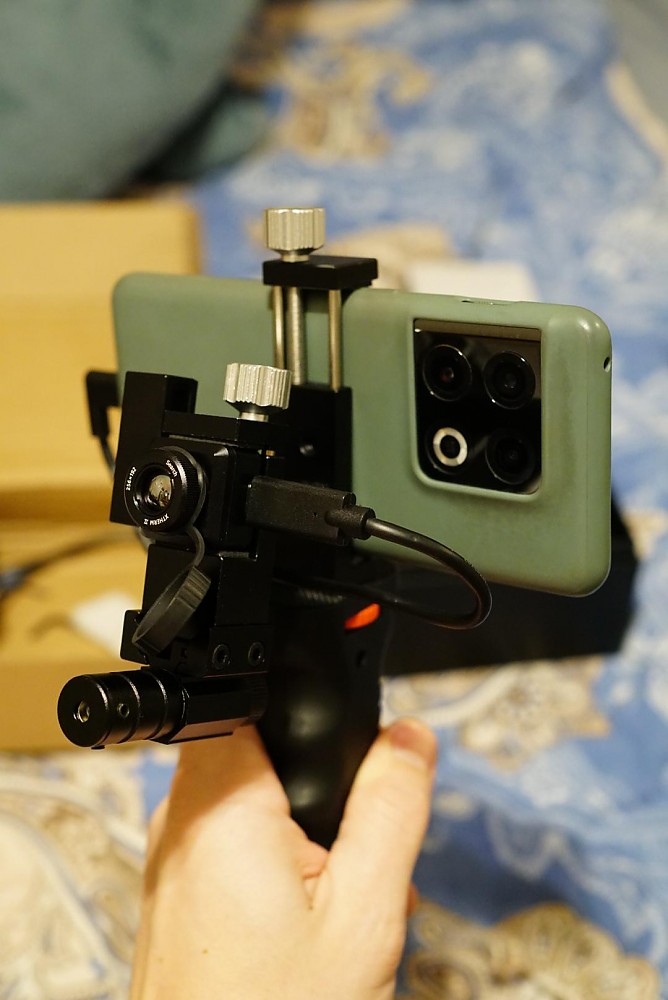
- Case, handle, phone holder, cables and [useless] laser pointer are all included
- Great value for money
Cons
- Not compatible to new iPhone with USB Type-C port (there is a version with Lightning port)
- Severe glitches in cold weather (a phone issue?)
- May be damaged if pointed at sun, open flame or similar objects
- Somewhat outdated; newer devices are available at steeper prices
- Possible incompatibilities with your phone
- No protection from elements, the camera mounted on the phone is rather fragile
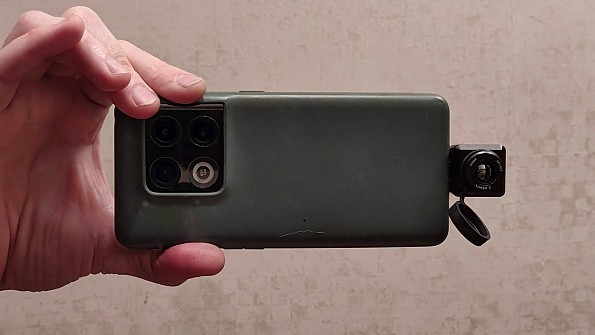
Despite already having a closet full of photo equipment, I discovered in 2025 that thermal imaging technology has evolved to the point where a $200 thermal camera rivals the image quality of $5,000 professional instruments from the 2010s. Such a camera is essentially a sensor with a lens that plugs into a smartphone's port, so you don’t need to pay extra for data processing unit, screen, battery and housing. Of course there are prominent limitations in such a design (it’s flimsy and depends on software quality and its compatibility with your smartphone), although for the average user it’s fine.
Last spring I purchased the Uni-T UTi260M thermal camera as a gift to my father, and although its image quality wasn’t really “photographic”, I was shocked with its capabilities and became obsessed with finding a proper thermal camera for myself. After doing a bit of research I realized that the clip-on thermal imager market has evolved to a point where you can pick from not only different sensors or brands, but also from entirely different device classes.
Clip-on smartphone thermal cameras can be broadly divided into the following categories:
1. General purpose models (the vast majority on the mass market). Wide angle lens (about 30 mm focal length equivalent, typically 56×42° FOV), wide temperature measurement range (up to several hundreds degrees C), ultra-compact body, often without any means for focusing.
They are aimed at customers who need a simple measuring instrument for various tasks at home, like finding the heat leaks, overheating equipment and so on. Those are not suitable for monitoring distant objects, like people or animals, as those will look like a single hot pixel on the screen. The photo quality isn’t great as well, because the sensor is optimized for accurate measurement of temperatures, including the extremely hot ones. Lack of any focusing makes the image a bit blurry as well. Close-up observation is only possible with expensive clip-on macro lens (if available).
2. Observation models (for hunters, outdoor enthusiasts, and so on). Telephoto lens (about 100 mm equivalent and more, FOV 20×15° and less), narrow temperature range (about 0-100 °C), more substantial body, manual focusing. Close-up observation is possible. Supplied with a pistol grip handle and smartphone holder, at least.
They provide good image quality at large distances, where a lens with ability to focus and much longer reach is necessary. On the other hand, such models are not suitable for very hot objects (like sun or open flame), and may be damaged if pointed there. Also the field of view is quite narrow, making thermal surveys less convenient, as you can only capture a section of a large object, like a house, at a time. Luckily, the ability to take close-up and even macro photos persists, and it doesn’t require additional lenses, unlike in cameras without focusing.
3. All-in-one models. Normal-to-telephoto lens (40-70 mm equivalent, 50×33°—28×21° FOV, manual focus), wide temperature measurement range (up to several hundreds degrees C). Body design is similar to observation models, and supplied accessories vary.
These devices resemble the aforementioned observation class but are equipped with somewhat wider lenses and a much broader temperature range. They combine the advantages of both previous categories, but outdoor observation isn’t the strong point of such cameras. These cameras aren't necessarily the most expensive ones—in all three categories the price usually depends on the sensor resolution.
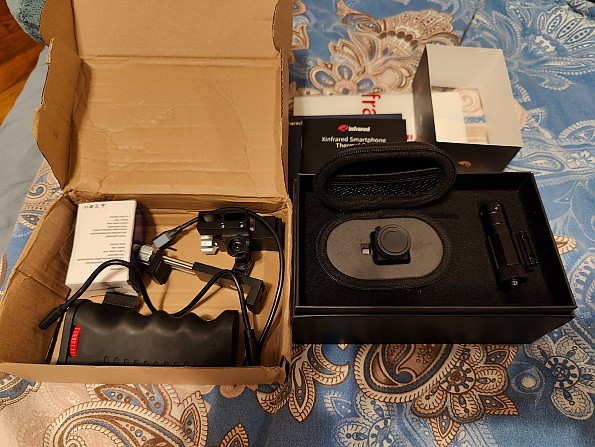
So, for myself I purchased one of the cheaper thermal cameras intended for observation: Infiray T2 Search. It's a rather old model (ca. 2022), equipped with a telephoto lens (19.6×14.7°, 100 mm equivalent), 256×192 px sensor (average for its class), 0... 80°C temperature measurement range. There are two versions of this camera—with USB Type-C (Android only) and Lightning ports—mine is Type-C. In the bundle with the camera there is very convenient semi-hard carrying case, lens cap, a pistol-grip handle with smartphone mount, laser pointer, cables and paperwork.
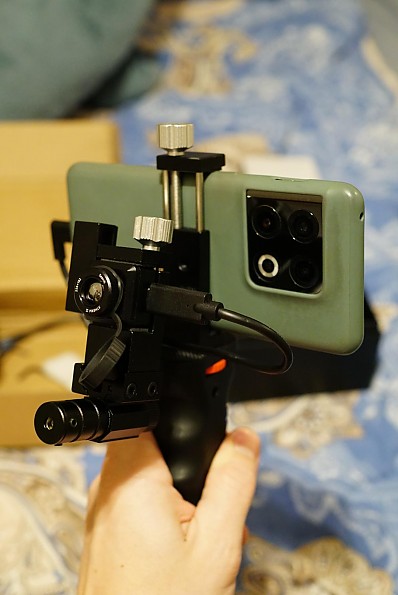
The camera can be used in two ways. You can simply attach it directly to the smartphone, or, alternatively, assemble the handle and mount the camera separately in a protective metal cage (which can also be installed on some sort of a weapon using the rails). In fact, I never use the handle because assembling it is very time-consuming, and the assembled unit is rather bulky and too high-profile. So I always attach the camera to the smartphone, and speaking of the laser pointer, I simply don’t know what it's needed for.
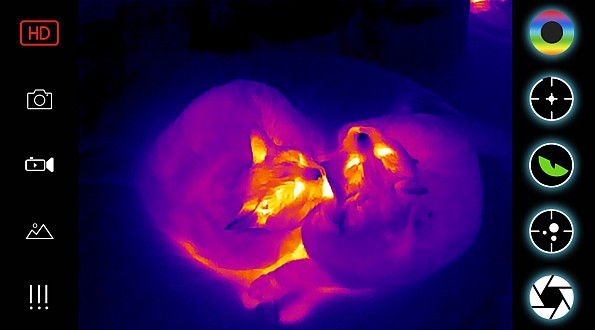
The camera is supplemented by the IR Explorer app. There are various settings for display: temperature pointers, color palettes (white-hot, black-hot, molten metal, red highlight etc.), units, PiP, and so on, as well as ability to initiate photo or video recording. The photos are saved in uncompressed PNG format at 2.7 megapixels, making them rather large, despite the limited sensor resolution. Unfortunately, in most of such cameras the app quality somewhat lags behind the optics and electronics, and you’re fortunate if everything works flawlessly.
Specifically, in freezing weather, the system only works reliably if the smartphone itself is relatively warm. After being left in a cold tent for some time, the camera starts glitching wildly. I don’t really know whether it’s a camera fault, or a smartphone problem, which in theory could limit the power supply to the camera when its battery is cold.
Aside from this, the camera works fine. I've found a lot of possible usage scenarios, so I'll list them below, along with the photo examples.
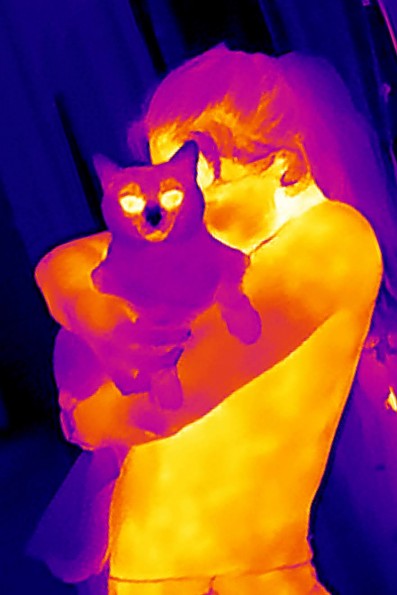
1. Portraits and general photography. This thermal camera is able to generate quite pleasant images and videos, despite its limited thermal resolution (as per usual for this price range). It’s possible to boost image quality a bit further by tapping the HD icon, which enables some sort of AI processing (reducing the frame rate just a bit).
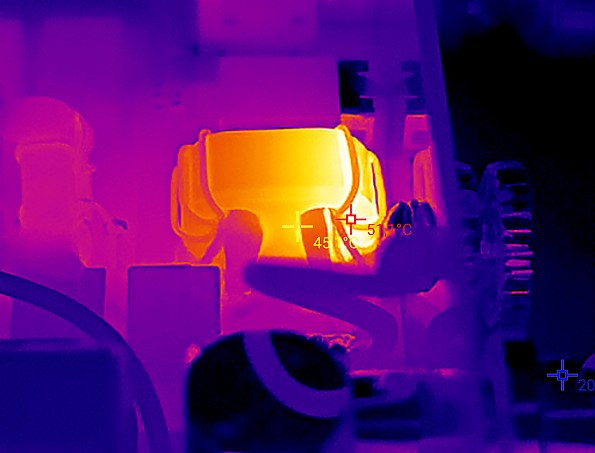
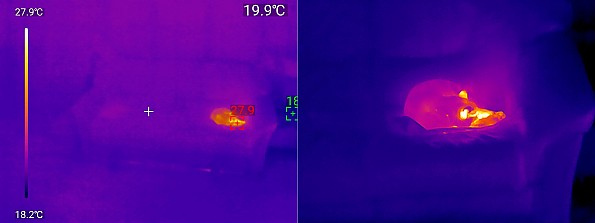
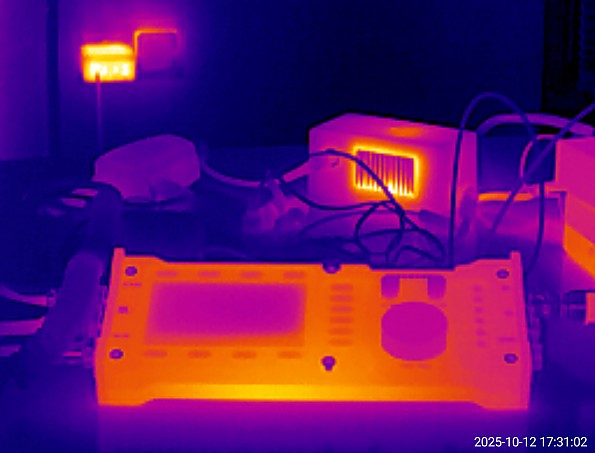
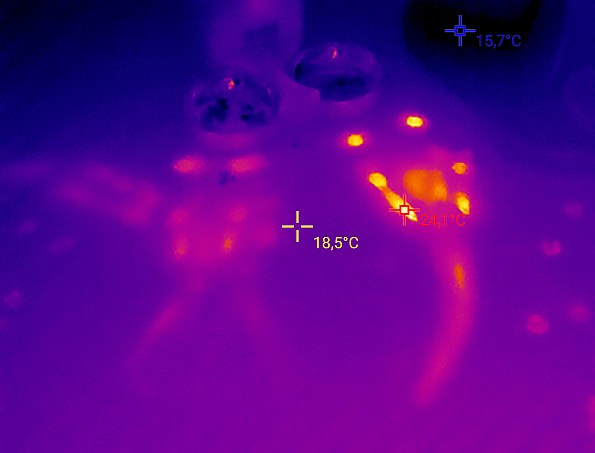
2. Surveying the temperature of electronic devices and components. Thanks to manual focus ability, even the thumbnail-sized components can be monitored with great resolution. The only caveat is lack of advanced temperature measurement tools in the IR Explorer app (as it’s mostly intended for outdoor observation), and also the app disables the temperature measurement on startup. Remember that some electronic components may have such an extreme temperature that it may damage the sensor. Also note that it’s not the precision measuring instrument, as the stated accuracy is about ±3 °C.
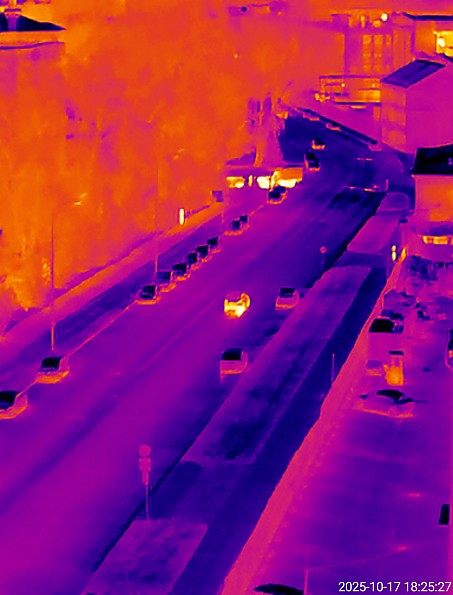
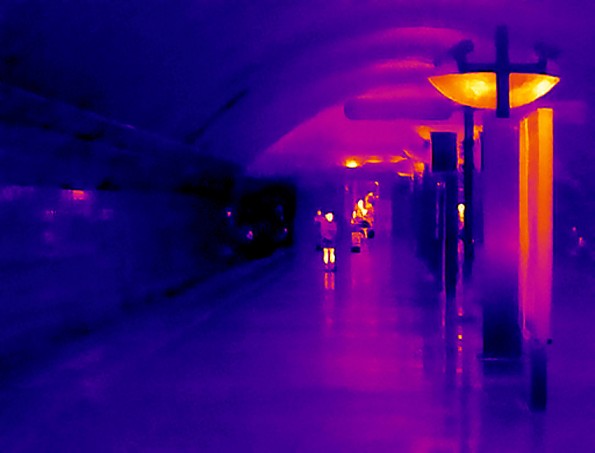
3. Outdoor and cityscape photography. In every city there’s a lot of interesting thermal objects, worth photographing. But on the other hand, in the wilderness, everything has about the same temperature, which isn’t entertaining in the photos. And don’t forget that pointing the camera on the stove or campfire may damage the sensor.
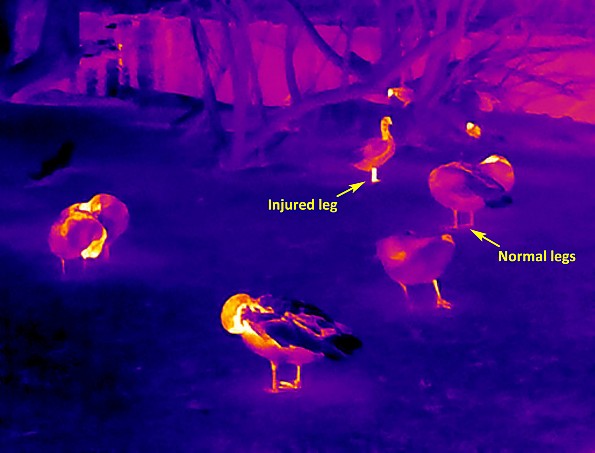
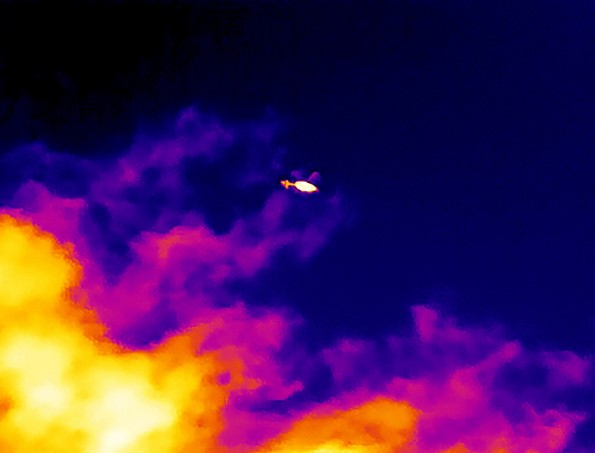
4. Wild animal watching. In theory, it’s what this camera was made for, but in late autumn there’s not many animals around me. I've made some photos in the zoo. Notably on the photo above there is a goose with injured leg (it is unusually hot)—that goose was harassed by a crow because of visible walking impairment. Although there is a telephoto lens (19.6×14.7°, 100 mm equivalent), for bird watching a different model with even longer lens (like 14×10°, 150 mm equivalent) is advised.
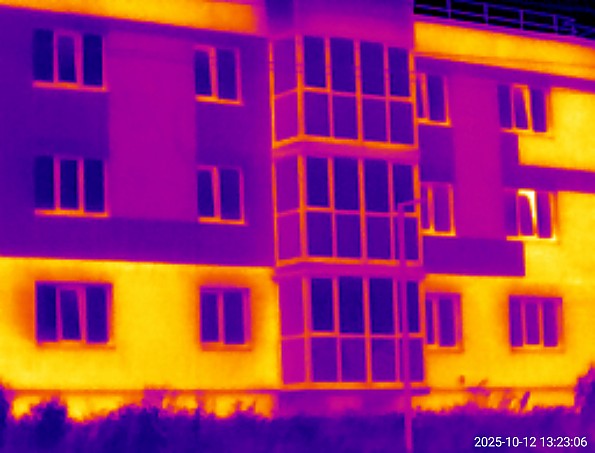
5. House thermal surveying. Technically it’s possible, but the field of view is narrow, so you cannot see the entire scene all at once, especially in the confined space. The house above was photographed from another side of the road! I suspect that their bills for heating are rather huge…
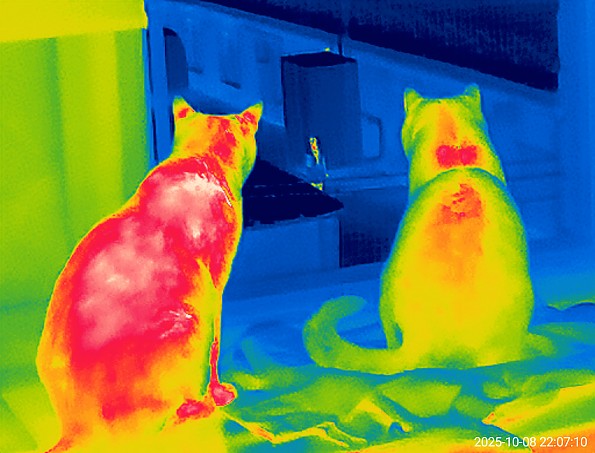
6. Search and rescue. I’m a volunteer SAR operator, and in theory this camera could help in finding the people lost in the woods. However, from the ground level, the ability to spot a person is extremely limited, even with such a camera. Probably I’ll be using it sporadically for scanning the horizon on large voids, like swamps. Luckily the camera is so small and convenient to carry everywhere! In the supplied carrying case the total weight is just 60 g / 2.1 oz.
As you can see, I’m satisfied with this camera, and it delivers great value for money. That said, this model is now somewhat outdated, and since 2022, more advanced models from the same manufacturer have appeared, under the Thermal Master brand. A bit more expensive, yes, but their hardware and software have evolved substantially.
On 11.11 I was able to grab the Thermal Master X3—a brand new device of a completely superior class, equipped with a higher resolution sensor (384×288 vs 256×192), sporting much better sensitivity (25 mK vs 50 mK) and more advanced hardware and software. It was just 2 times more expensive than my T2 Search, and that’s simply fantastic. I’ll write another review, if somebody’s interested!
Also there’s Thermal Master X2 model, which is the next generation of T2 Search, with more sensitive thermal sensor, better hardware and software, and its price sometimes also drops fairly low.
Remember that having any iPhone with USB Type-C port, you should be extra careful to pick the right camera model, which is compatible to both platforms, not just the Android. You're limited to the most recent camera models in such case.
Background
I've been using it for a couple of months, and also I've got limited experience with UTi 260M thermal camera.
Source: bought it new
Price Paid: 200 USD