
Windquester Horizon Lite 2 Pro



 Reviewed by
Brian N
TOP 10 REVIEWER
+2,823
August 29, 2026
A solid, slightly more budget friendly 2 person ultralight tent
Pros
- Weight - 3lbs 1.2 oz
- Ease of setup
- Fully freestanding
- Less expensive than big competitors
- Numerous guy out points
- 2 doors and 2 vestibules
- Zippers rarely snagged
- 1 zipper on body doors
- 16" high nylon side for privacy, sand and wind stop
- Vent at head to reduce condensation
- 30" mid spread bar makes near vertical walls
- DAC poles and stakes
- PFAS-free DWR
Cons
- Dimensions - not for the tall or wide
- Balls at pole ends won't work with generic footprints
- Fragile UL fabric
- Plastic pole clips for ends may be more prone to break
- Fewer pockets than premium brands
- Single slide zips on fly don't allow venting
- Limited warranty
Most of us have probably never heard of Windquester before, so I decided to take their Horizon Lite Pro 2 tent and see how it performed.
The pro version has a heavier nylon fly and mesh (15D vs 10D) and different pole to body connectors. So it is a few ounces heavier and a little more expensive. Usually lighter is more, so this is a little different from most manufacturers.
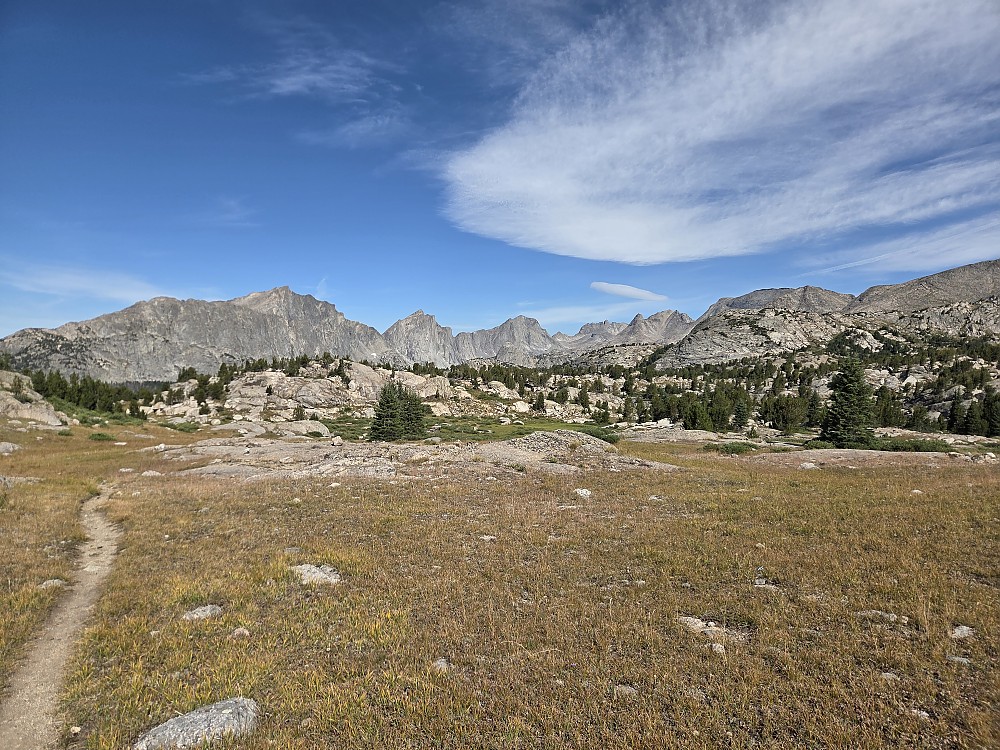
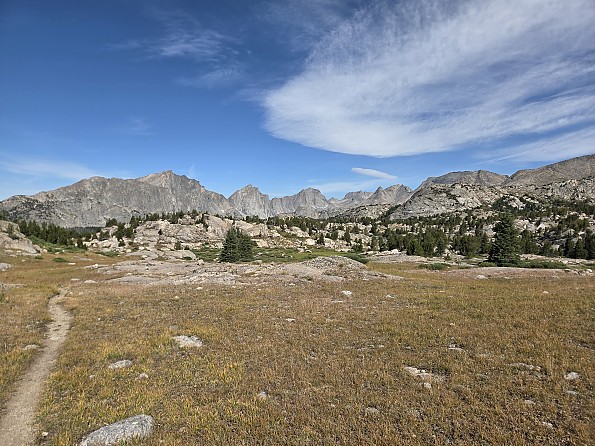
Our test was a nearly 50 mile trek in the Wind River range of Wyoming. All campsites were above 10,000' elevation and there was some rain in the forecast, so we were a little nervous taking an unknown tent on it's trial run.
The winds were surprisingly warm, then came some heavy rain and 15–20 mph winds. We stayed dry, the tent stayed tight, and handled weather better than expected. A few quirks, but overall it is a solid shelter.
Conditions & Weather Performance
We had everything: warm nights, nighttime rain, and sustained winds. After one particularly nasty rainstorm, we woke up expecting to pack up a wet tent. However, with the warm temps, wind and a good waterproofing we had a completely dry tent to pack.
The fly has 2 guys at each end, a mid-head guy and vestibules with short guys and line locks. With stakes at the vestibules + mid‑head/foot guyed to a rock (the guys are plenty long to go around large rocks), it stayed solid in 15–20 mph gusts. The line locks at the vestibules are a welcome extra, my BA tents are lacking these and I typically added them for more flexibility in stake placement. Deploying all guys would obviously keep this solid in some pretty bad weather.
Ventilation & Livability
With the head vent open and the mid‑head pull‑out engaged, we experienced no condensation inside. Nights were warm, though, so YMMV. With night temps in the high 40's and unfortunately a 20 degree quilt, we found ourselves in need of venting. The fly doors can be pinned open using door bars + foot‑end loops to let air move through. This combo was easy to deploy and undo when the rain started. With everything closed up, it was too warm and I decided to try hooking the door zipper to the fly loop to create a half‑door opening. Pretty sure it’s not “official,” but it kept rain out and boosted airflow. This is similar to the half door vent mode on the Copper Spur.
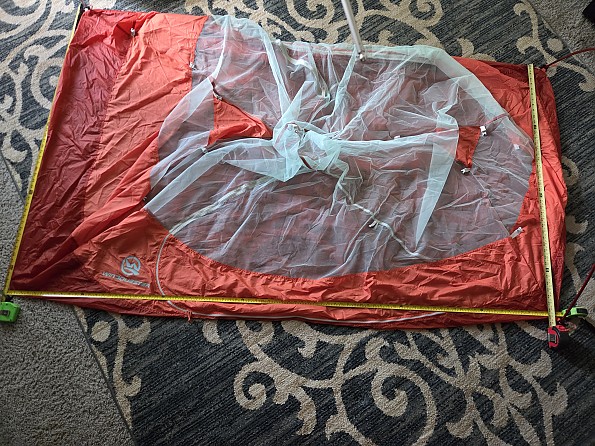
This is an ultralight 2 person tent and interior space is limited to 83" long, 53" at the head, tapering to 44" at the feet. For those over 6'2" you may want to look elsewhere or sleep diagonal. I would like to see a few more inches in length so we could more easily stow our packs at our head.
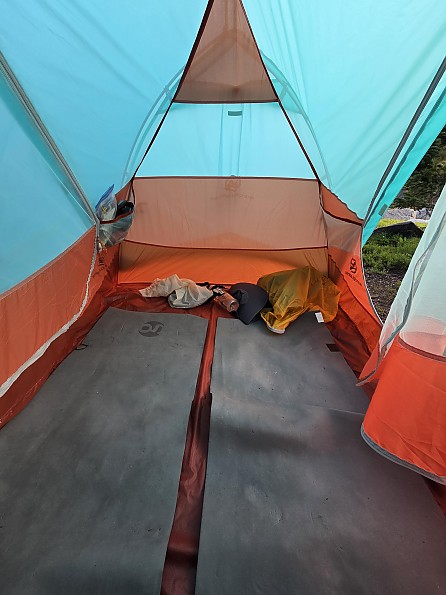
Our Exped Duo pad fit perfectly with room for shoes at the sides, one pack at the head, and one pack in the vestibule.
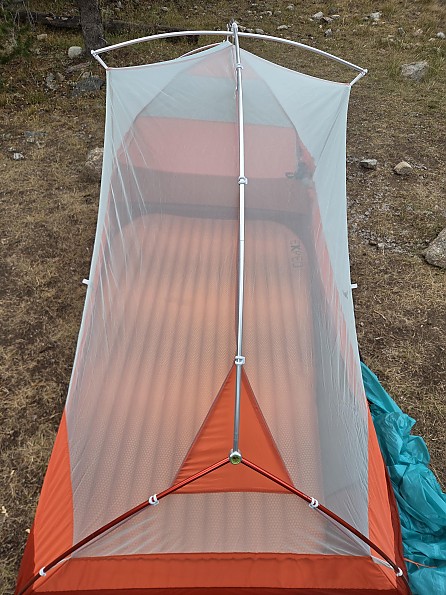
A 30" spreader bar and the Y poles make fairly vertical walls and good head room (44" at max) so inside is not terrible for 2.
Setup
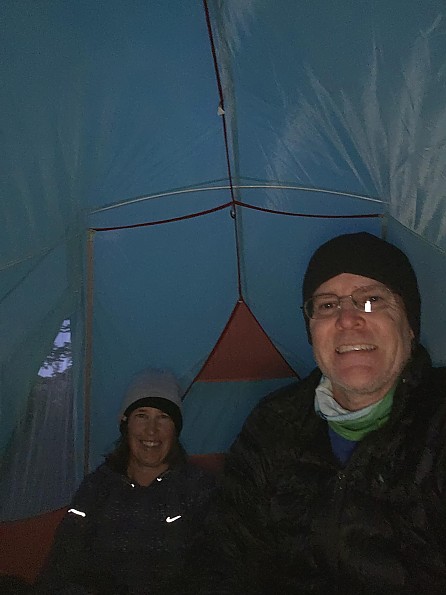
Setup is fast and easy for one person. The ball‑end pole connectors snap in securely and make the pitch effortlessly taut. With color coded ends, and the snap connectors, this is the easiest and fastest tent I have ever setup.
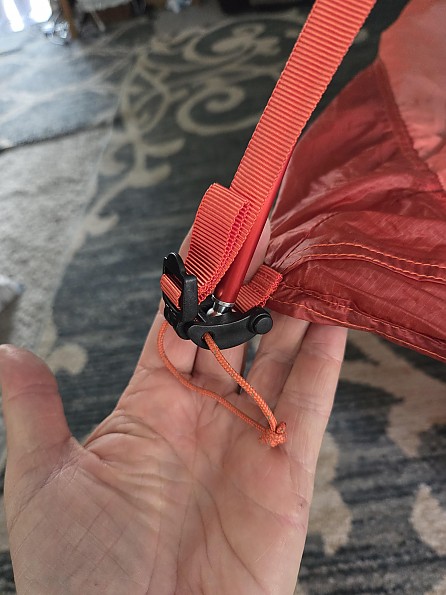
However, those ball connectors are too big for the grommets on our multipurpose footprint/tarp/poncho. So we had to leave our footprint unconnected, this complicates fly first setup unless you buy the matching footprint. I also worry about the durability of the plastic clip. If one of these breaks, there is no easy field repair. I much prefer a skinny end and hole like a more traditional Jake foot that is available on the Horizon Lite (not the pro).
As mentioned, there are 5 guys, 2 vestibule guys and loops at each end for 11 possible stake points. The tent comes with 8, 6" DAC stakes, so if you want to use all guy points, get a few more stakes, or use rocks.
The fly can be pitched in awning mode using poles. I prefer having tips down, and found the loops on the fly were too small to fit over my Leki pole handles. This could be fixed by re-tying the loops, but I opted to just hook the loops to my flick locks, it was too windy for this mode after setup, so we didn't use it much. But on a calm rainy day, or with a good view, the awning mode can be nice. My wife loved awning mode on the Copper Spur as it opened the fly and made setup (getting in and out, blowing up pad...) easy. However, on the Windquester, because the fly opens from the head and can be easily pinned to the foot of the tent, it creates a huge doorway - better than awning mode.
Doors, Pockets & Usability
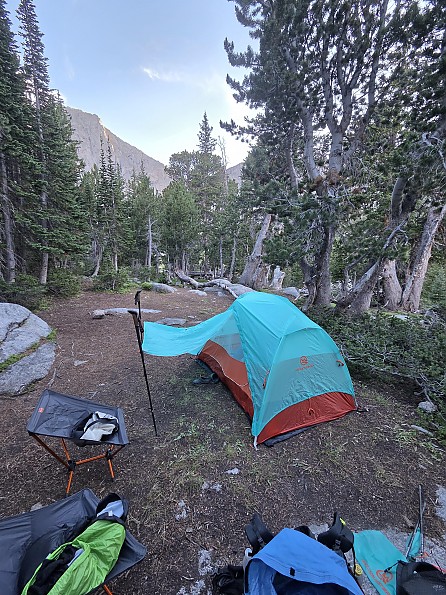
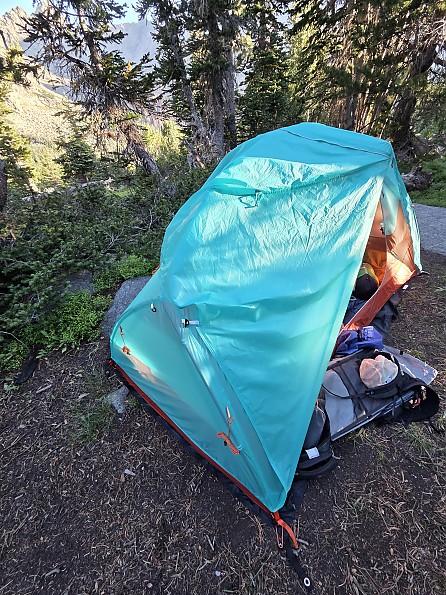
The fly door opens from the head of the tent vs the traditional mid vestibule. I really like this design as you don't have to crawl out to open the fly and the fly seems to stay tauter without having to constantly remove from the stake to get out. I need to test if this opening can let in more rain, it might, but I was not able to confirm or deny.
The nylon extends 16" high (higher at head), which provides good privacy, keeps blowing sand down and helps keep the wind at bay.
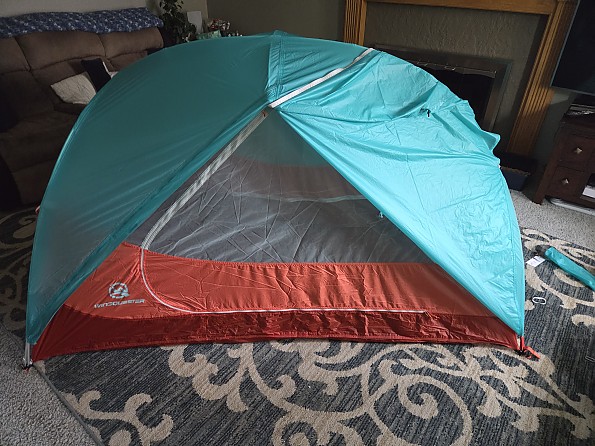
Fly zippers are notorious for jamming in the rain flap. This happened much less often on the Windquester compared to my BA's - especially the Tiger Wall and it's terribly jammy zips. The Windquester also has multiple velcro closures on the fly, I did run into these with the zipper and you have to sort of hold them out to enable the zipper. Maybe this is why the zipper didn't jam as much? I'm not sure, but I was happy not having to unjam a zipper in the middle of the night.
The mesh body has a single half circle zipper that works much better than the 2 zippers on the Copper Spur.
Storage is decent, but lacking compared to the Copper Spur. There are 2 larger than normal side pockets that easily held my gloves, socks, med bag, headlamp, phone, charger. I really do love the large pocket at the head like the Copper Spur and Tiger Wall have.
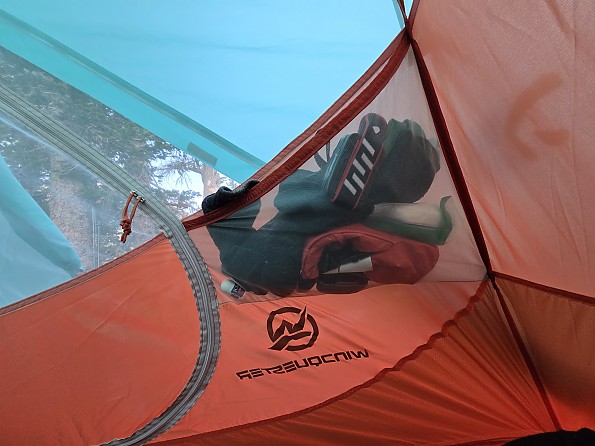
The foot‑end pocket sits low enough to eat into foot room and is sort of hard to get into. I would much prefer this to be up at the top of the nylon - a foot or so higher.
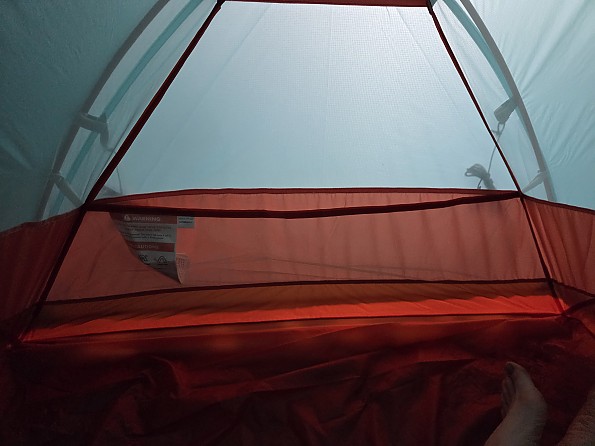
Packing & Accessories
The stuff sack is decently sized, rolling things up tight makes it easy to put the tent away, but its easiest with two people (one holds, one stuffs).
The included 8 DAC stakes are short (6"), but honestly some of the best I’ve used. Reflective guy lines and guy points make the tent easy to spot at night. And an included split and repair patch are nice extras.
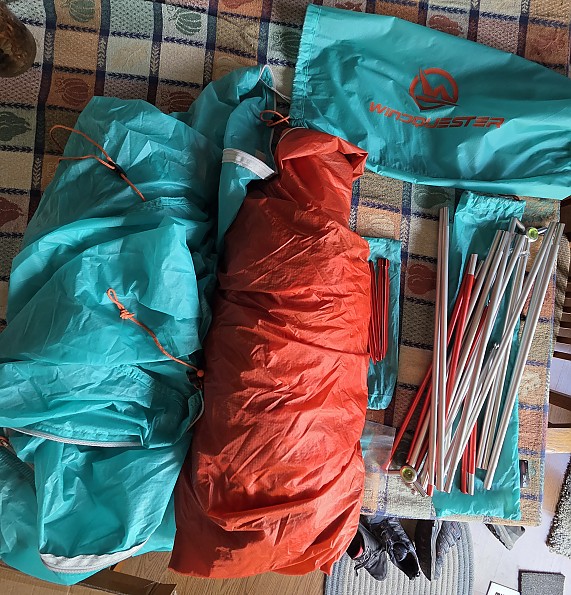
Weight
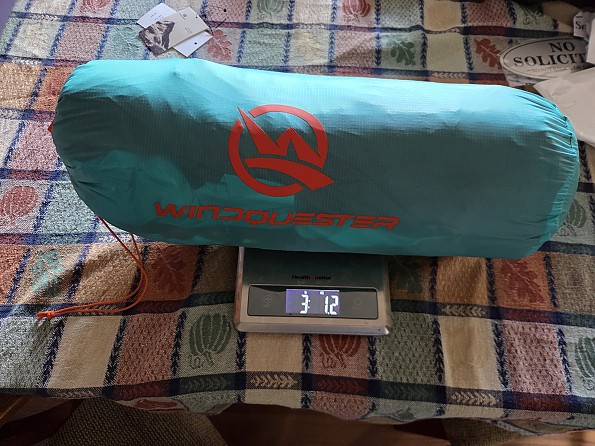
Total packed weight on my scale: 3 lbs 1.2 oz.
Breakdown:
-
8 stakes + splint: 2.3 oz
-
Stake bag: 0.2 oz
-
Poles: 11.2 oz
-
Pole bag: 0.3 oz
-
Tent bag: 0.7 oz
You could drop the bags and a couple stakes, but the fly, body, and poles make up the bulk of the weight.
This tent impressed both my wife and I. Making us question if we actually need the extra space in our Copper Spur UL2 XL. And now we will have to flip a coin as to which tent to bring. The Windquester wins on price and is close enough on most other elements, to make us question prior purchases.
If you want something lighter, cheaper and don't need heavier fabrics opt for the Horizon Lite 2 (Yet to be reviewed however).
Background
This is my 16th tent since I started backpacking.
Source: tested or reviewed it for the manufacturer (Keep)