
Tarptent Dipole 1 DW



 Reviewed by
Randy Givens
TOP 10 REVIEWER
+1,414
November 13, 2025 (original Sep 19, 2025)
Cleverly designed, relatively lightweight, superbly constructed, one-person, double walled tent for just about all weather conditions.
Pros
- Stay-dry setup
- Generous headroom
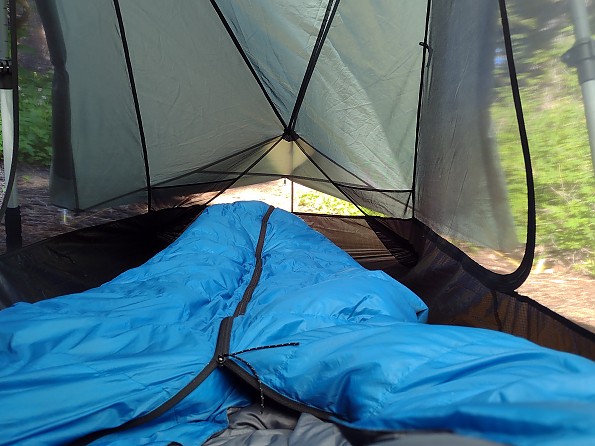
- 360-degree ventilation available
- Stable in wind
- Vestibule doors can be left open in rain*
- Packs down to 11" long bundle
- Sil-poly fly, Sil-nylon floor
- Two doors with usable vestibule space
- Carbon fiber end struts
Cons
- Challenging to pitch perfectly with no sag
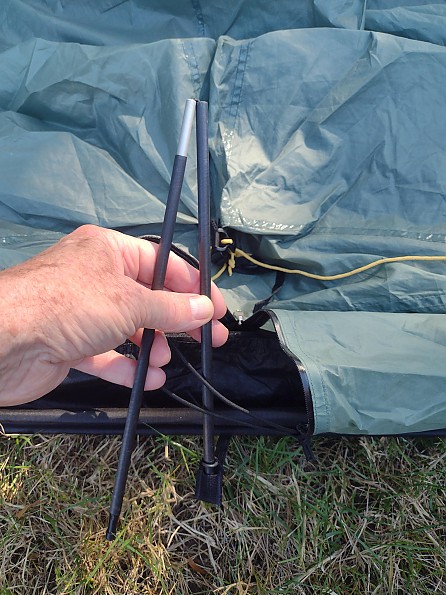
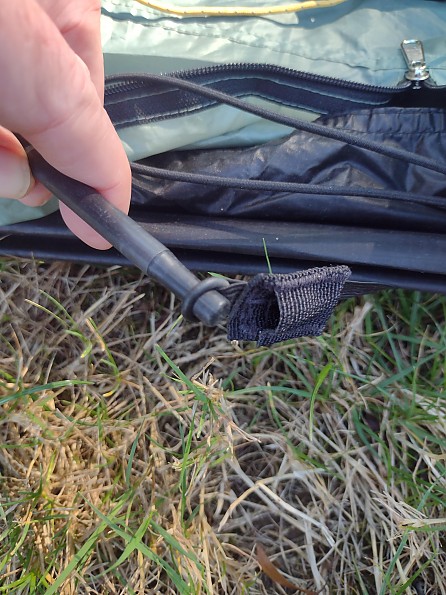
- Head and foot struts can be an irritation to install, especially when it's dark.
- Struts are carbon fiber if you have an aversion to the stuff.
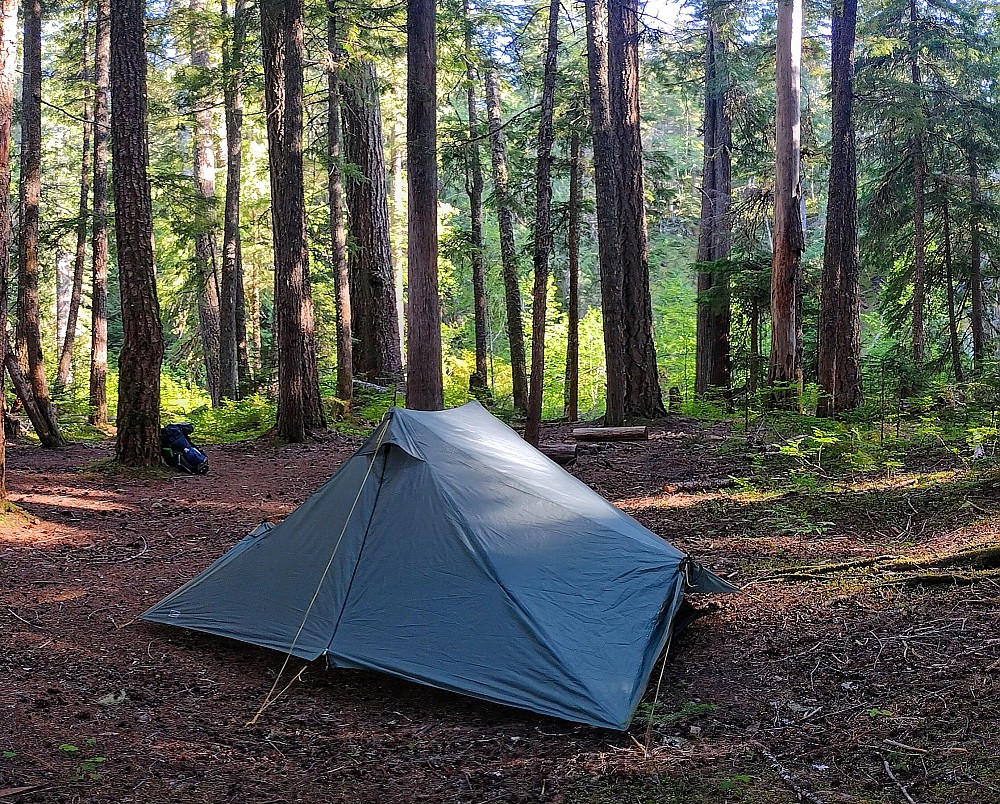
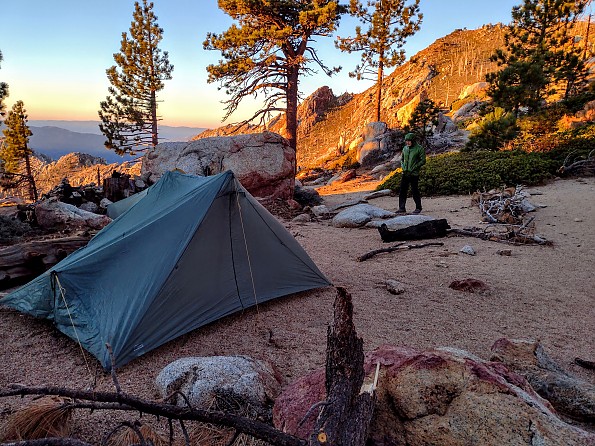
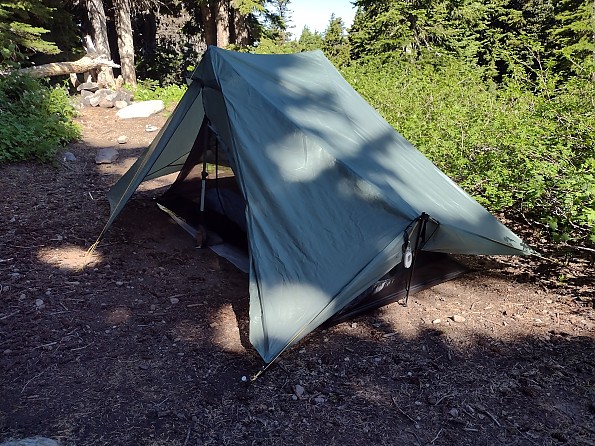
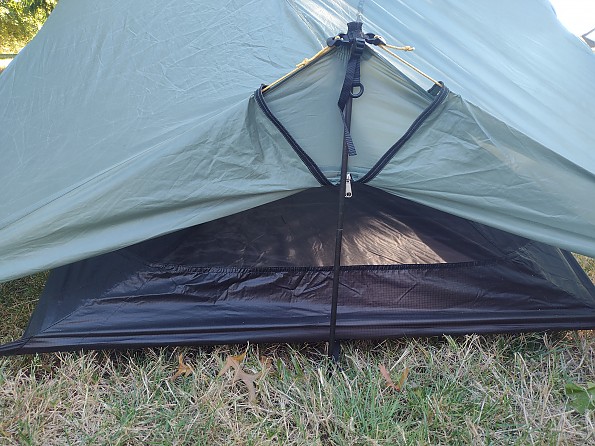
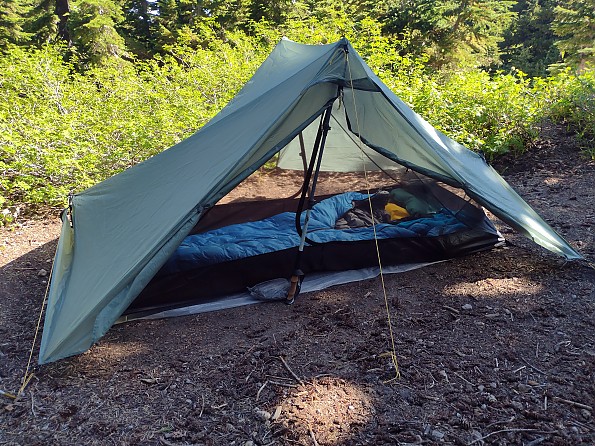
I opted for the one-person, sil-poly version with the mesh interior, and the 11" folding end struts as opposed to the 18" fixed length struts. This is my go-to shoulder season shelter when rain is possibly in the forecast. I wanted double wall so as to minimize contact with condensation. With most of my backpacking spent in the Pacific Northwest, condensation in the shoulder seasons is virtually guaranteed.
The Dipole comes one- or two-person, and in dyneema or sil-poly. The dyneema version is single wall. I have one dyneema tent already, which I "like", but don't love (the dyneema part, not the design part), so I had no desire for another one.
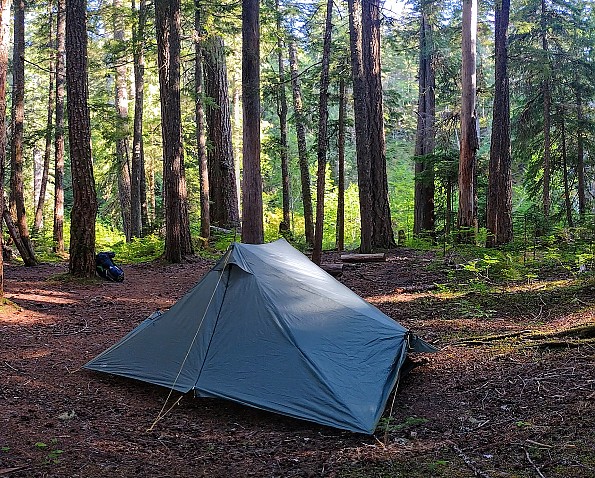
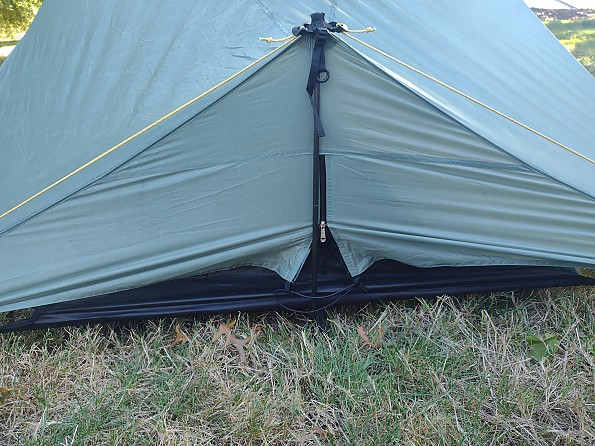
The tent comes with four tubular 8" DAC stakes. I added two "needle" stakes for staking out the vestibules, and with the two-piece shock-corded end struts my tent package weighs 34oz. It comes with a total of 12 Line-loc tensioners which is arguably overkill, but you sure can fine tune the pitch, and the vestibule doors have magnetic ties (love those).
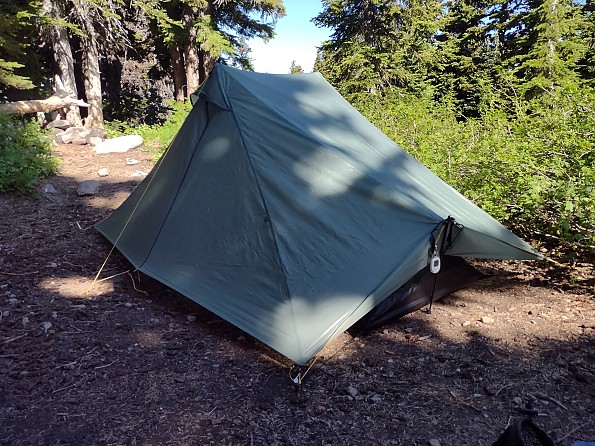
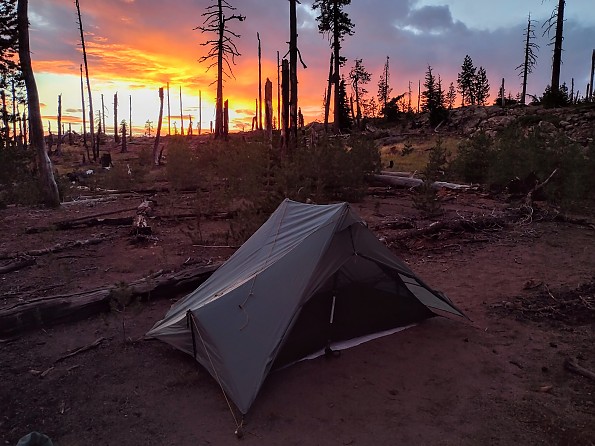
The tent's design and the setup process is quite brilliant for a stay-dry pitch. You would literally have to work at it to get the inside wet setting up in the rain. The not quite so brilliant part of the pitch is placing the end struts, particularly if it happens to be dark. The tent is equipped for leaving the struts 'in place' when packing it up which makes setting it up much simpler, but it's easier to pack it up with the struts removed, so pick your poison.
The fly is constructed of six, catenary cut triangles of 20 D sil-poly, while the floor is 30 D sil-nylon. It's immediately observable when you don't get a perfect pitch as at least one of the six triangles will pucker or sag. Having pitched this thing at least 20 times now, I've only managed a close to perfect pitch twice. It won't happen unless you get all four corners at a perfect 90-degree angle. Henry makes it look easy in the setup video, but I continue to struggle.
Background
I've been using this tent now for three years, with at minimum of 20 nights in it, but fortunately with not that much rain. I think this is my 20th tent in over 40 years of backpacking. I've still got 12 in the stable.
Source: bought it new
Price Paid: $340?