
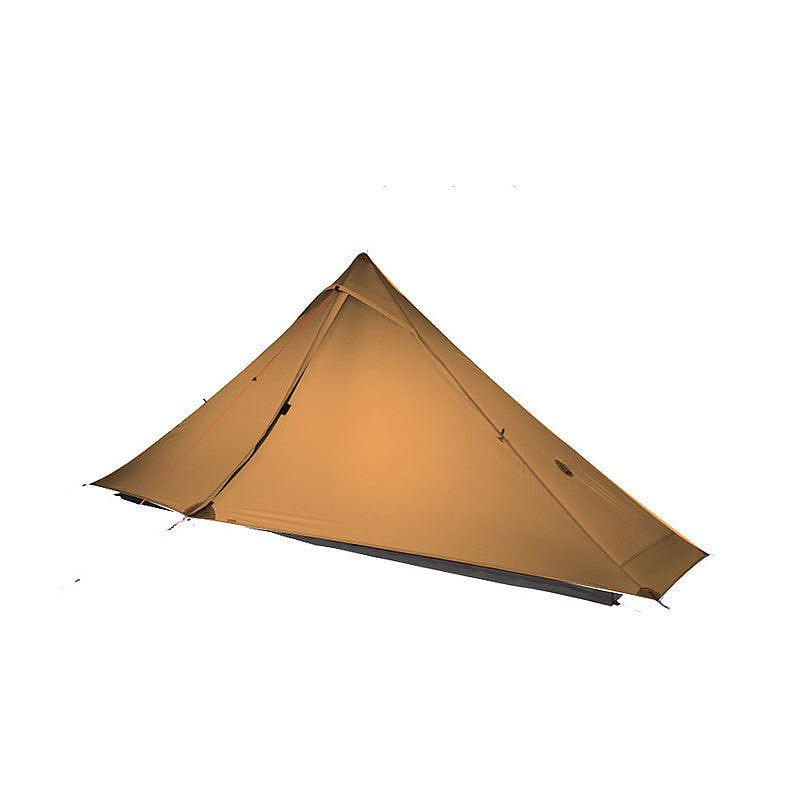
3F Gear Lanshan 1 Pro



 Reviewed by
Richard Frey
+71
February 26, 2026
I have the 3F UL Gear Lanshan Pro—similar tent to the Night Cat, paid considerably more, x3—and can't think of even one outing where it performed well. Some of that is due to my specific needs. The Night Cat Ultralight Tent 1 looks like an exact copy. I thought it would be the ideal backpacking tent at just under 2lbs, but it has drawbacks.
Pros
- Just a wee over 2#, not including a ground tarp
- Inexpensive compared to name brand solo UL tents
- 20D SilPoly material is durable
- Better suited to a smaller camper; at 6'1" 200lbs, I took up all the space.
- Adequate buyout points
Cons
- As a single-wall tent, it relies on condensation rolling down the inside surface and out the netting on the bottom. But it's too easy to bump the sides and ends and get a shower of water droplets.
- Not much room inside for gear, nor to sit up without bumping the sloping top sides.
- Needs a user-supplied stick or hiking pole for its only support
This is a single wall tent. I bought this for UL backpacking, thinking the longer size would be perfect for me, my 30-inch wide Therm-a-Rest RidgeRest and my 30-inch CampRest, both of which fill up the entire space with not much room to spare. I roll around a lot and am a side sleeper as well, so I sometimes draw up my legs and that caused me to be touching the sides. Inevitably, my feet and/or my head end up pushing against the ends.
It appears to be waterproof, but I have only experienced light rain in using it. Mine had to be seam sealed before use, on the outside seams exposed to rain. It takes a little extra time to set it for proper guying out. No matter how tautly I guy it out, it will sag by morning. I found myself using sticks to guy out the side and ends to create enough height and sidewall to compensate for sagging.
I live in northern New Mexico where the average humidity is between 6% and 20% daily, and still found condensation to be the biggest problem. The only true venting comes from a tiny vent at the very top and the raised edges of the cover where it flairs out, i.e., the space around the bottom, so sagging from rain could reduce any venting.
I decided I don't like the single-wall design and the drawbacks that are inherent in that design and went back to a double-wall solo tent with poles, even though it doubled the weight.
Background
Camping since the 1970s in northern Wisconsin, 15+ trips to the BWCA of northern Minnesota, and wilderness camping in New Mexico's northern San Juan mountains. Car camping, portaging, and now ultralight hiking/camping.
Source: bought it new
Price Paid: $150+