
Sea to Summit Ether Light XR



 Reviewed by
Sean Van Cleve
GUIDE/OUTFITTER
TOP 25 REVIEWER
REVIEW CORPS
+14,521
March 30, 2026
The Sea to Summit Ether Light XR Insulated Air sleeping pad is a well designed and durable sleeping pad that functions comfortably deep into the fourth winter season. This pad is aimed towards overnight hikers that are looking for the lightest weight-to-warmth ratio. The 4.1 R-Value model is significantly lighter than the Pro version (7.4 R-Value), and lies within the optimal point where function is maximized while packable. At nearly a full inch thicker than a close competitor (3.9"/10cm), side-sleepers will feel all-night comfort… All year round! Comfortably tested down to nearly 0°F with a CCF (closed cell foam), and using several winter Western Mountaineering sleeping bags.
Pros
- Extremely packable
- Excellent weight-to-warmth rating
- Pillow lock patches hold extremely well
Cons
- Fill—empty valves can require effort opening
- Inflating with breath (using included pump sack) allows gas contraction in cold temperatures
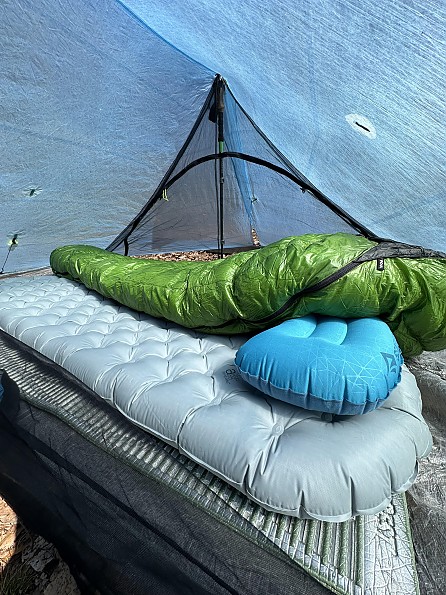
Sleeping pads are generally one of the heavier items in one’s backpacking kit, and careful consideration is often given when finding the ideal lightweight sleeping pad. With sleeping pads that use traverses into the winter, the stakes are even higher. The Sea to Summit Ether Light XR sleeping pad is a well balanced insulated inflatable pad that has a respectable 4.1 R-Value, and in a lightweight 15.7oz package. That being said, this pad can be used for most overnight hikers year round, well below the freezing point.
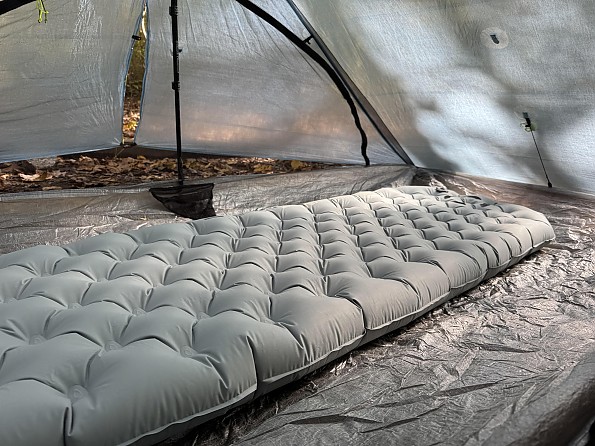
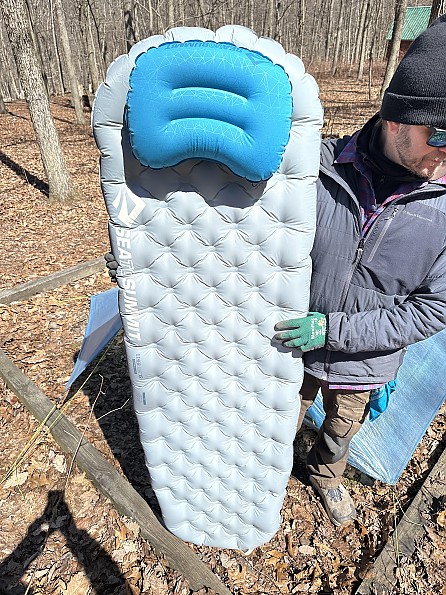
The Sea to Summit Ether Light XR is available in five different sizes. The size provided for testing was the Small pad—21.7" wide, 5'6" long, 15.7oz. A link showing all available sizes can be found here.
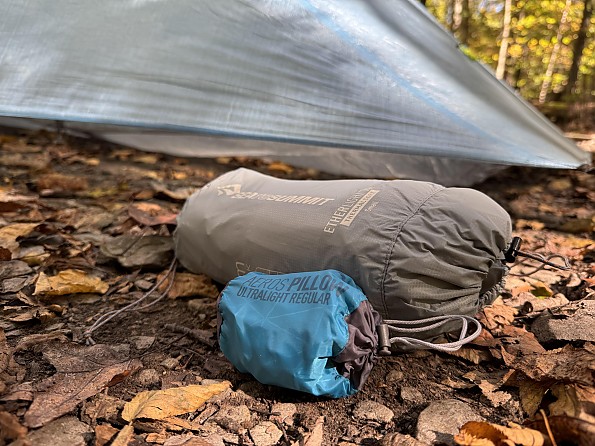
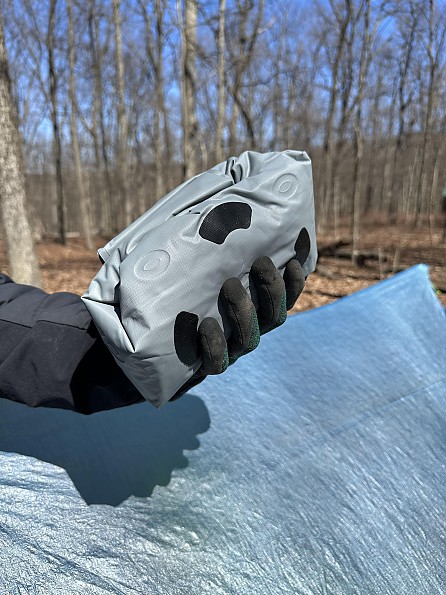
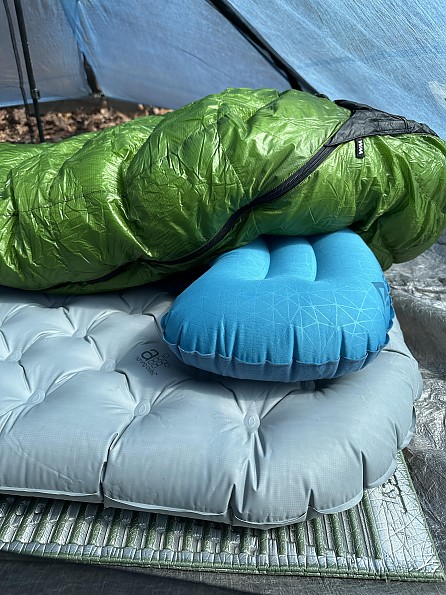
This pad was tested in conjunction in the winter with a CCF (Closed Cell Foam) pad, which aids to act as a barrier between the cold ground and the pad. Two Western Mountaineering sleeping bags were used during testing— the -25°F Puma, and the 10°F Versalite. Also tested was the Sea to Summit Aeros Ultralight Pillow.
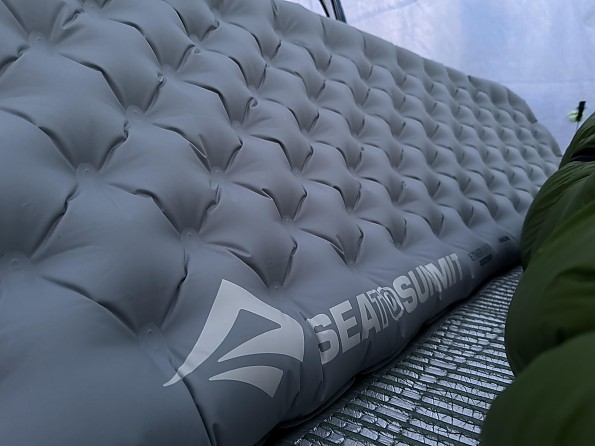
Many hikers use this method, adding durability to the inflatable pad, and also adding additional insulation. Using this method, R-Value stacks, the Ether Light XR (4.1) was tested with the Therm-a-Rest RidgeRest SOLite (2.8): totaling an R-Value of 6.9. This is typically an acceptable amount of insulation for winter overnights. An informative link about R-Values and their testing can be read here.
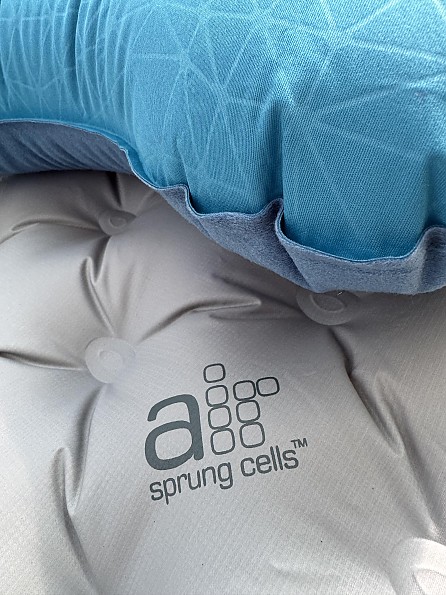
This pad was tested in the mid-Atlantic USA region from late summer 2025 to early spring 2026, and coupled with two different sleeping pads. This sleeping pad proved to be a contender for comfortable use. Its tested temperature range was from approximately 5°F to 40°F.
Sea to Summit has two different lines of Ether Light sleeping pads, as well as a new Ultralight XR line. All of these pads are available in different lengths and widths—a link to all of these options can be found here. The Small size was sent for testing, which sports a 21.5" wide x 66"length. When fully inflated, the pad is about 4" thick.
Ease of Use/Features:
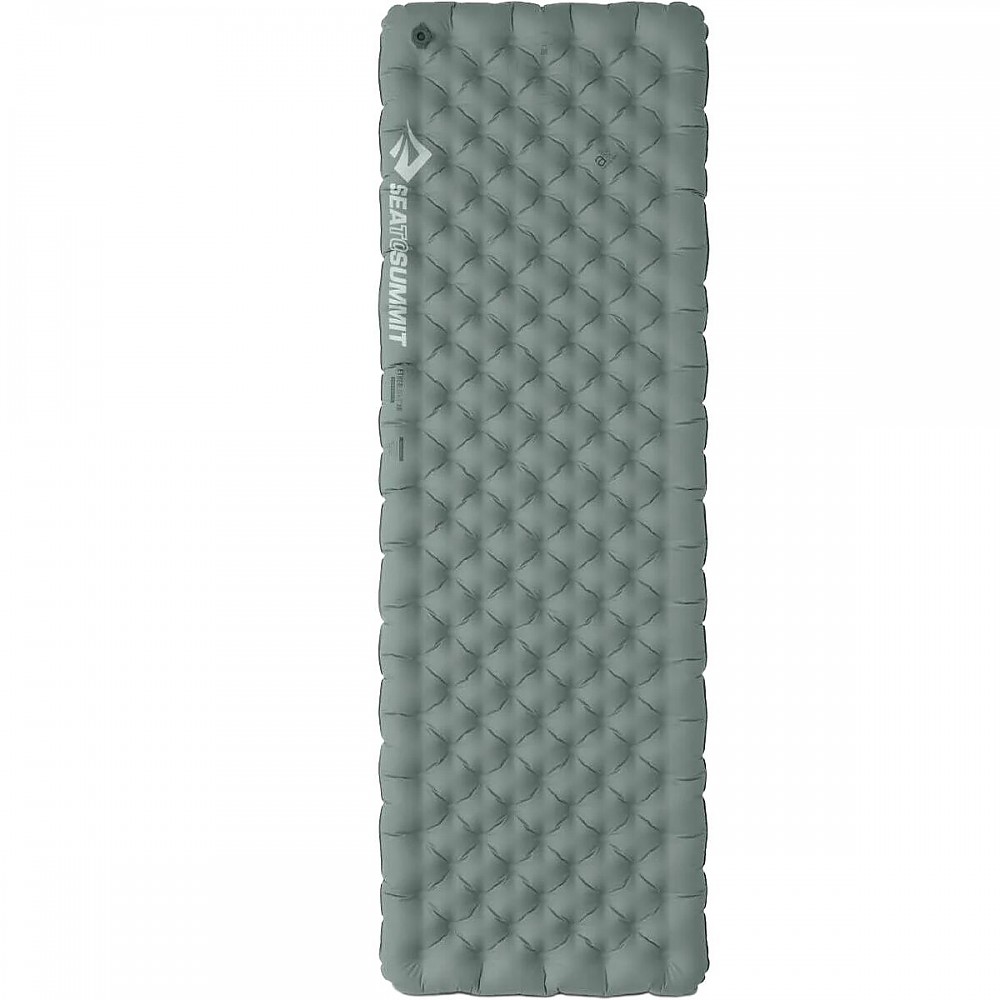
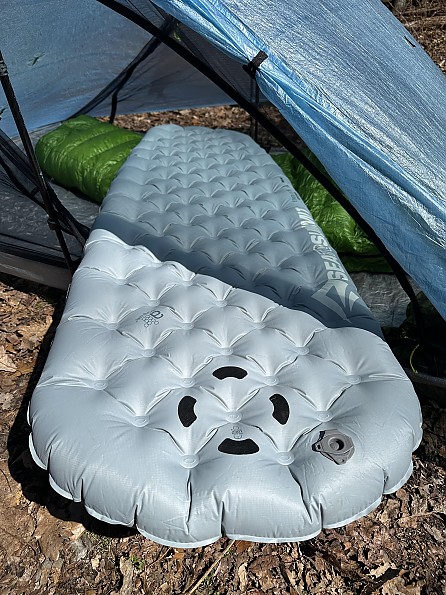
This pad has a quilted appearance with its air sprung construction.
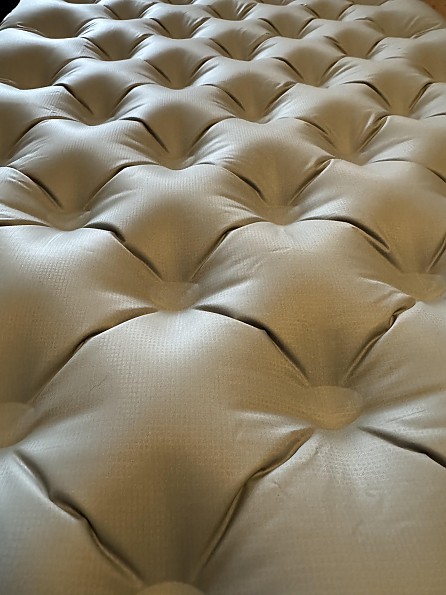
According to Sea to Summit, these new XR pads have 200% increased weld strength. This gives the 4" thick mattress a very strong feel to it. Side sleeping, frequent tossing and turning, sitting up never gave the feeling of ‘bottoming out’.
A pump sack is integrated with the stuff sack, saving weight.
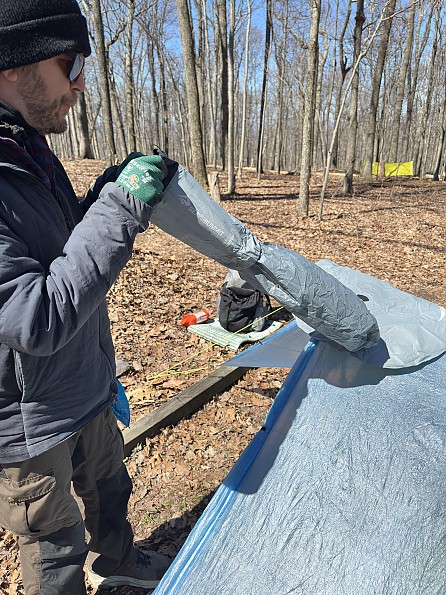
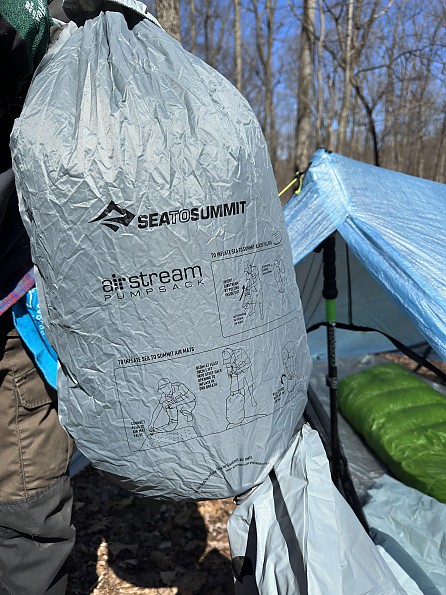
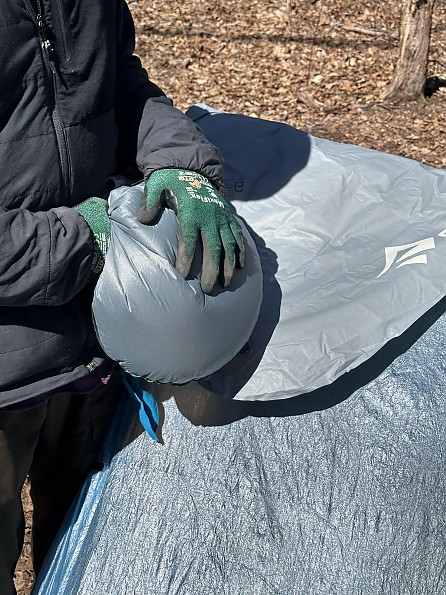
Initially the pump sack was a bit confusing to operate. Without a breeze, one must blow from at least 1'. Attempting to do so from a closer distance negates the engineering of the pump sack's operation. Other than this learning curve, this is a straightforward product.
As mentioned as a con, breath inflation can be a bit tricky. Body temperature breath from inflation contracts over the course of the night, so a maximum inflation is required in order to avoid waking up with that "flat tire" feeling in the middle of the night.
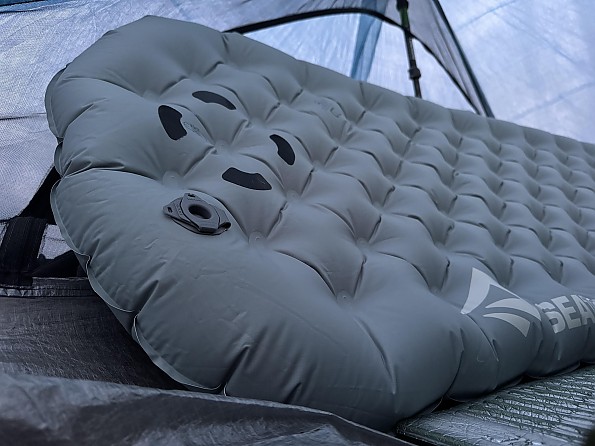
Sea to Summit uses its XPRESS valve technology for easy inflation, and fast deflation.
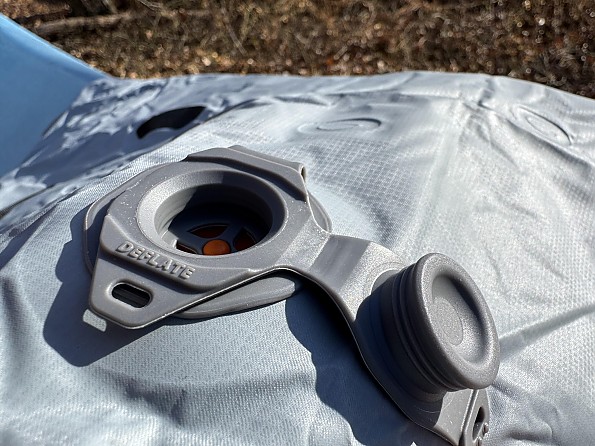
In cold weather, these valves can be awkward to use… An argument can be made that one wants a release valve that comes undone.
Construction & Durability:
The Ether Light XR is a very well engineered product. Made with TPU (Thermoplastic Polyurethane Elastomer) laminated 30/40 Denier fabric, the Ether Light XR feels tough to the tough, yet not slippery. Sea to Summit uses their proprietary Thermal Core insulation inside the pad. "…a suspended TRM layer reflects warmth back to the sleeper effectively." TRM stands for Thermal Reflective Material. Reflecting one’s body heat has been used for quite some time in sleeping pads, across many brands.
Little to no wear is evident over approximately ten nights of backpacking on the Appalachian Trail in Virginia, Pennsylvania, and Maryland. Some minor stains are typical with using any sleeping pad.
The Trailspace Gear Review Corps thanks Sea to Summit for the Opportunity to test the Ether Light XR pad, in conjunction with the updated Aeros Pillow!
Conditions:
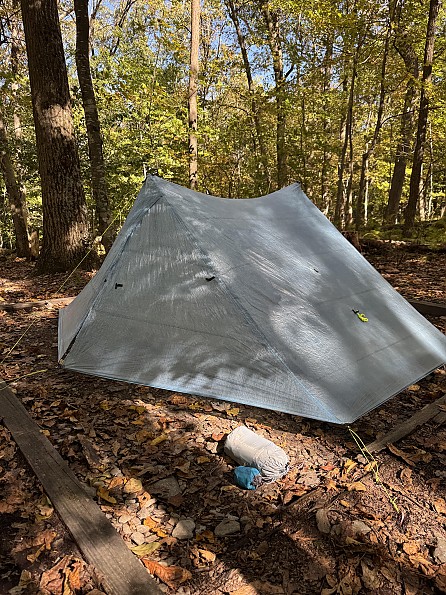
The Sea to Summit Ether Light XR was tested from Summer 2025 into early Spring 2026. Temperatures tested have ranged from lower 40°F down to approximately 5°F.
Background
From early 1970s "blue foam" CCF pads to semi-inflatable pads, fully inflatable pads (both insulated and non-insulated), a minimum of 15 sleeping pads have been extensively used over the course of over forty years of hiking/backpacking.
Source: received for testing via the Trailspace Review Corps
(Sample for testing and review provided by Sea to Summit)
Your Review
Where to Buy





You May Like
Specs
| small | regular | large | regular wide | large rectangular | ||
|---|---|---|---|---|---|---|
| Price |
MSRP: $189.00 Current Retail: $132.30-$259.00 Historic Range: $132.30-$259.00 |
|||||
| ASTM Tested R-Value |
4.1 |
|||||
| Weight | 15.7 oz / 445 g | 16.6 oz / 470 g | 21.3 oz / 605 g | 21.3 oz / 605 g | 23.5 oz / 665 g | |
| Packed Size | 8.1 x 4.3 x 4.3 in / 20.5 x 11 x 11 cm | 8.1 x 4.3 x 4.3 in / 20.5 x 11 x 11 cm | 9.4 x 4.5 x 4.5 in / 24 x 11.5 x 11.5 cm | 9.4 x 4.7 x 4.7 in / 24 x 12 x 12 cm | 9.3 x 4.7 x 4.7in / 23.5 x 12 x 12cm | |
| Best Use |
winter camping, mountaineering, cold weather backpacking |
|||||